
Morocco to Spain and Portugal Day 15: Lisbon to LAX
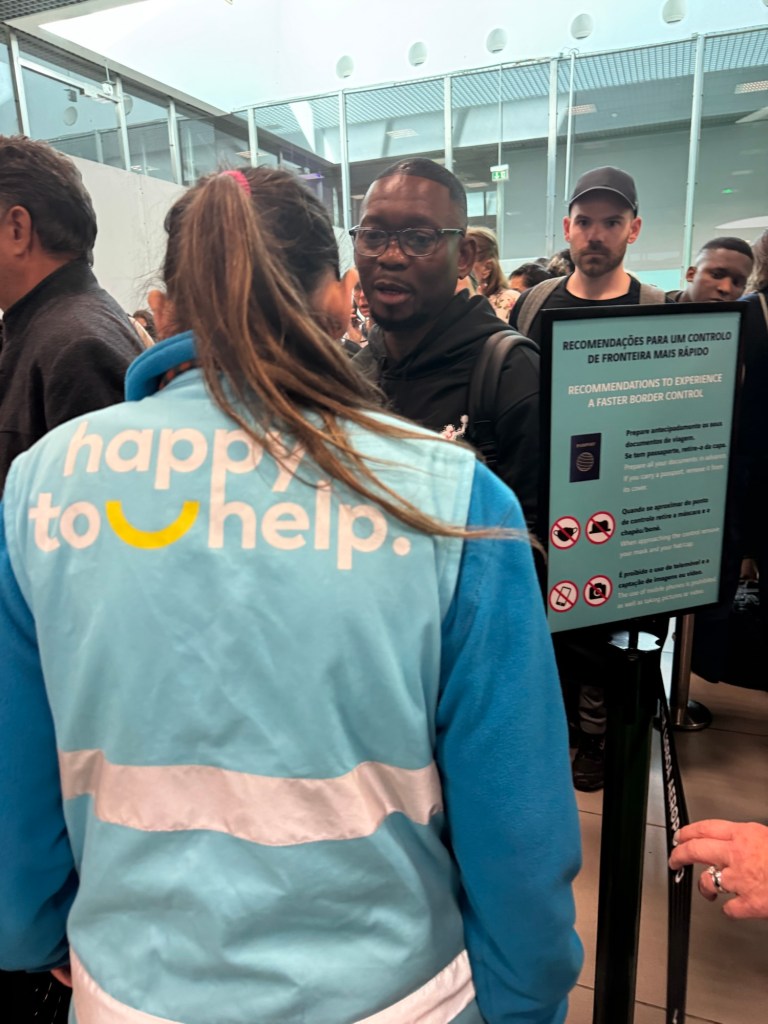
We arrived at the Lisbon airport at 6:50 a.m., only to be told we couldn’t check our bags until 7:15—exactly three hours before departure. After that, we headed straight to security, which had fairly typical lines, but then encountered yet another checkpoint: passport control.
There, only two windows were open to process hundreds of travelers, and the wait stretched to more than two hours. Tensions ran high as people worried about missing their flights. Some began pushing their way to the front, and the situation grew chaotic, with much shouting.
We went straight from that line to a plane that was already halfway boarded. Thankfully, they held it for Jim and a few others, but the whole experience was incredibly stressful.
The most discouraging part? The passport officer told me this is an everyday occurrence—the airport infrastructure simply hasn’t kept pace with Portugal’s tourism boom. Pro tip: look for the secret American passports line instead of the “all other passports line.”
At U.S. airports, Transportation Security Administration agents aren’t being paid due to a partial government shutdown, and I was worried about potential chaos at Newark Liberty International Airport after reports of unusually long security lines. U.S. Immigration and Customs Enforcement agents are now “helping” at some airports as well. Fortunately, we didn’t encounter any problems.
Morocco to Spain and Portugal Day 14: Lisbon, Sintra and Cascais
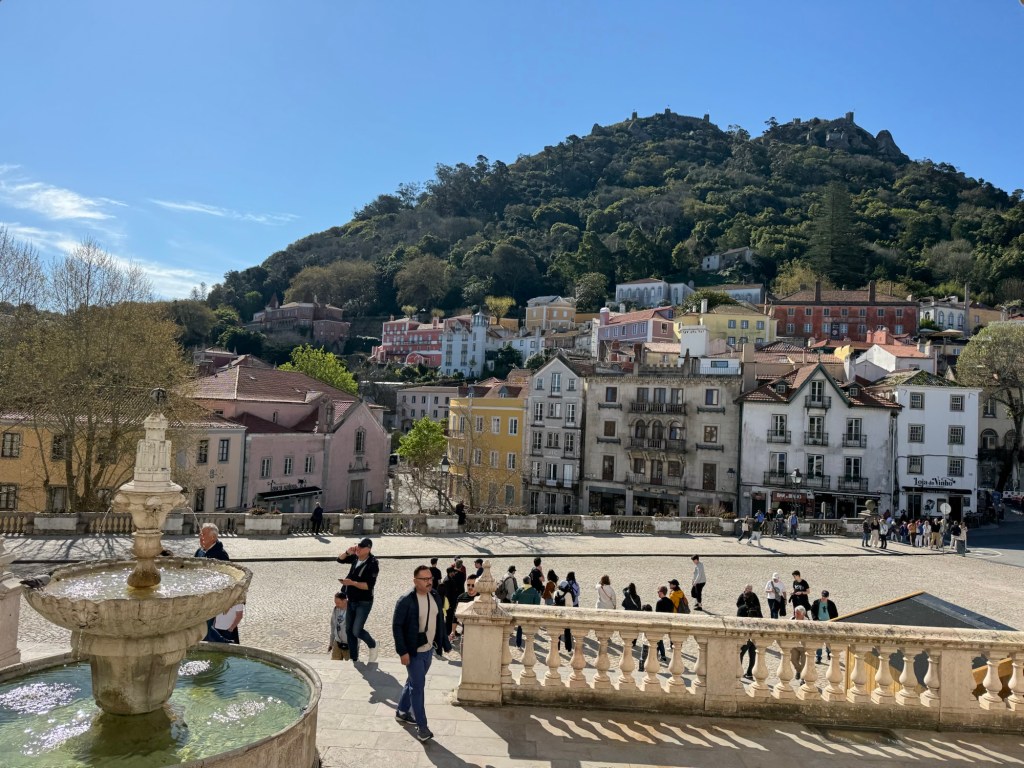
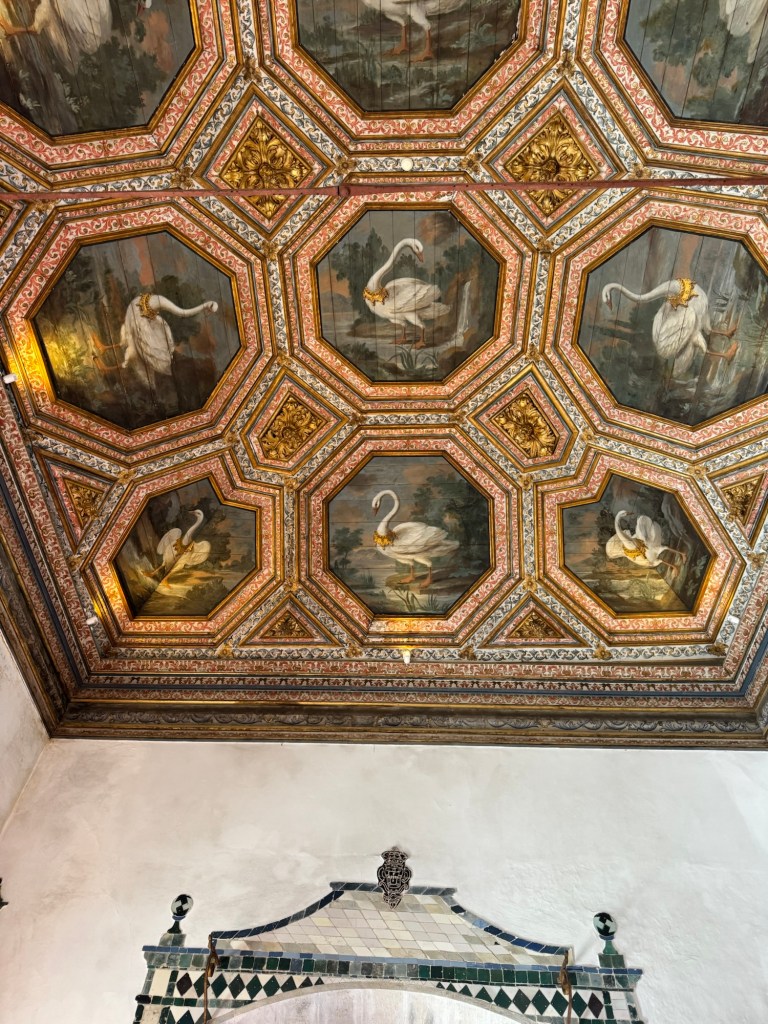
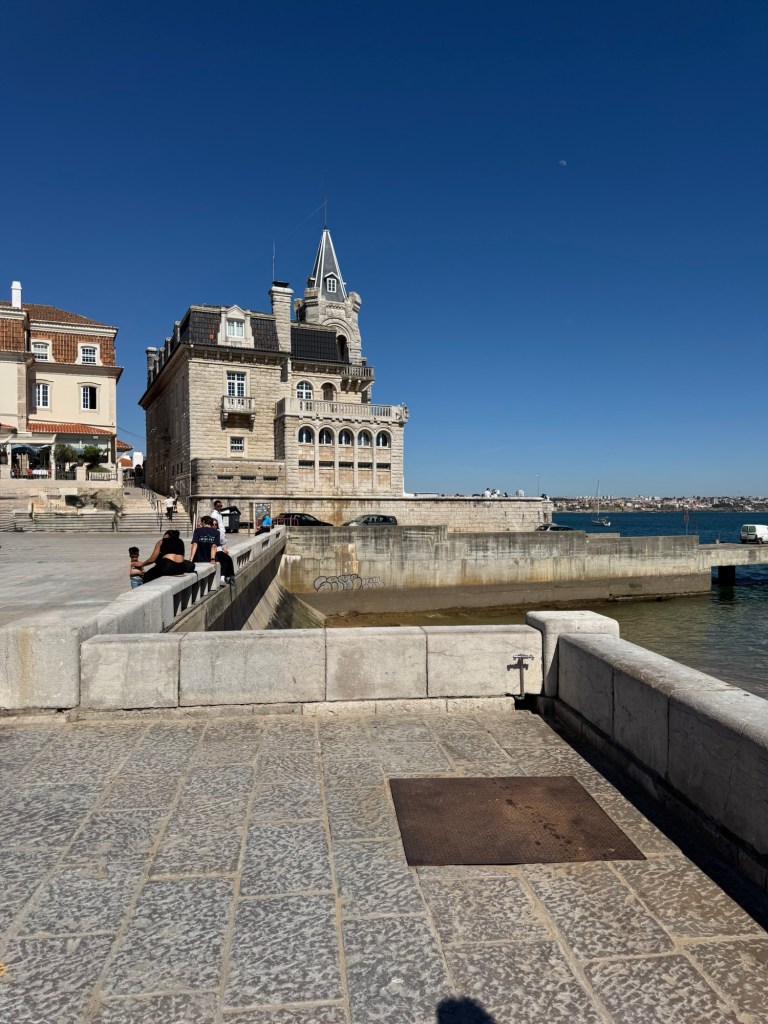
Are you tired of hearing about charming small towns? Each one is genuinely distinct, and today’s journey to Sintra was no exception — from wandering the palace with its delightful bird motif to losing ourselves in the town’s winding streets

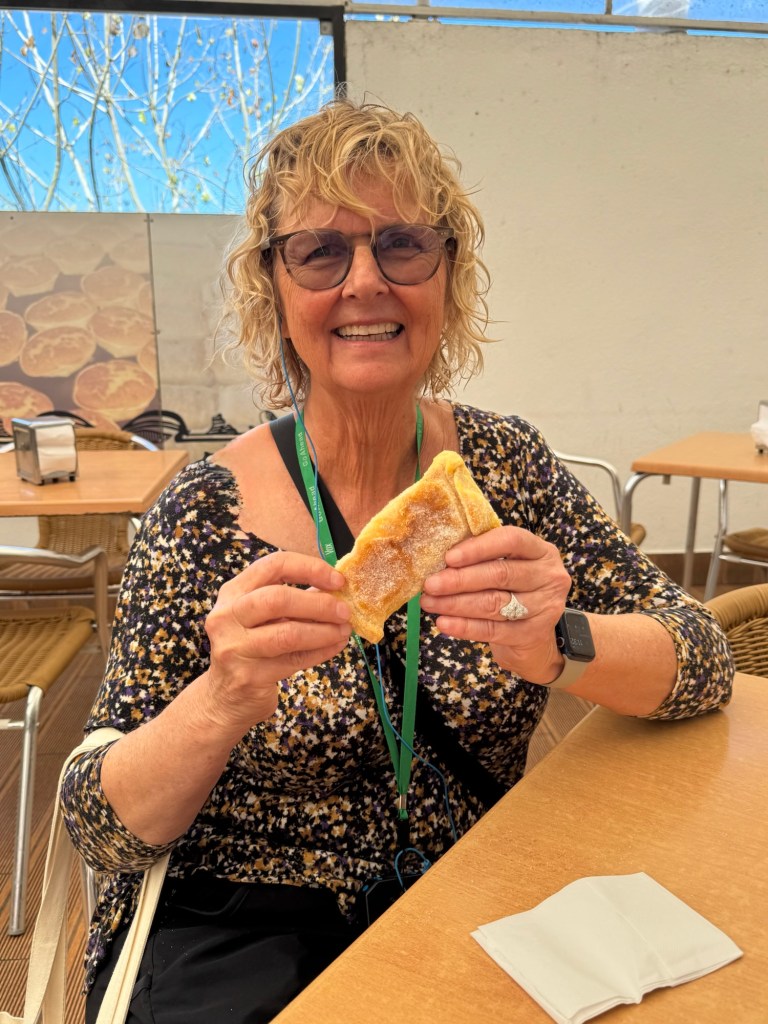
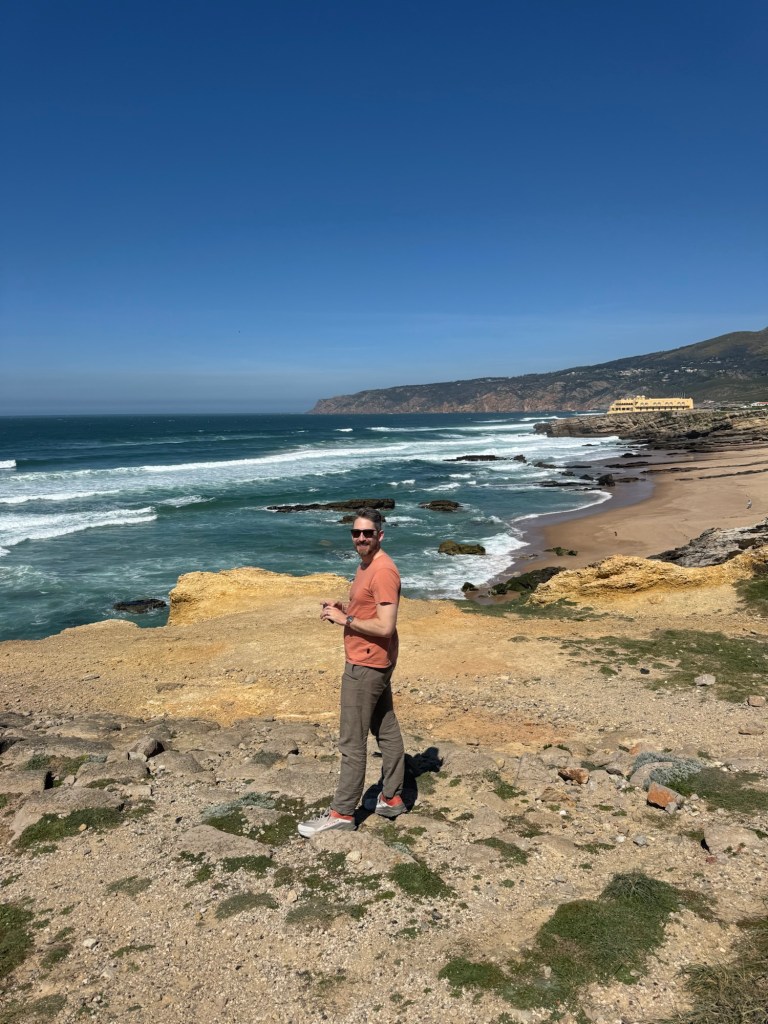
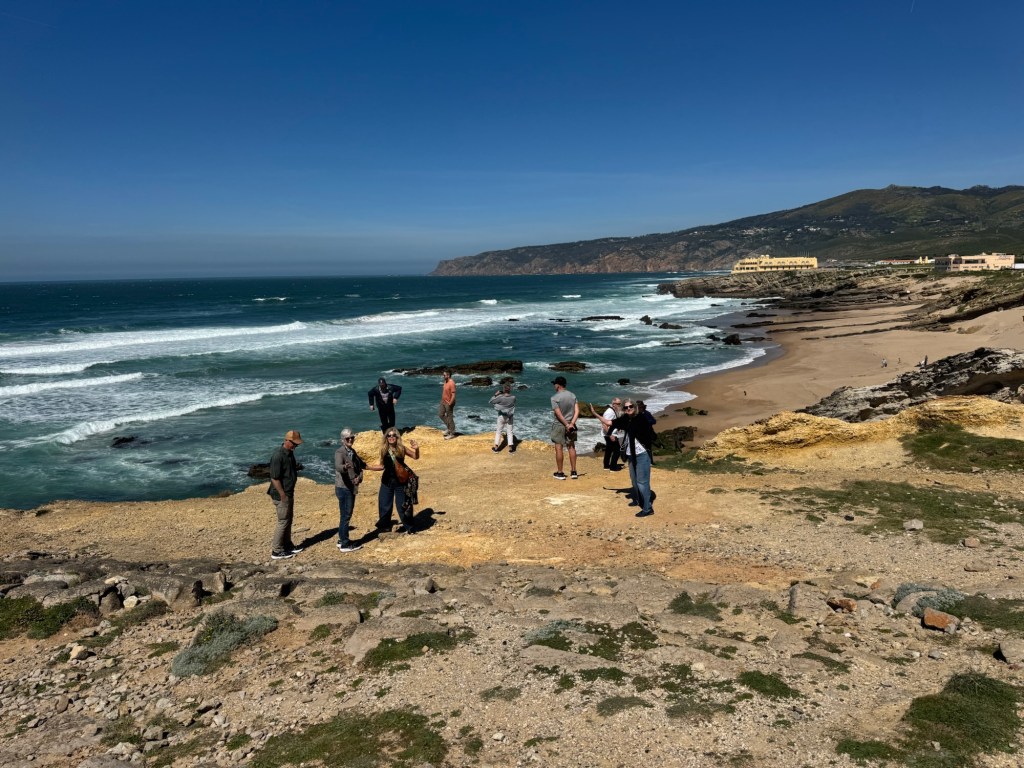
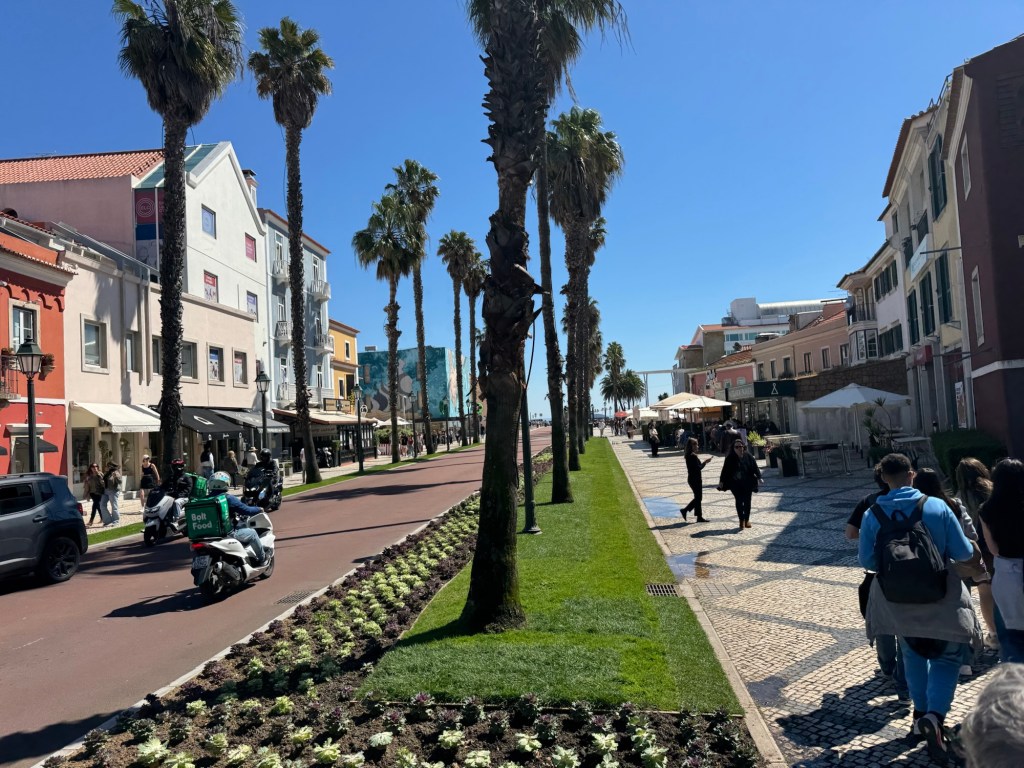
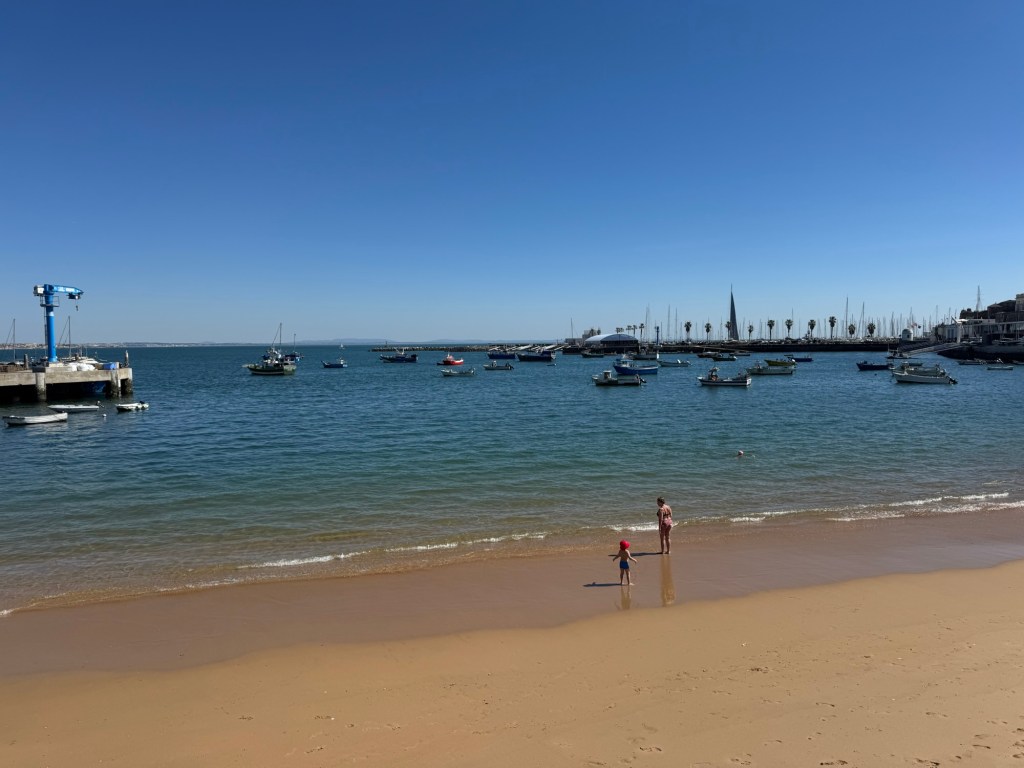
For our farewell dinner we had a cooking class. We made cod in cream, prawns, and a custard tart. We may have each eaten the equivalent of a stick of butter.
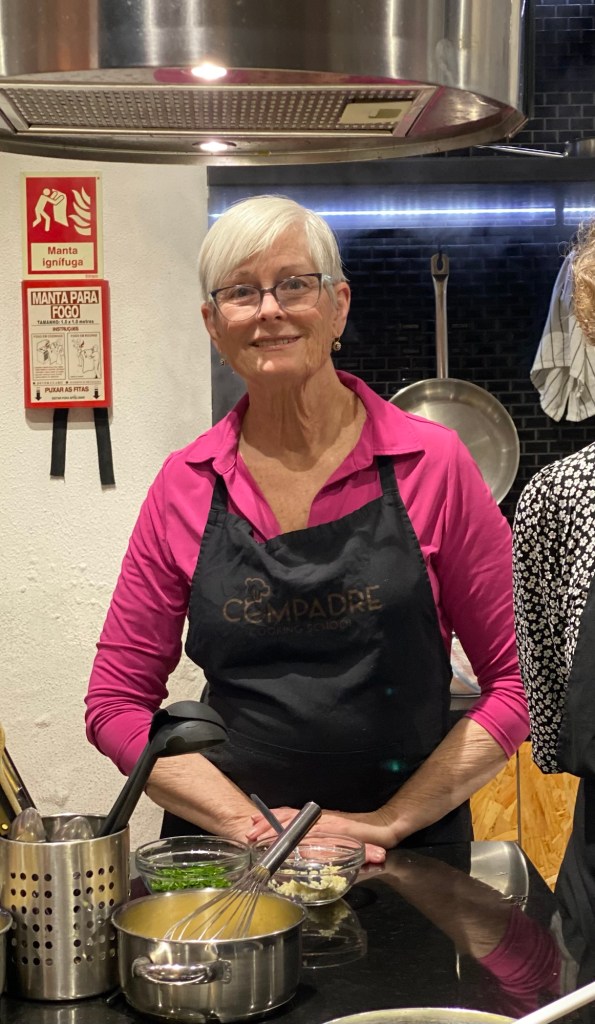


Shonda wrote and sang a song about the trip to the tune of the Way We Were (our EF tour) We did hilarious impersonations of our well-loved tour director. I have so enjoyed this group. I hope we can travel together again.
Morocco to Spain and Portugal Day 13: Batalha, Nazaré, Òbidos, and Lisbon
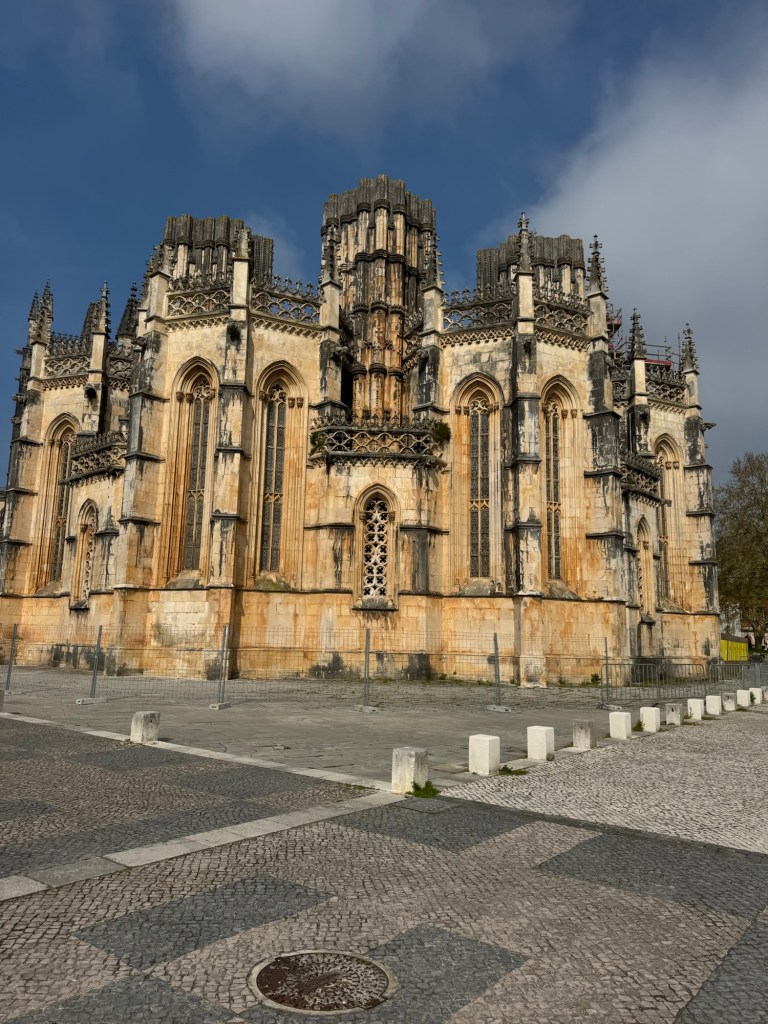
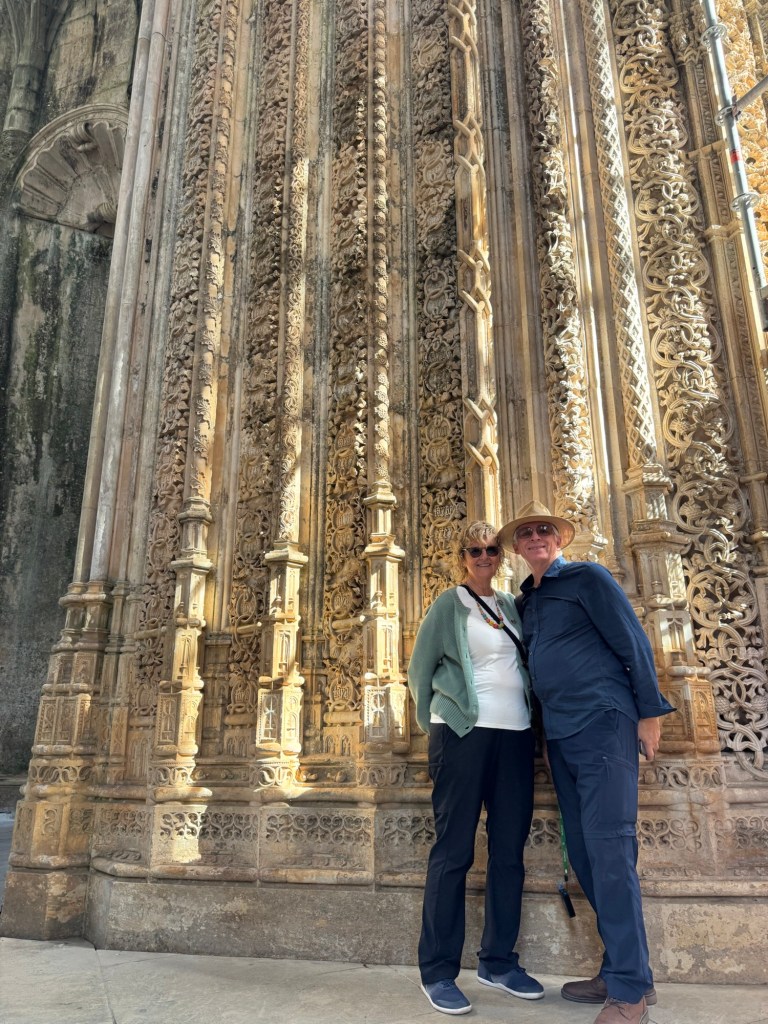
Today we began in Batalha, at the UNESCO World Heritage Site of the Monastery of Santa Maria da Vitória. It was built to give thanks for the decisive victory at the Battle of Aljubarrota in 1385.
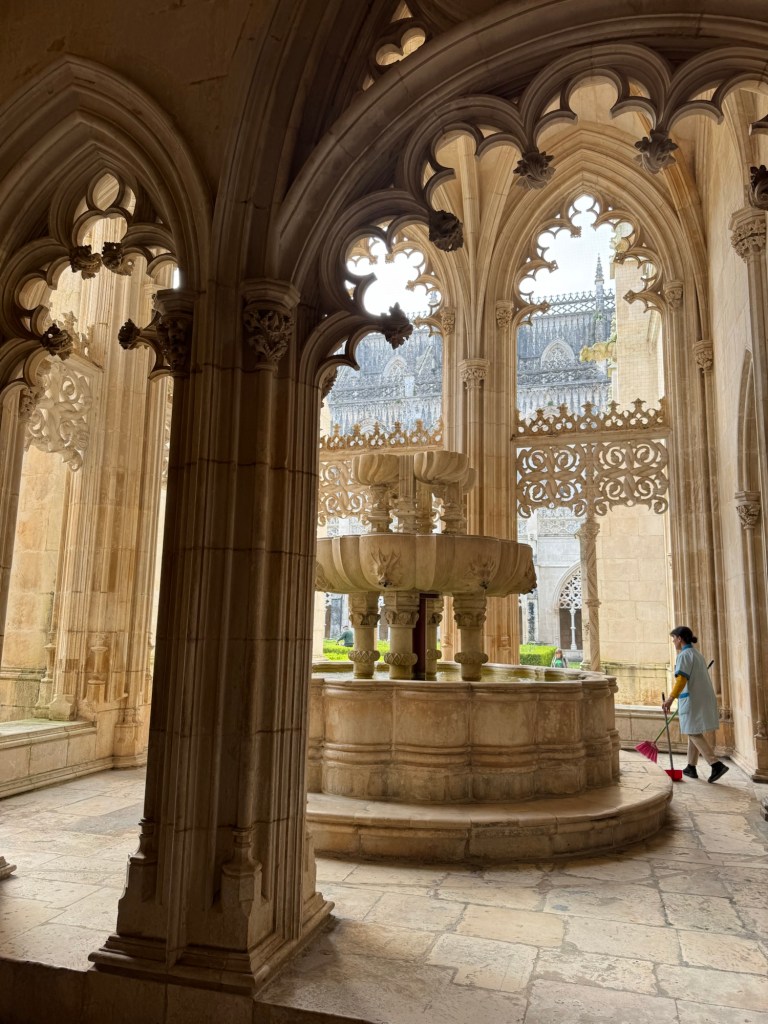
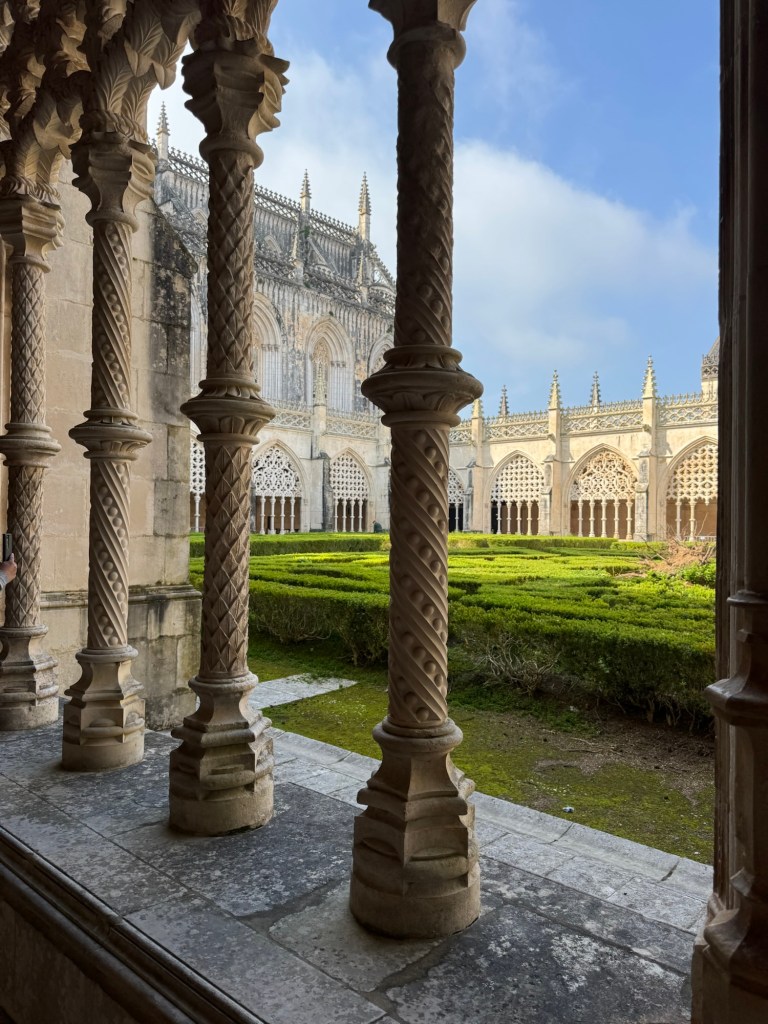
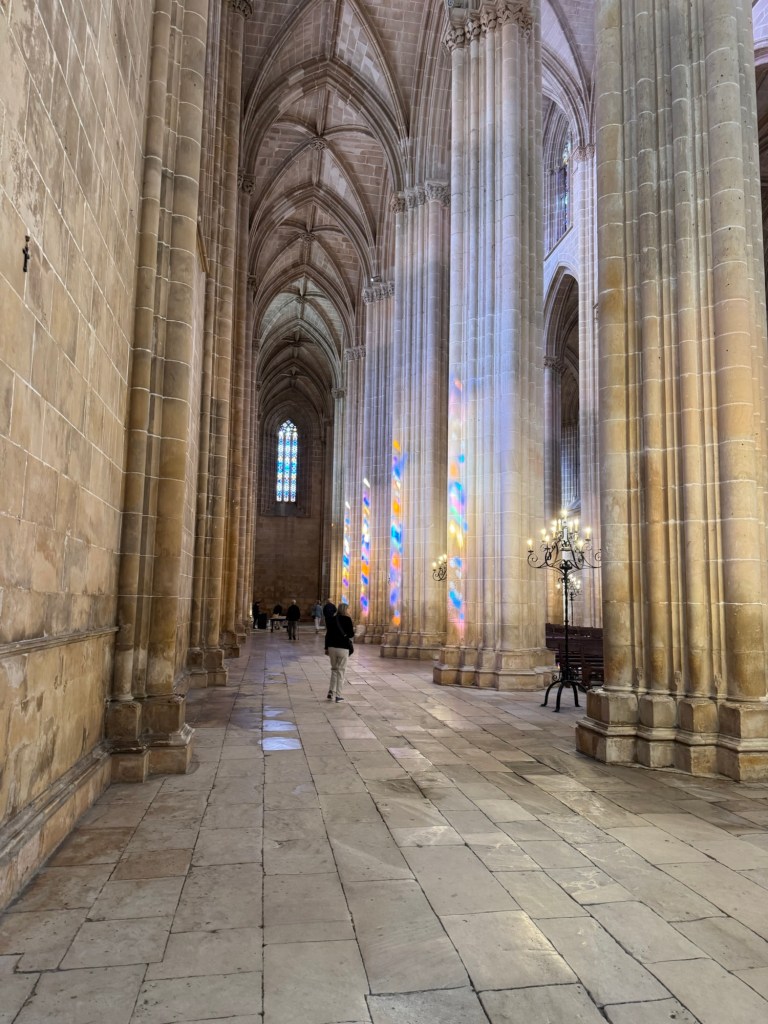
The nave’s stained-glass windows cast stunning rainbow patterns across the stone.
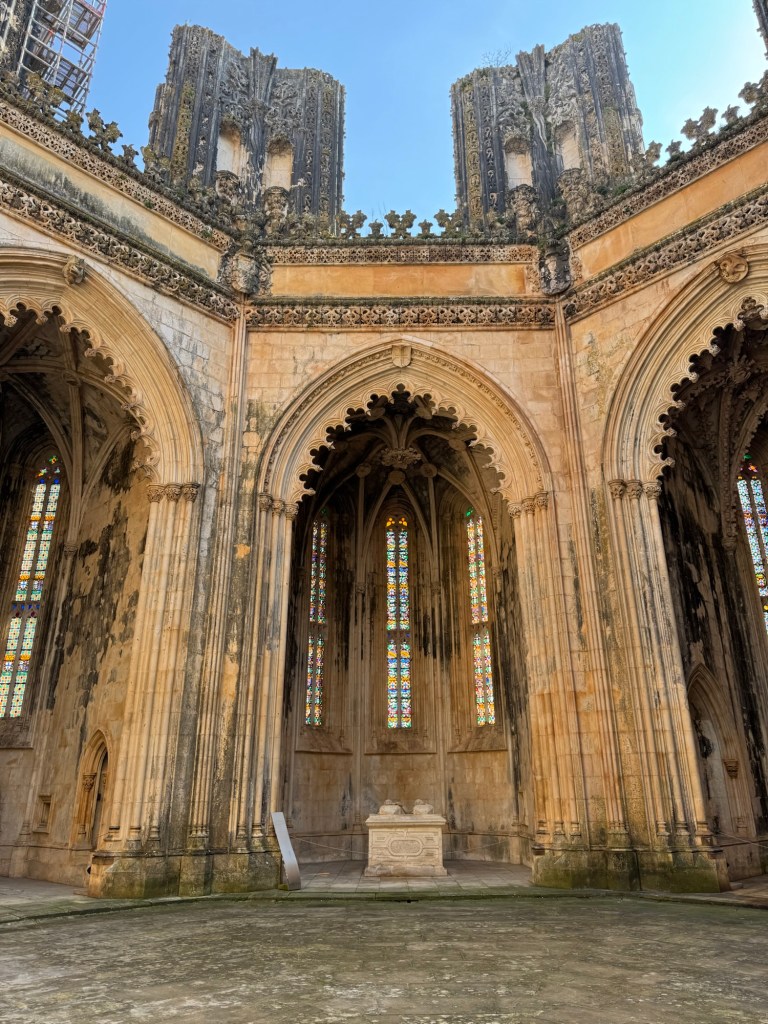
It took 200 years and the reigns of seven kings to bring the building to this point—yet the sanctuary remains unfinished, open to the sky without a roof. It’s an unfinished masterpiece.
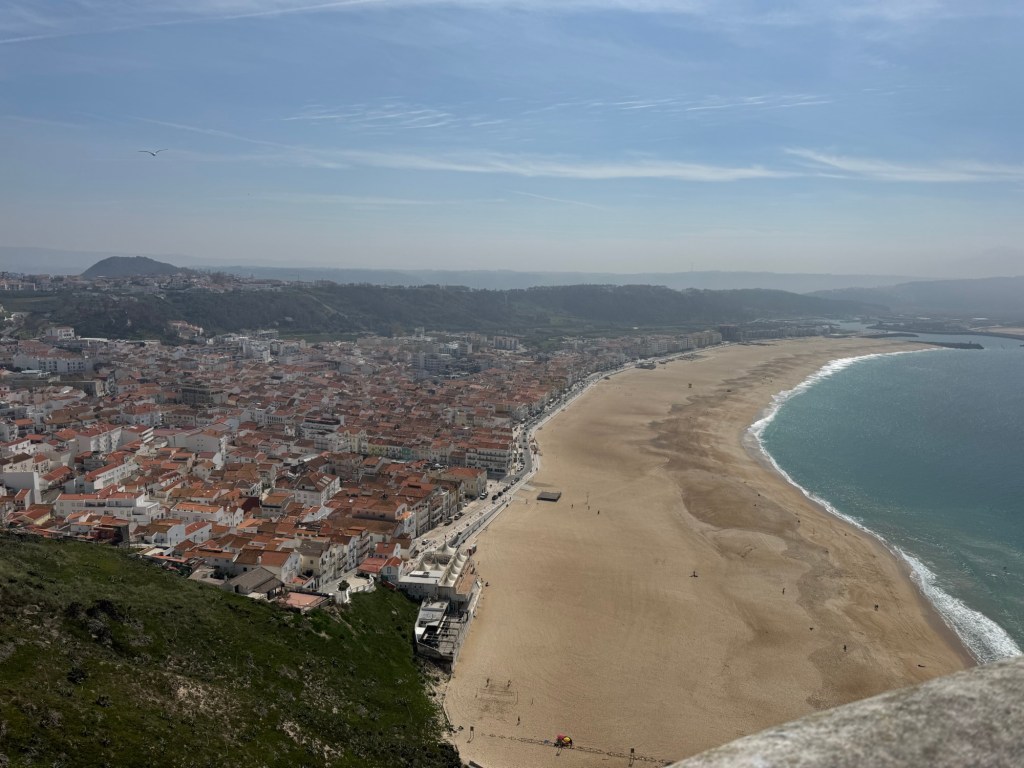
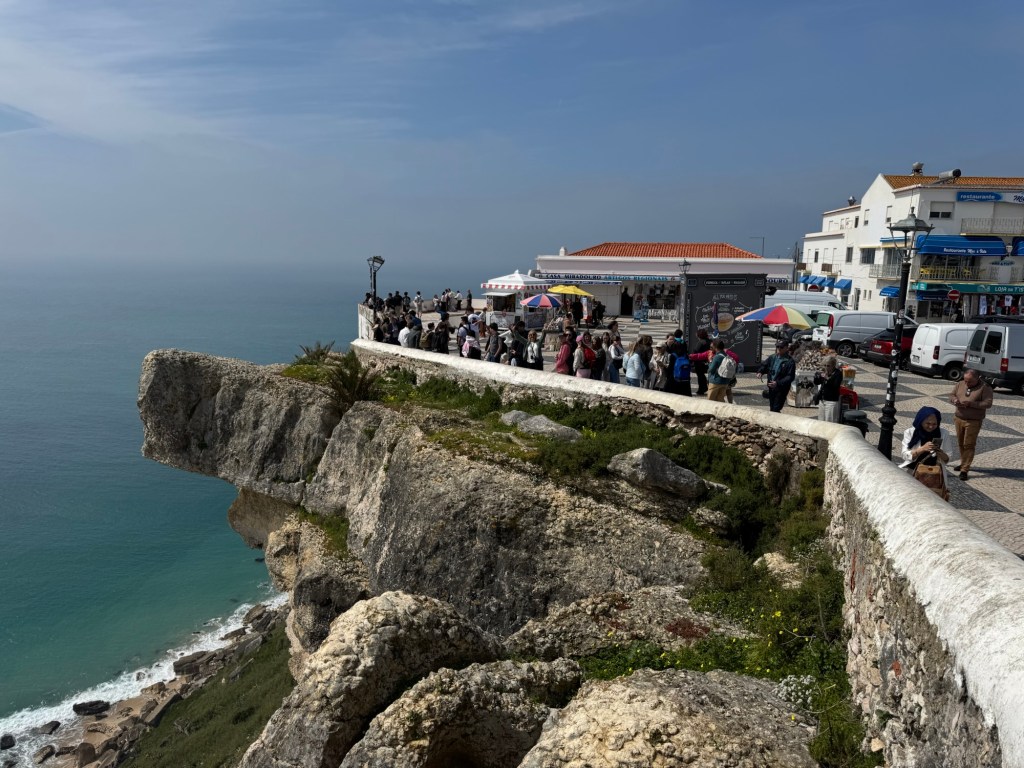
We had lunch in Nazaré, a small coastal town famous for its massive waves—some of the largest ever surfed, reaching heights of over 100 feet.
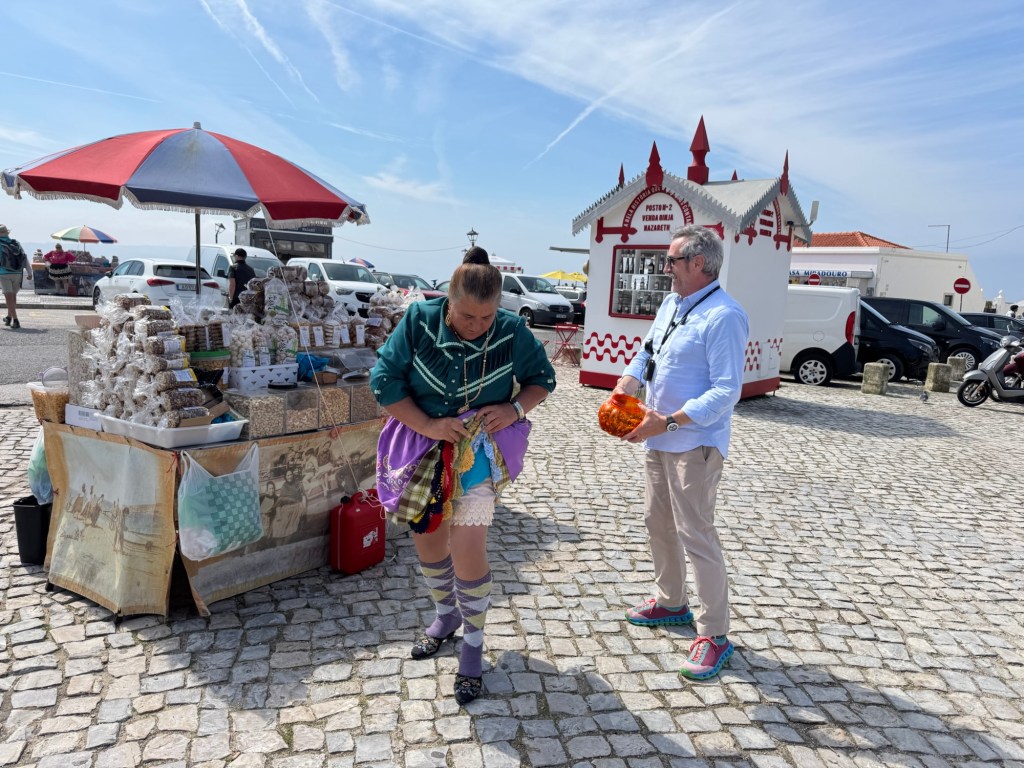
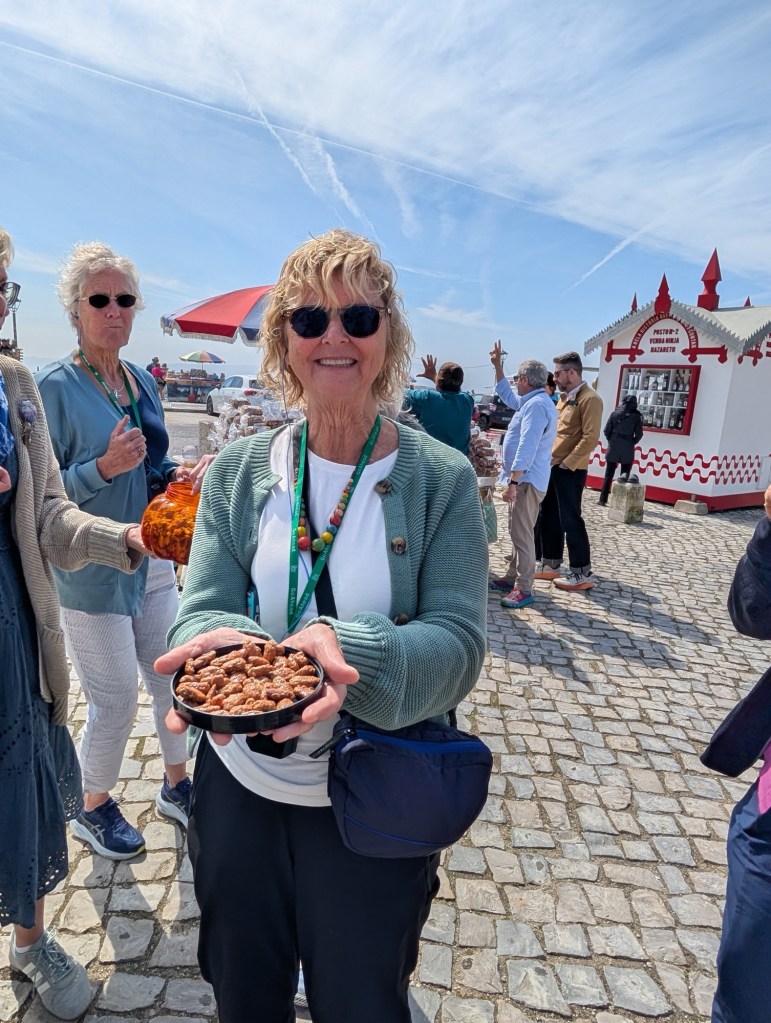
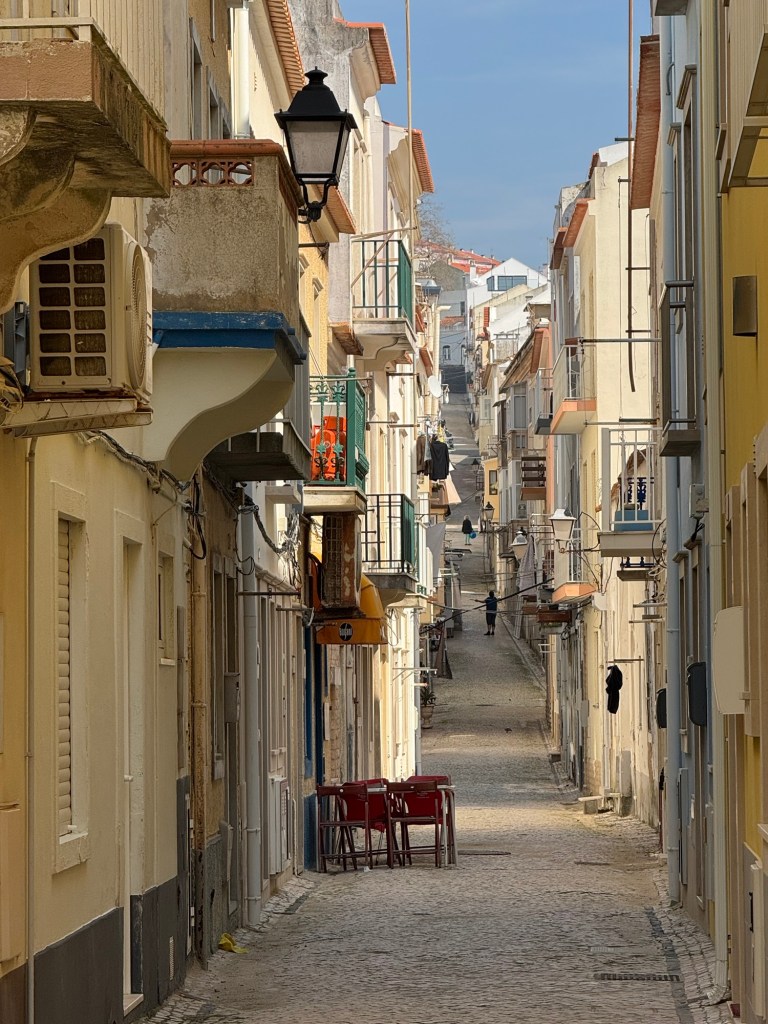
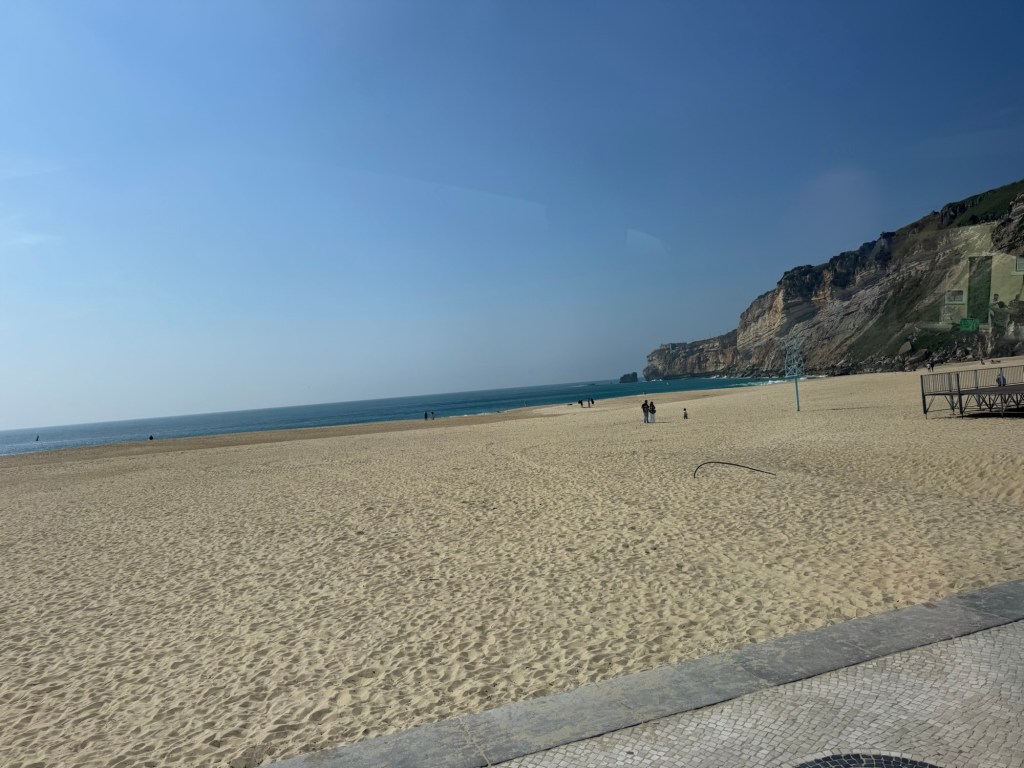
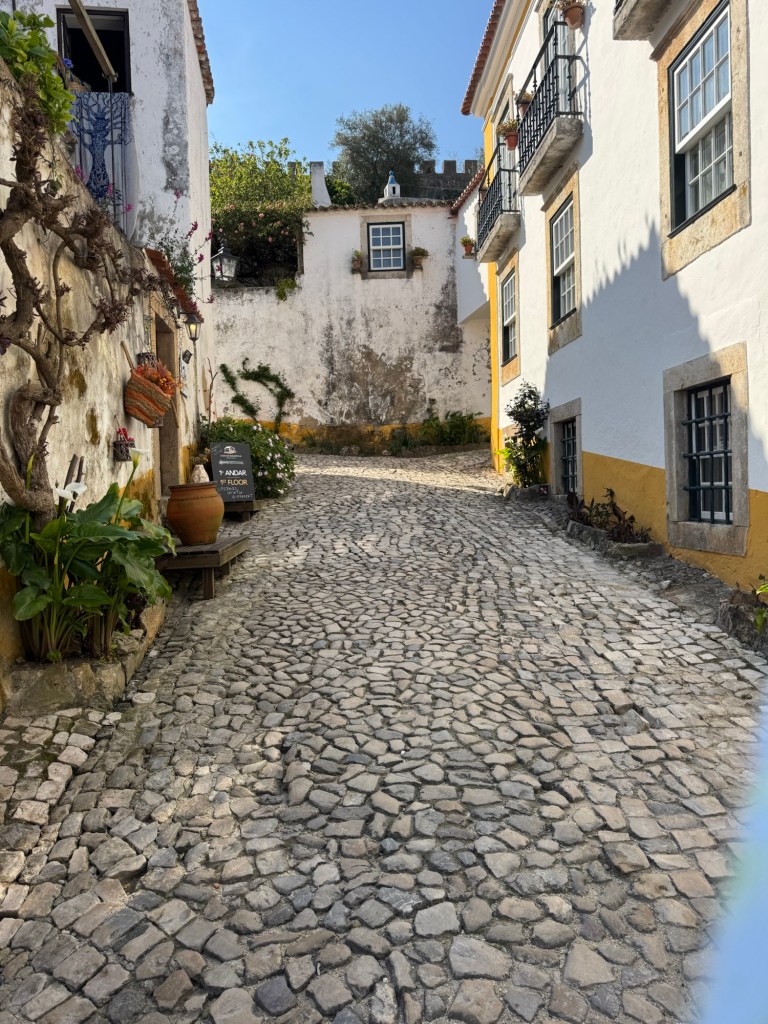
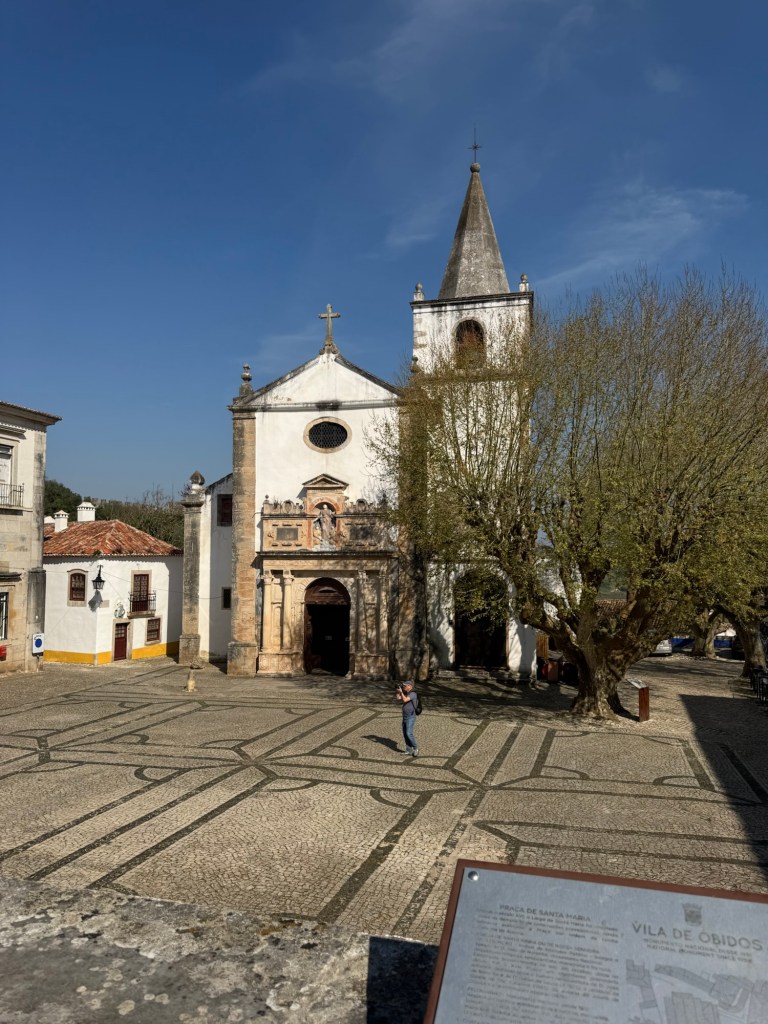
In the afternoon we went to yet another darling small town Óbidos. If you’re getting tired of reading about town after town, just scan the pictures. 😂
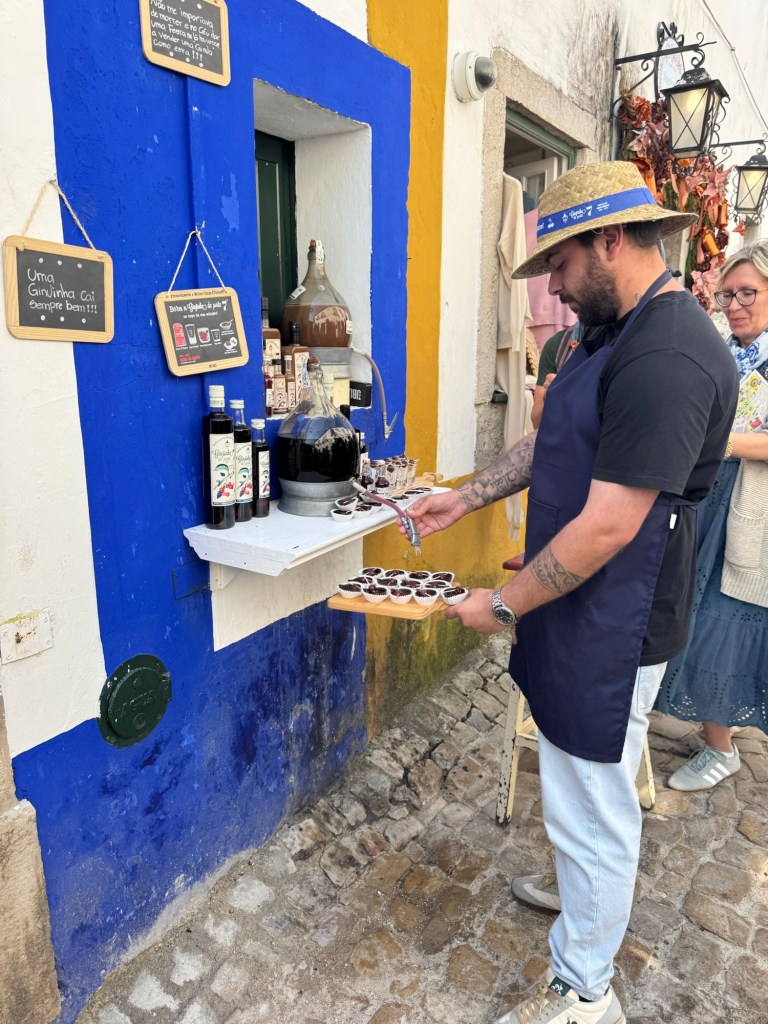
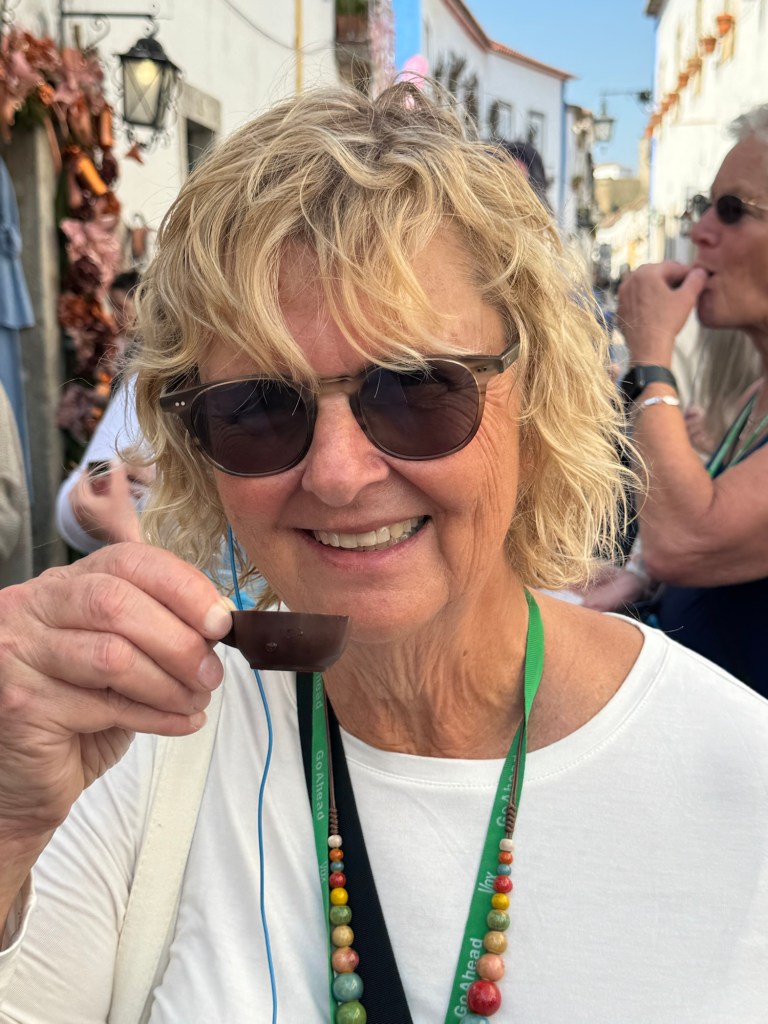
In Òbidos they have a cherry liqueur that you drink out of a chocolate cup.
Traveling is hard work, but I’m so happy to be sharing all these fun times with new friends and old friends.
Morocco to Spain and Portugal Day 12: Évora to Lisbon
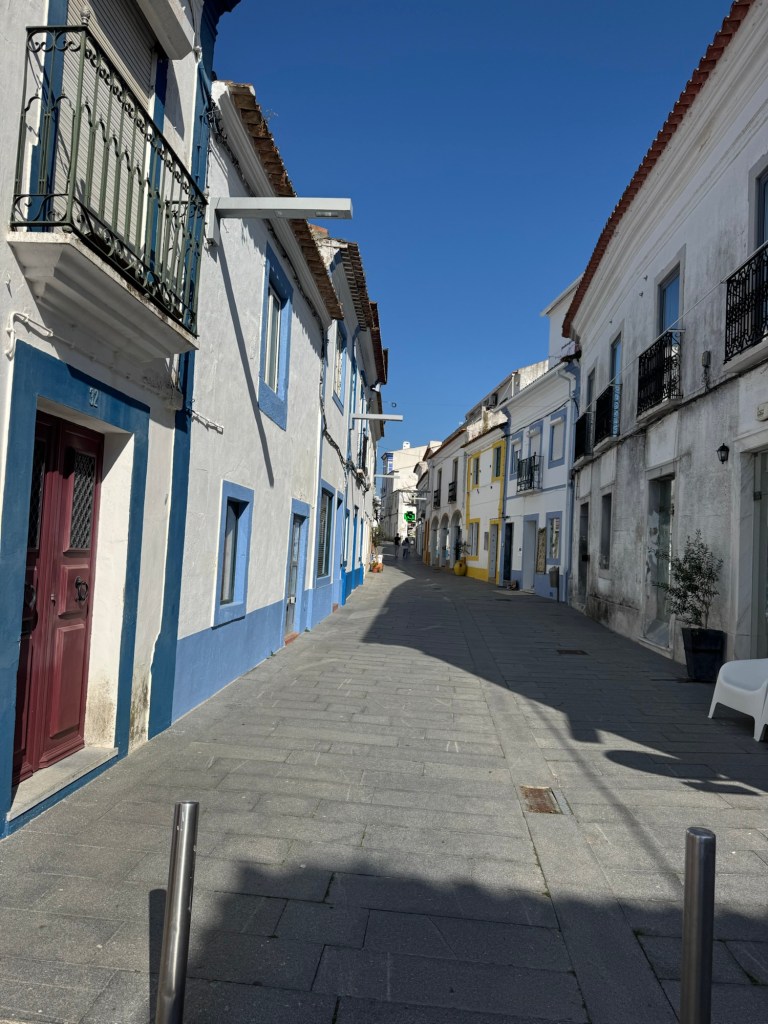
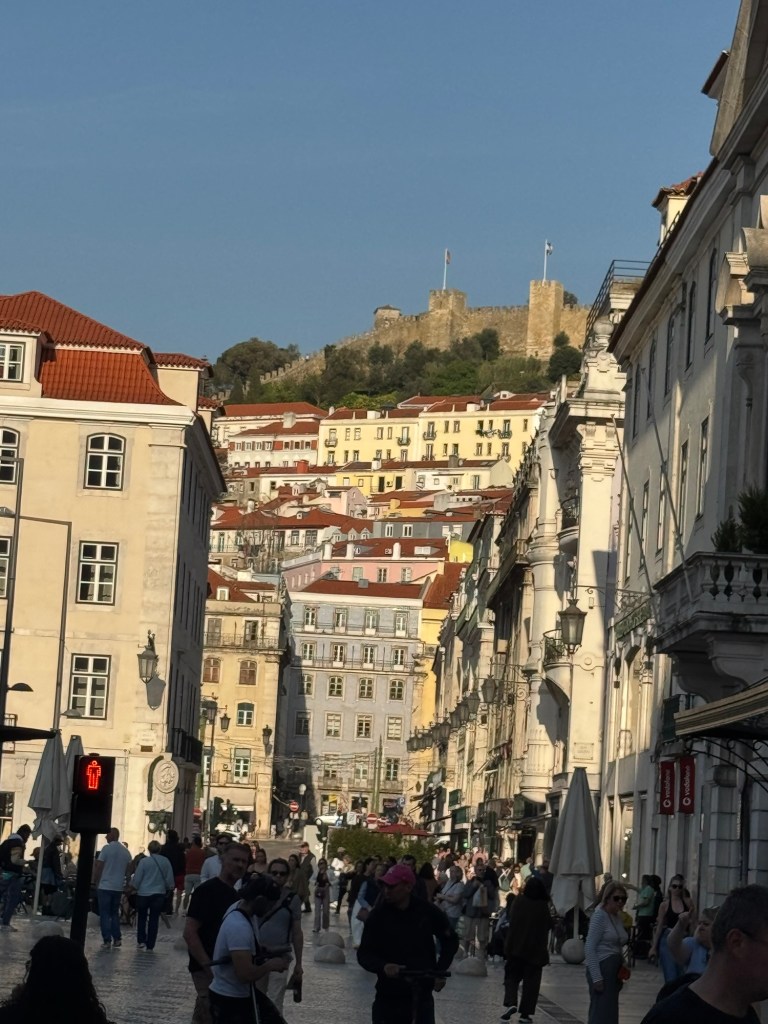
The more people travel, the more peace and understanding we can foster in the world—but there has to be a balance. Some cities have become so over-touristed that daily life is no longer typical for the people who live there. In some towns it can feel easier to buy a souvenir than an onion. In Lisbon prices have risen so much that many locals can no longer afford to live in the city and are forced into long commutes.
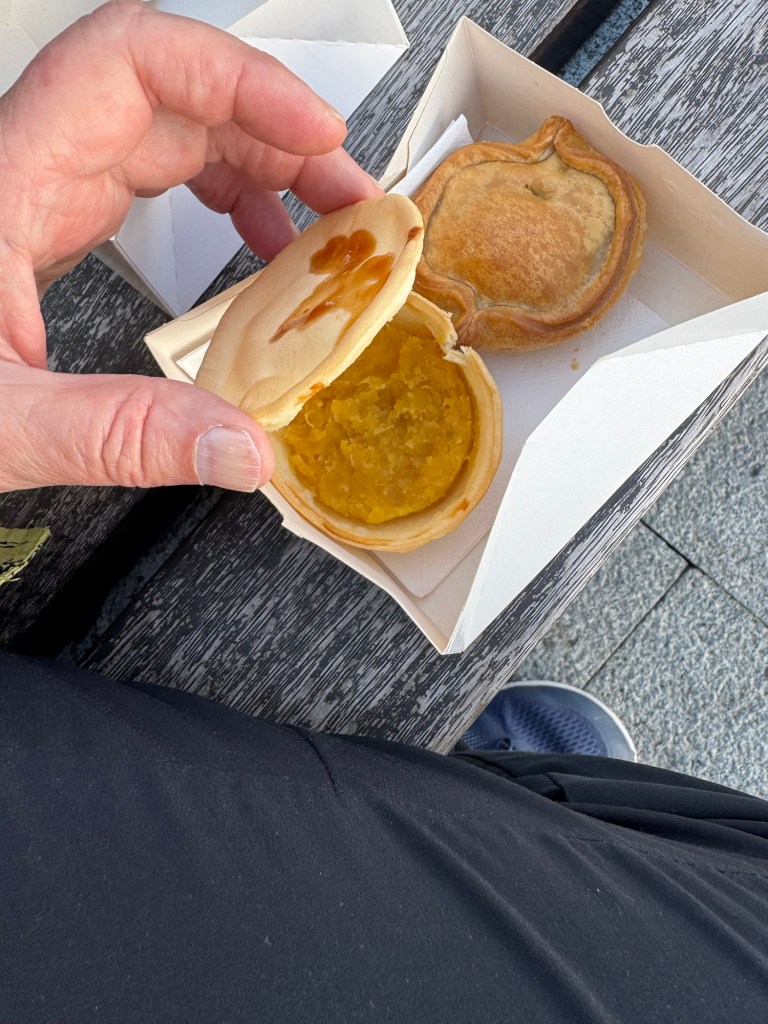
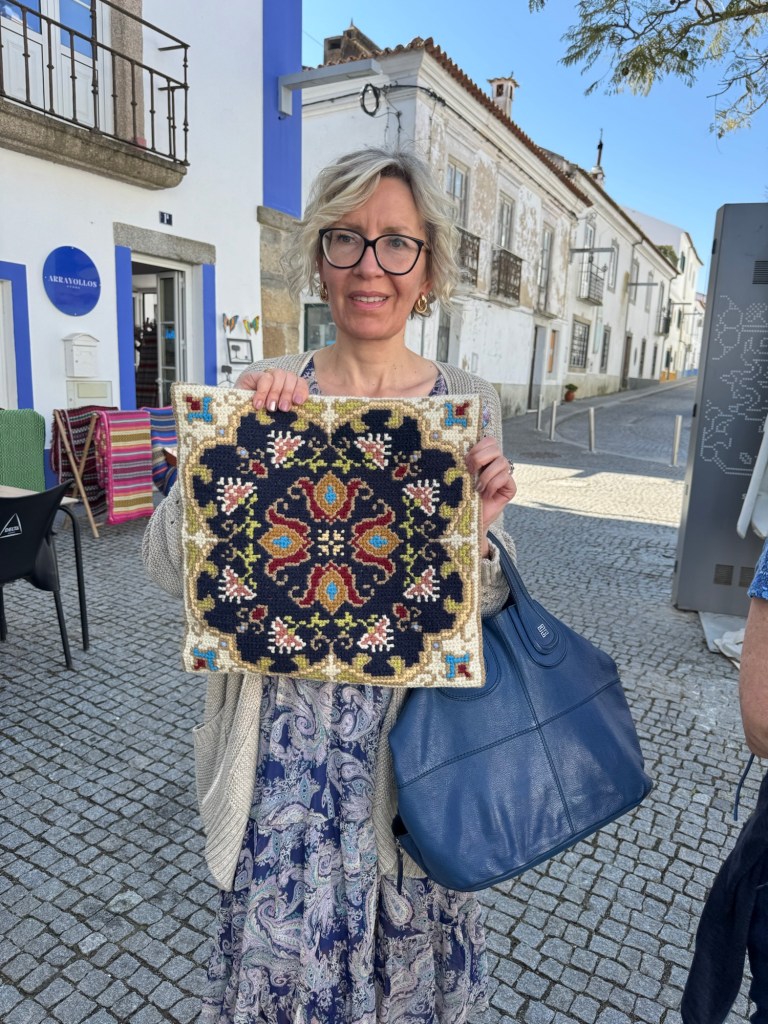
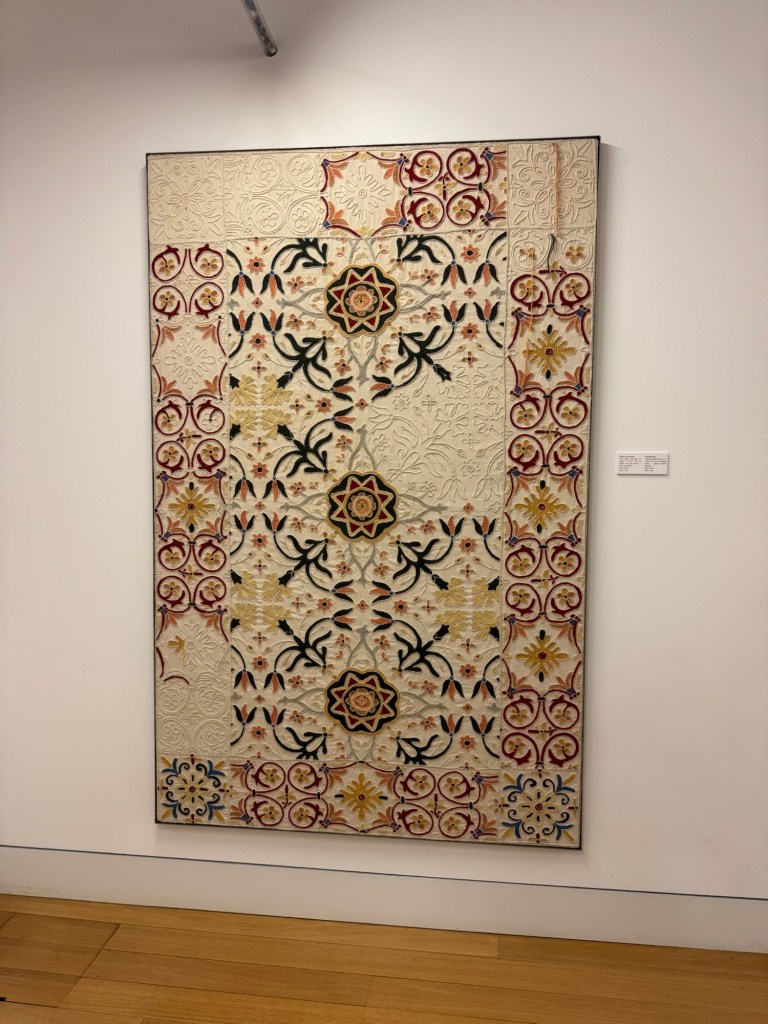
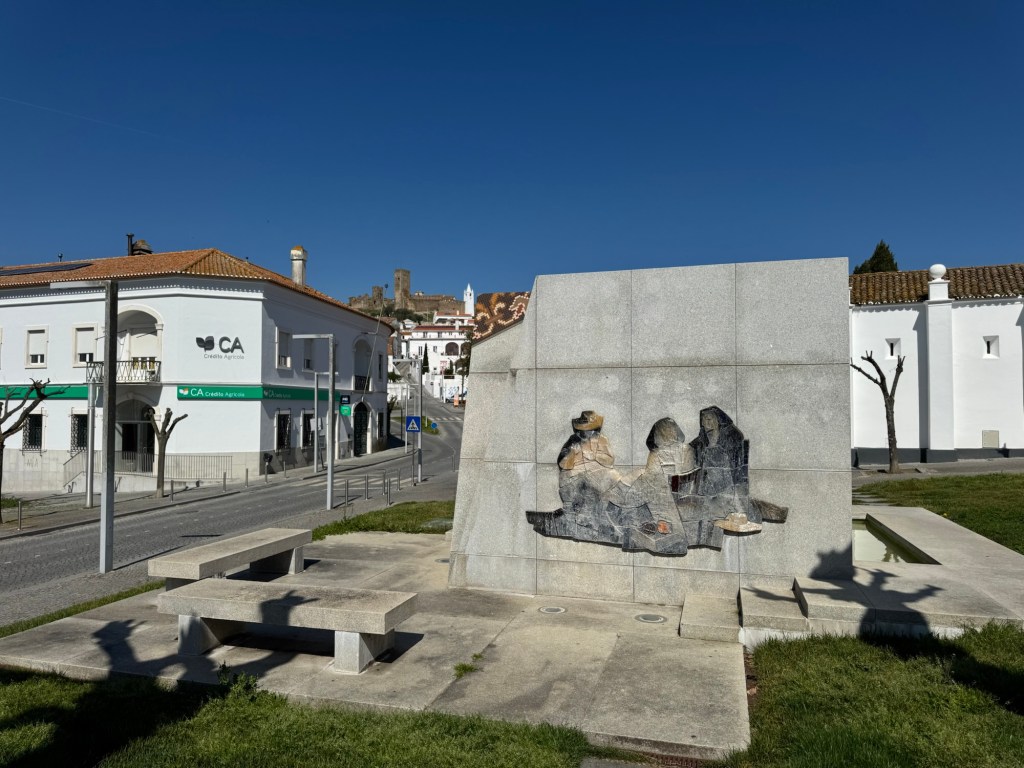
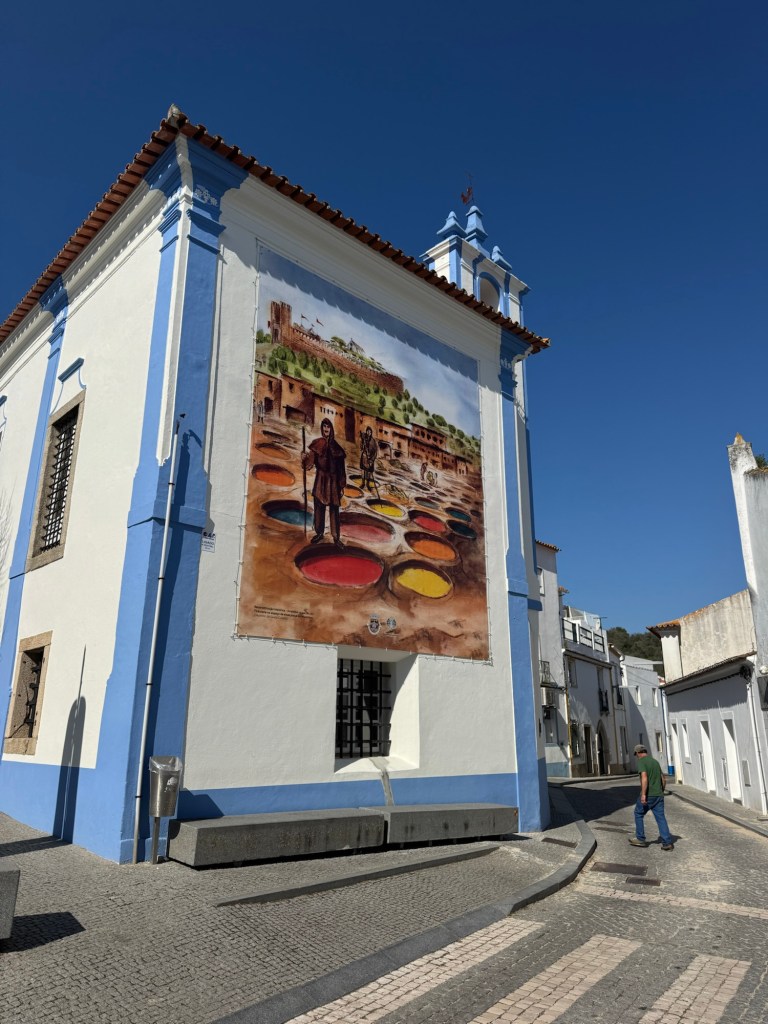
That’s why I was especially happy that our first stop today was in Arraiolos—a darling small town that few people know about…yet. It’s known for its beautiful, traditional embroidered rugs, a craft that has been passed down for generations. The empanadas I bought there were the best I’ve ever had, and I found a beautiful, one-of-a-kind necklace from a local artist.
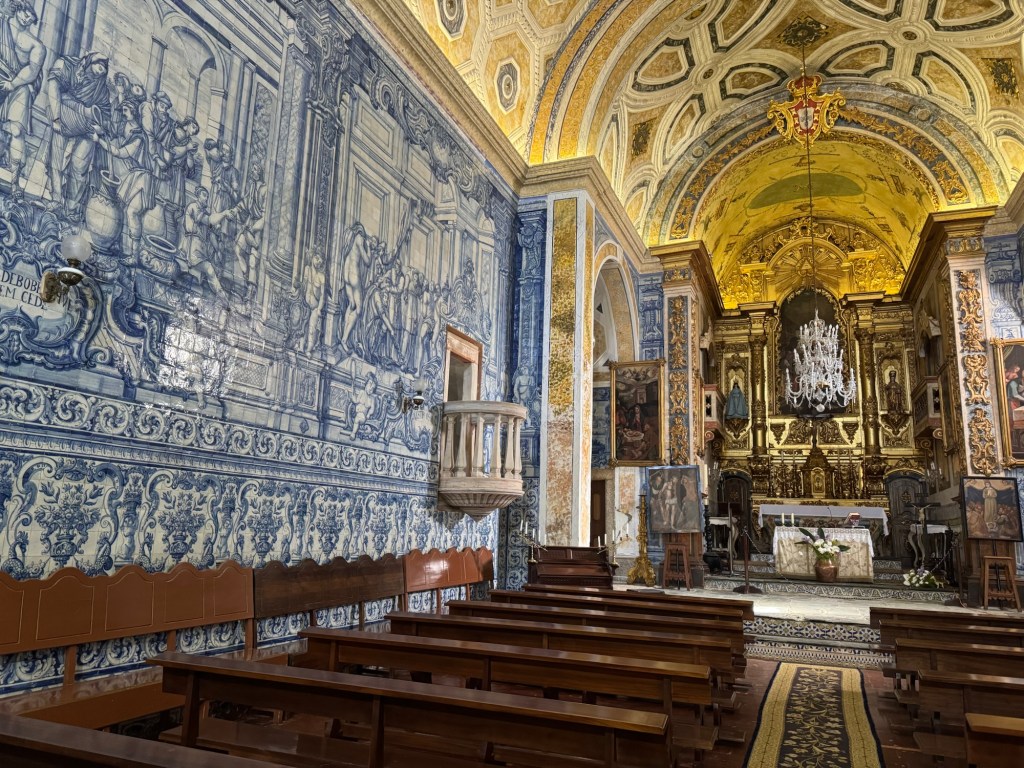
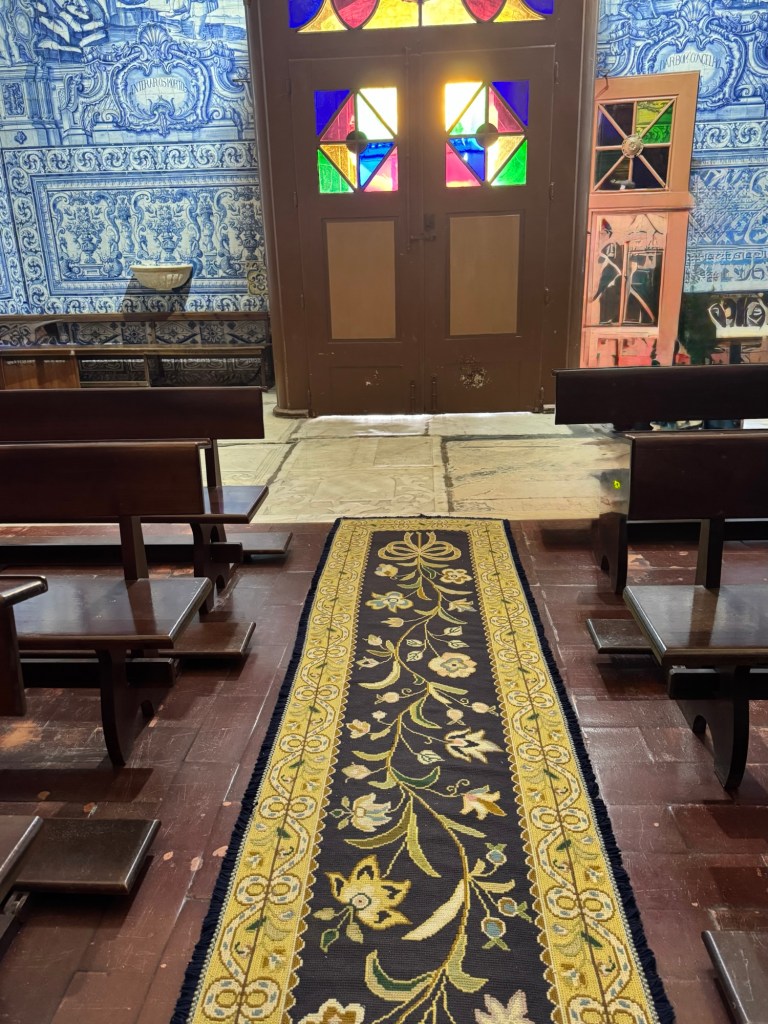
At the church Igreja do Salvador, the beautiful blue-and-white tile walls quietly tell a story—one of feeding the hungry, helping the homeless, and caring for the most vulnerable. It’s a message that feels especially meaningful for the American church right now. The central aisle had a beautifully embroidered rug, almost too lovely to walk on.
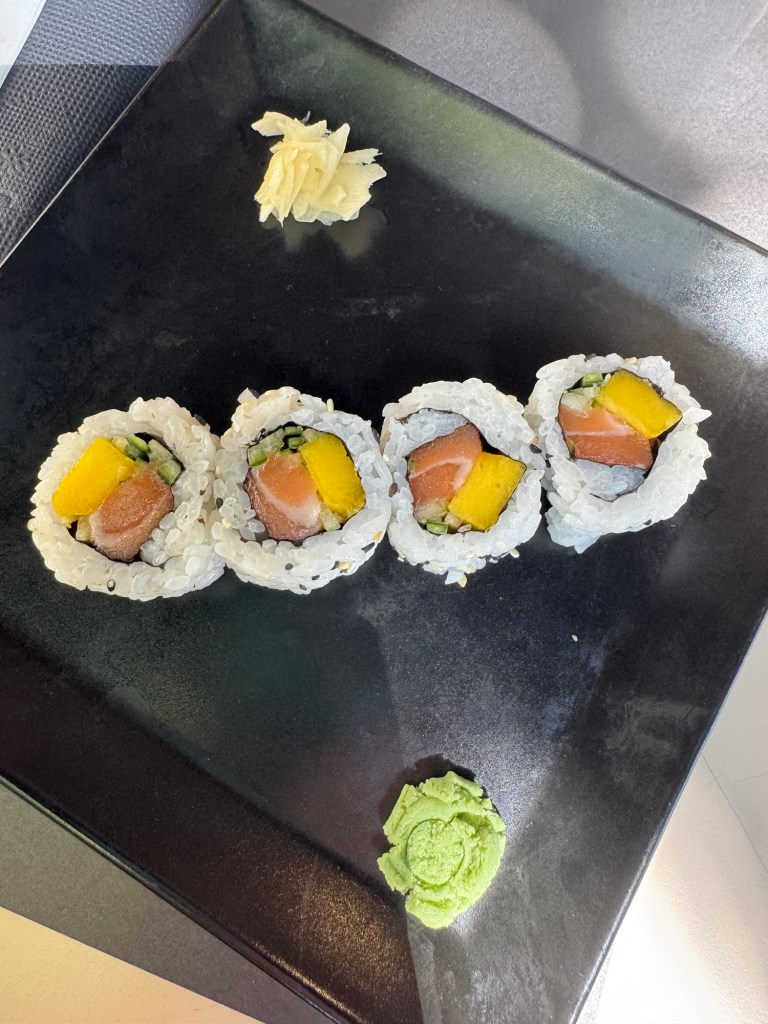
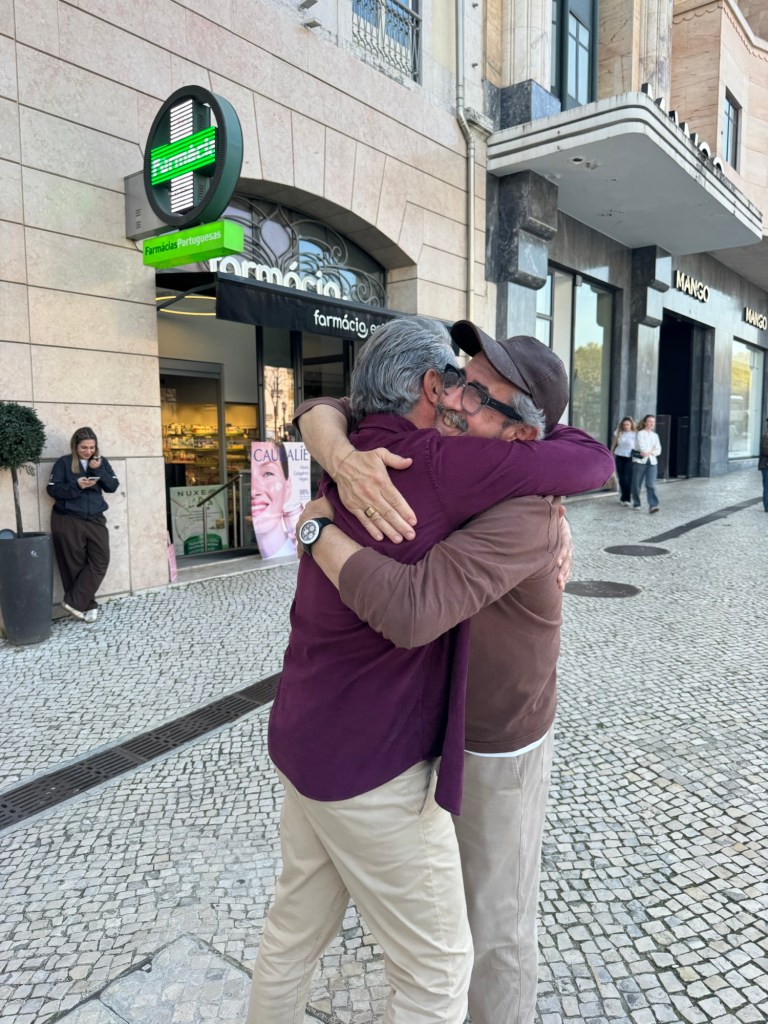
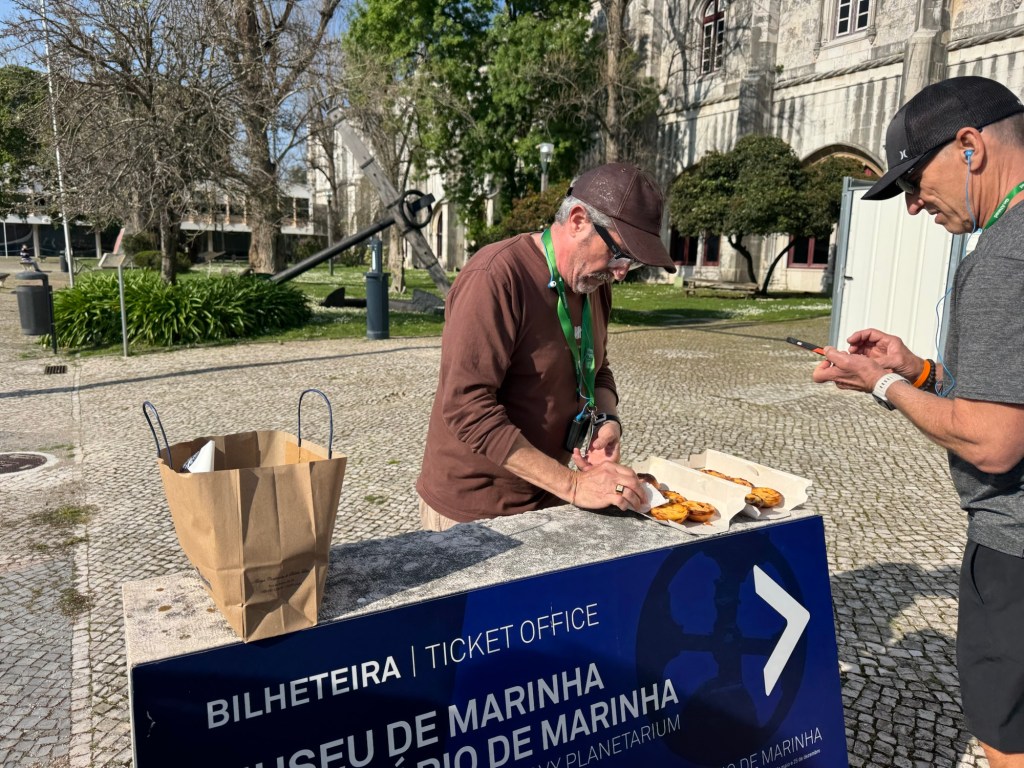
He also treats us to something almost every day. Today it was the best thing I’ve eaten in a long time—a warm custard tart in flaky puff pastry. He stood in line for half an hour to buy it at the monastery.
The story goes that in earlier times the nuns used egg whites to starch their clothes, leaving them with extra yolks. So they began making custard with the yolks. Today, they produce and sell about 23,000 tarts a day.
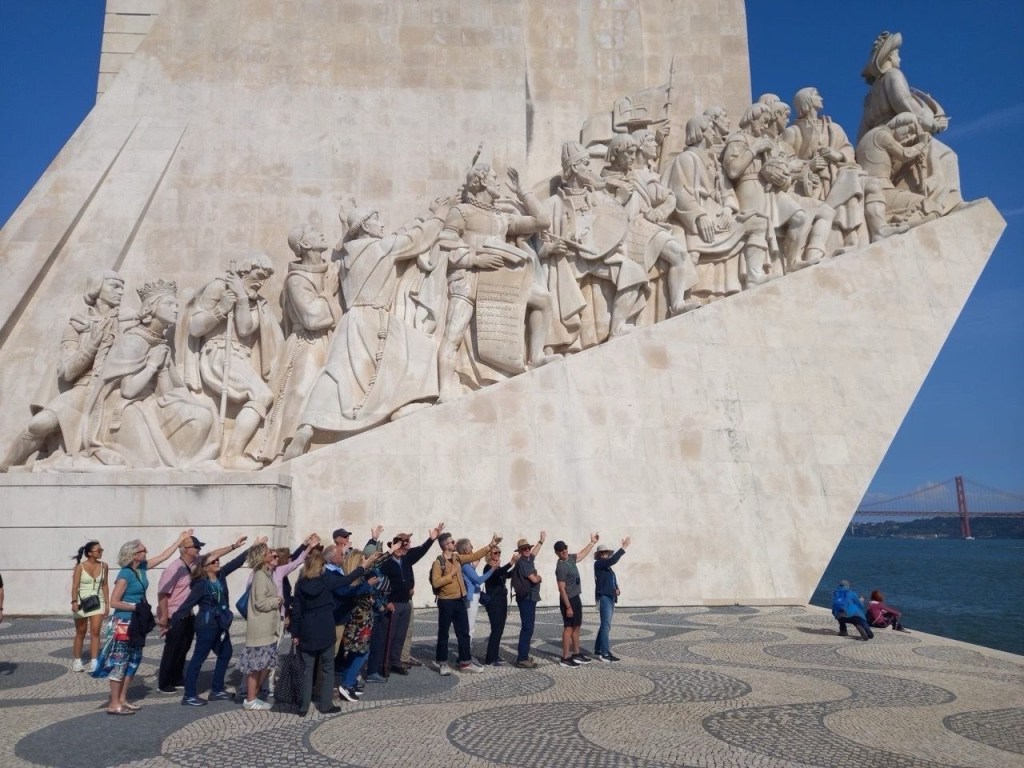
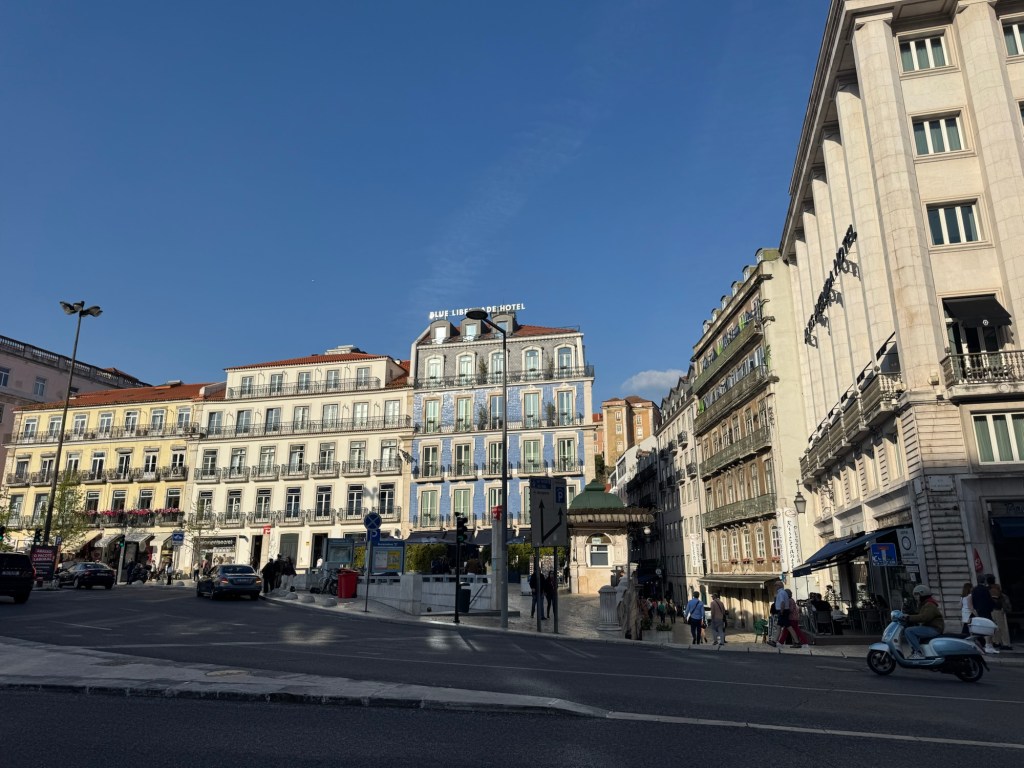
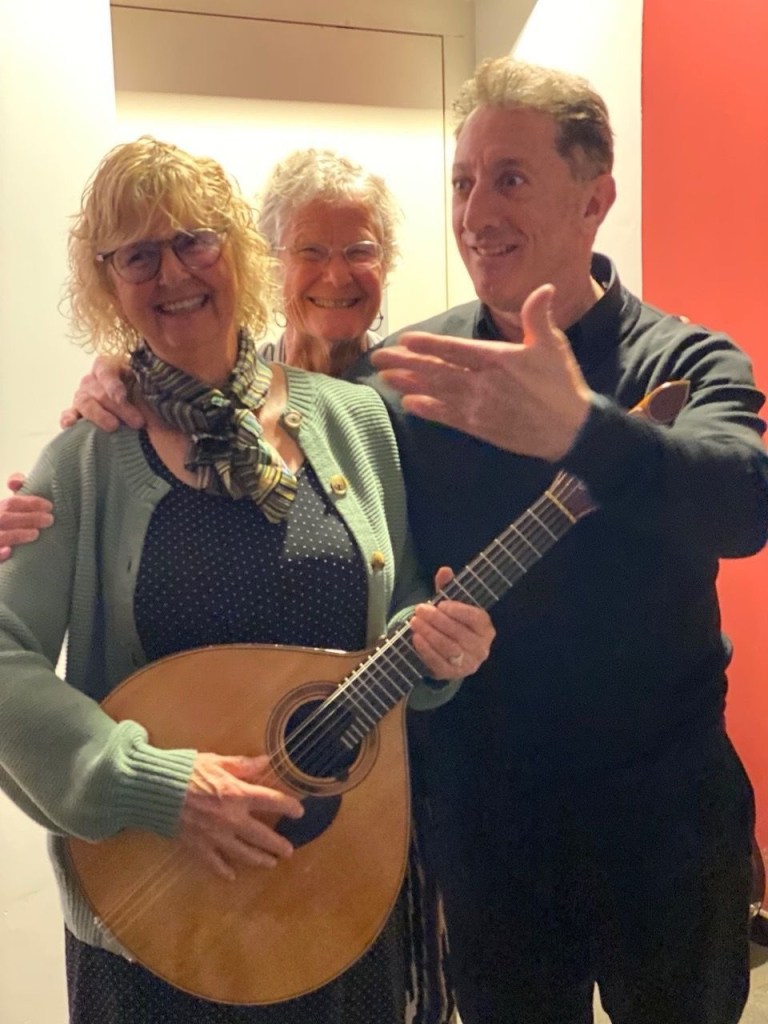
We had dinner at a traditional fado house, where we listened to three different singers perform. Afterward, we had the chance to speak with them—one of whom owned the restaurant and was even washing the dishes!
Morocco to Spain and Portugal Day 11: Èvora
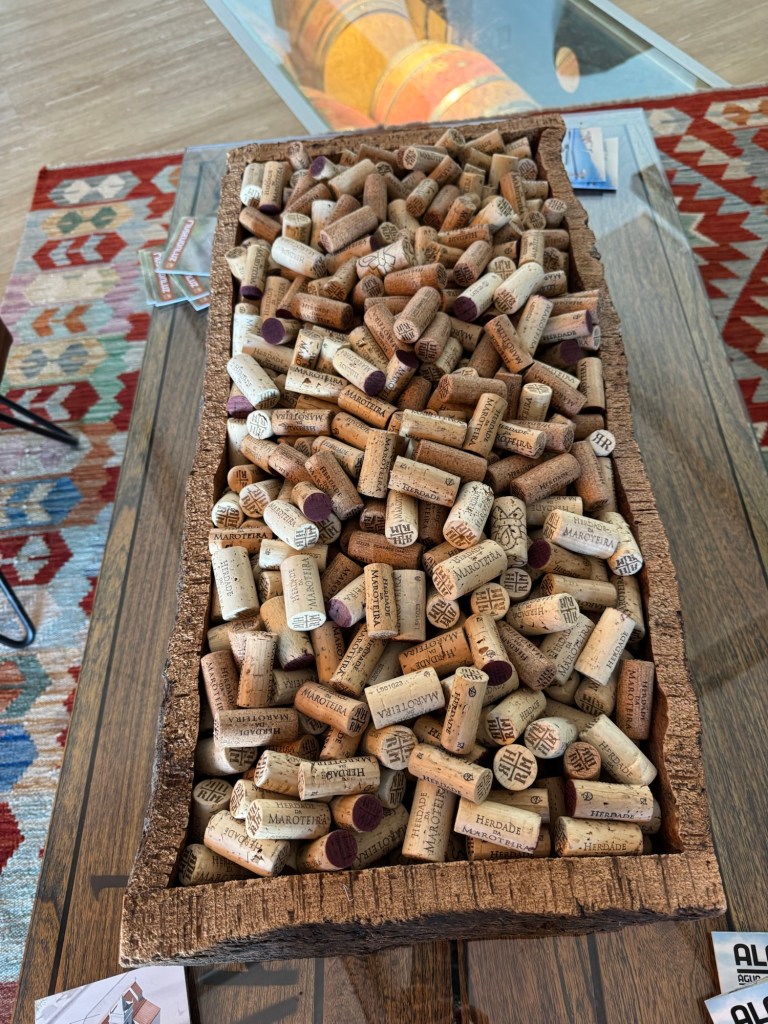
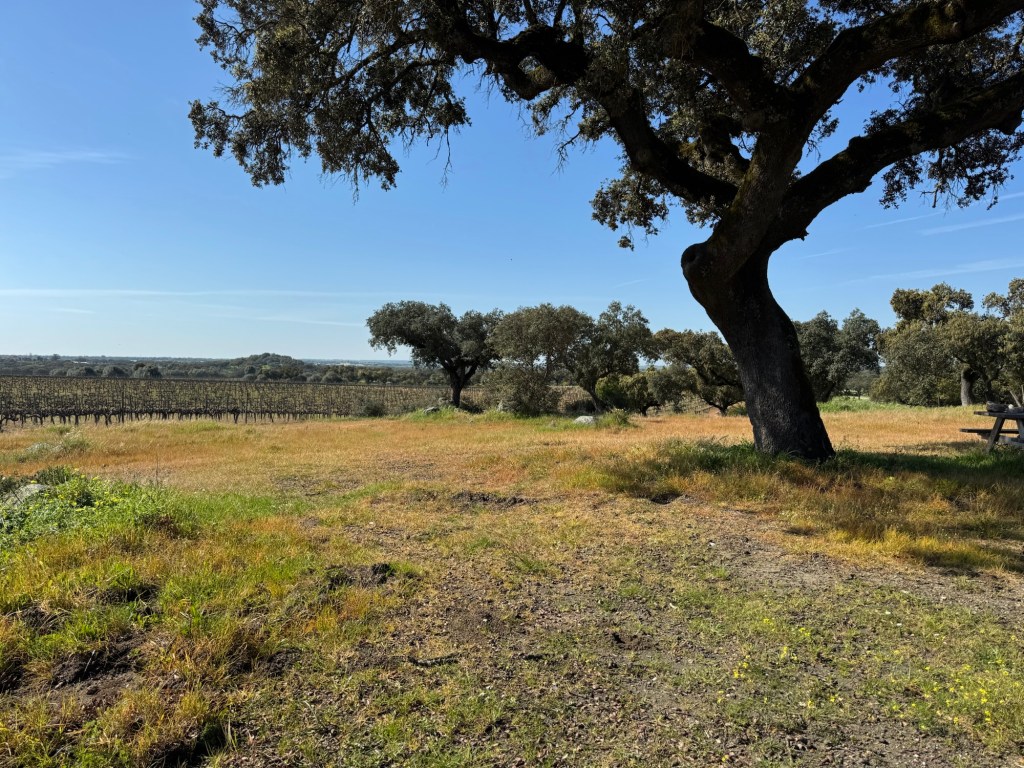
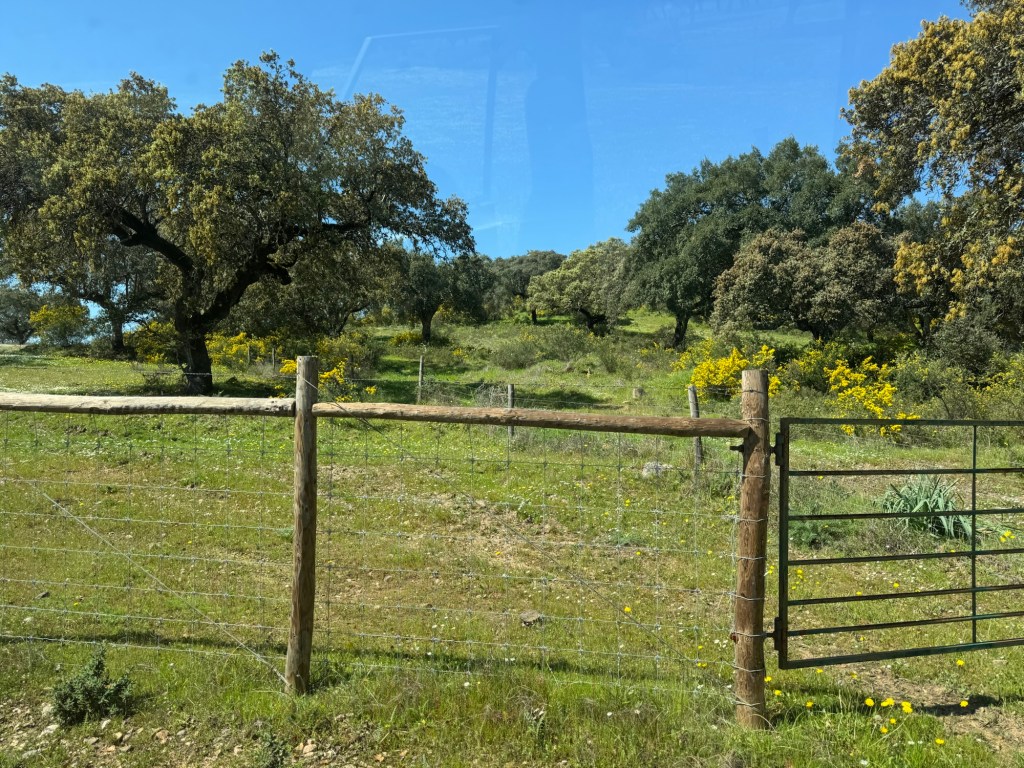
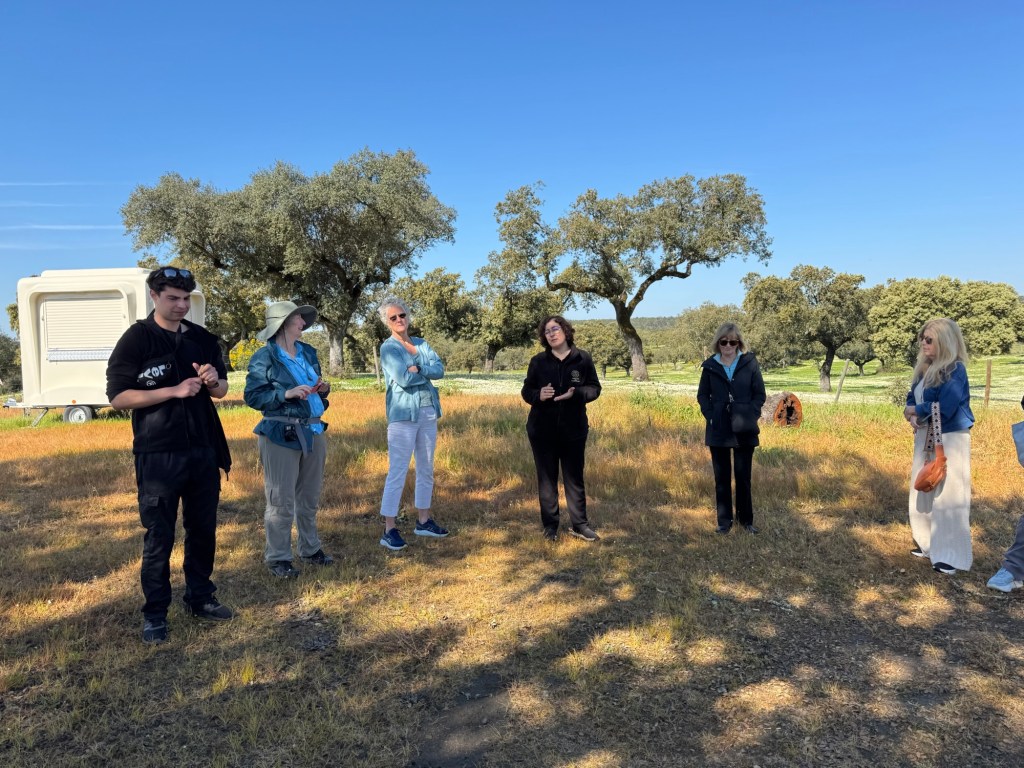
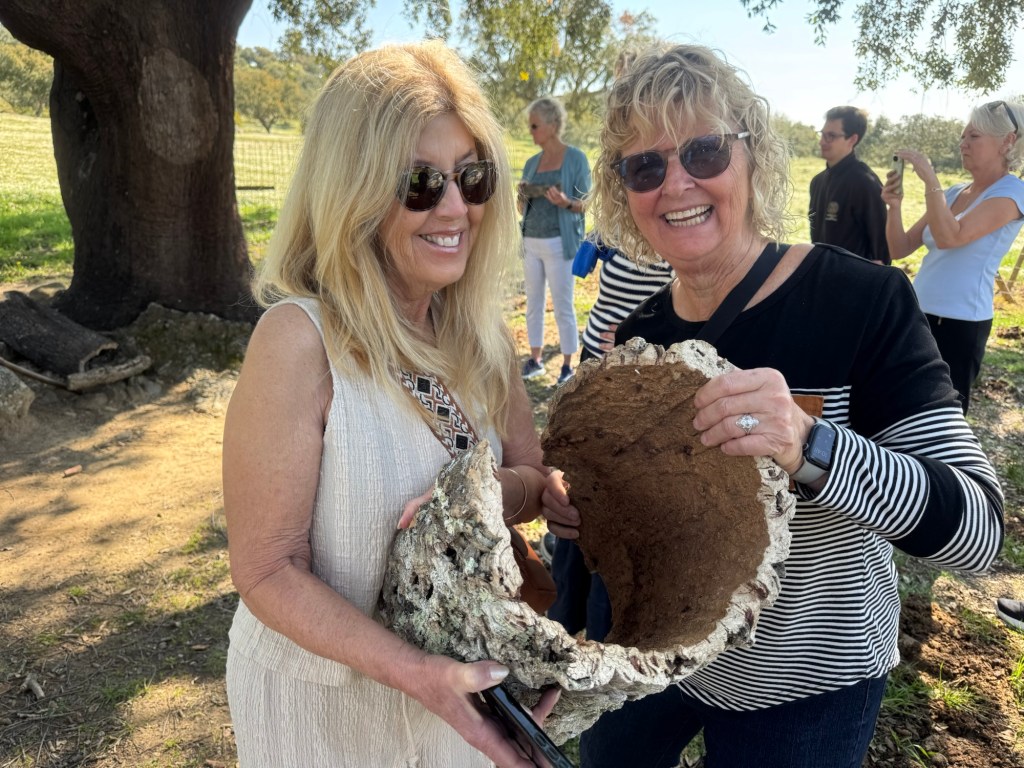
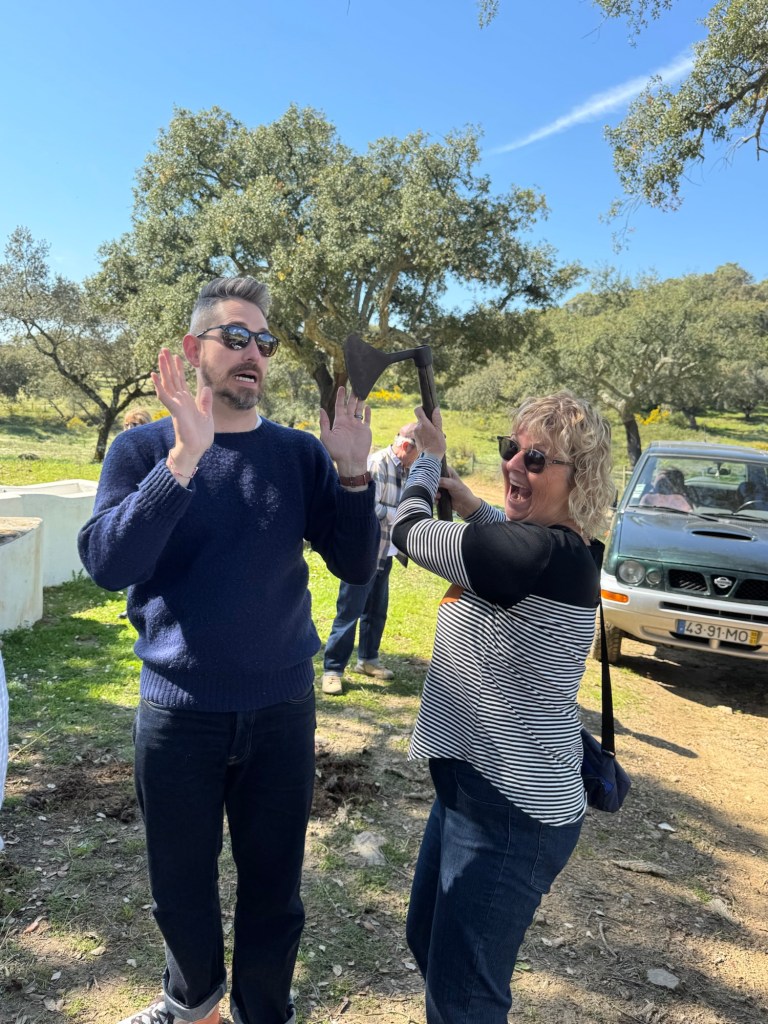
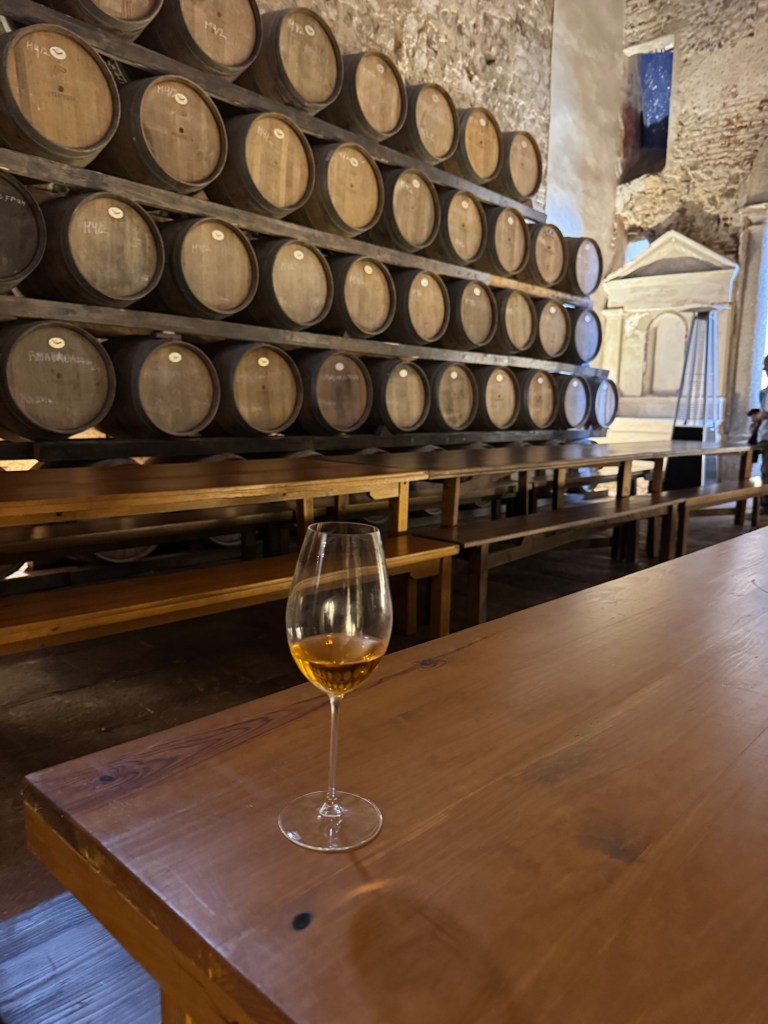
Today was such a fun day. We explored a 2,000-acre family-owned cork farm by jeep, winding through dirt tracks and rolling hills. The landscape was alive with beautiful wildflowers and birds. It was fascinating to see the cork trees up close, their trunks stripped back to reveal the rich reddish color beneath, and to learn how carefully the bark is harvested without harming the tree, using traditional hand tools. Everything was organic and natural. As with many traditional industries, revenues are declining because of labor costs and newer alternatives like plastic stoppers. It made me a little sad to think that ten years from now this beautiful family farm might be run by a conglomerate–the work is so demanding that probably the next generation won’t want to do it.
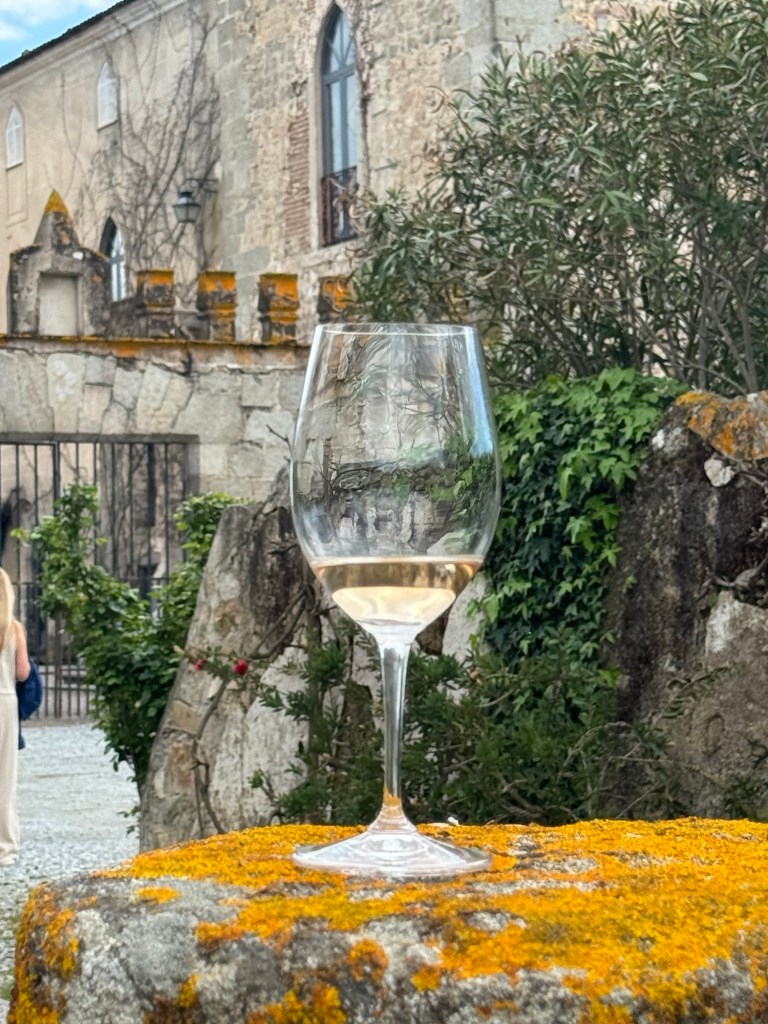
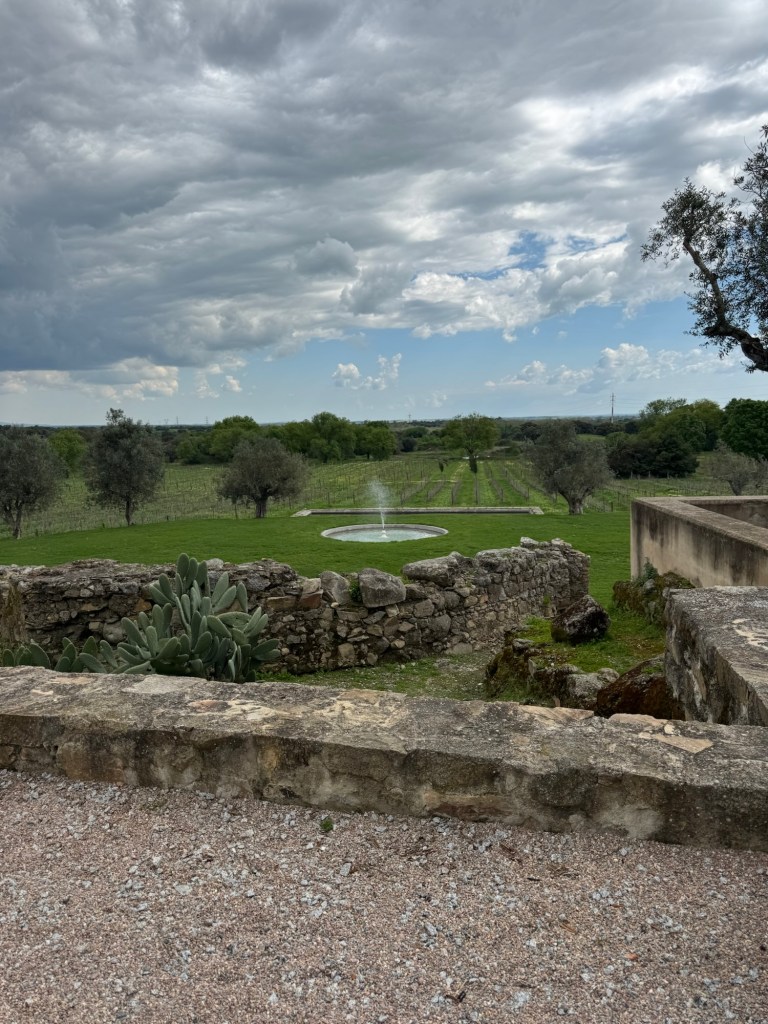
Then we had lunch at a beautiful old mansion, where the setting was as lovely as the exquisite food.
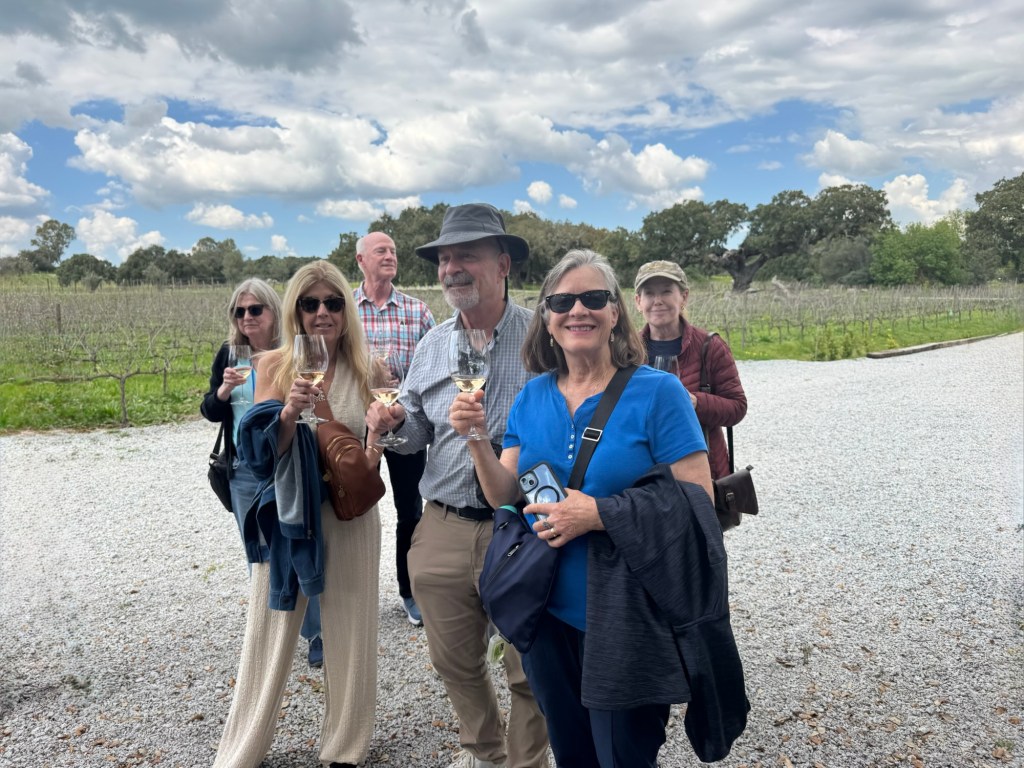
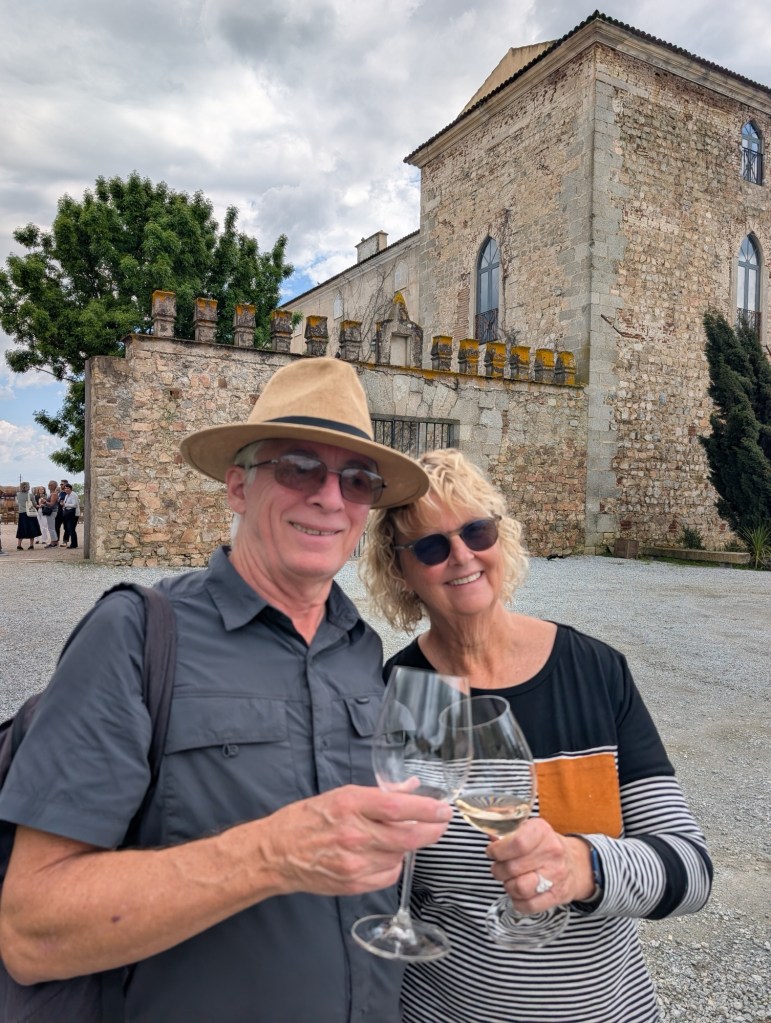
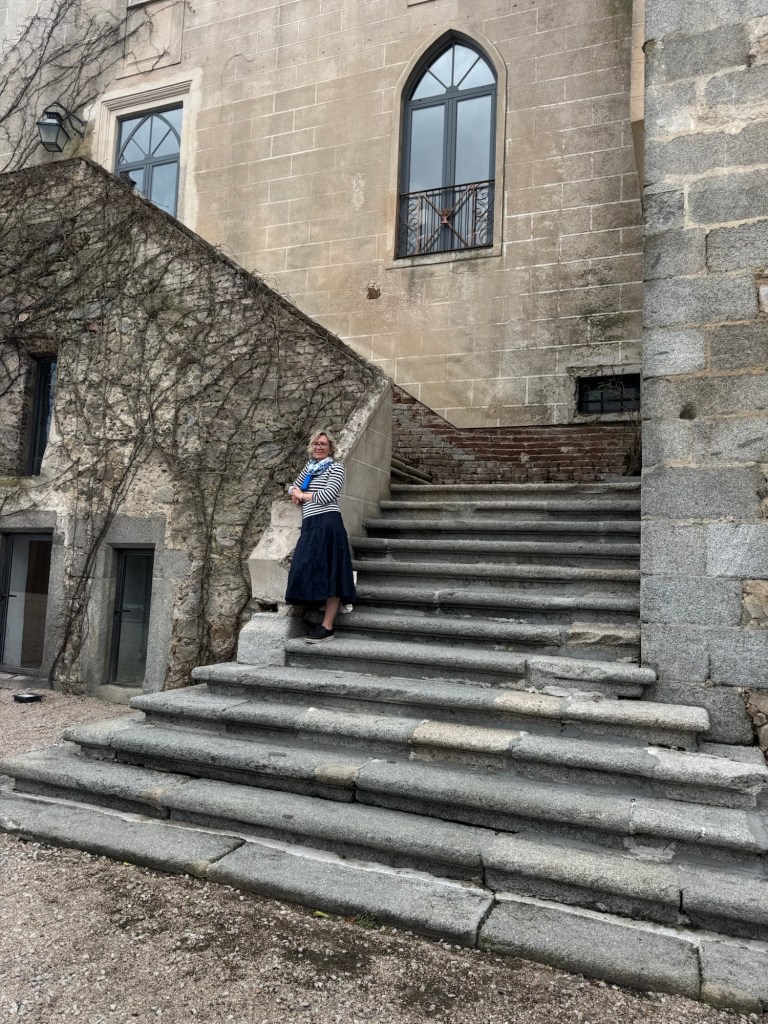
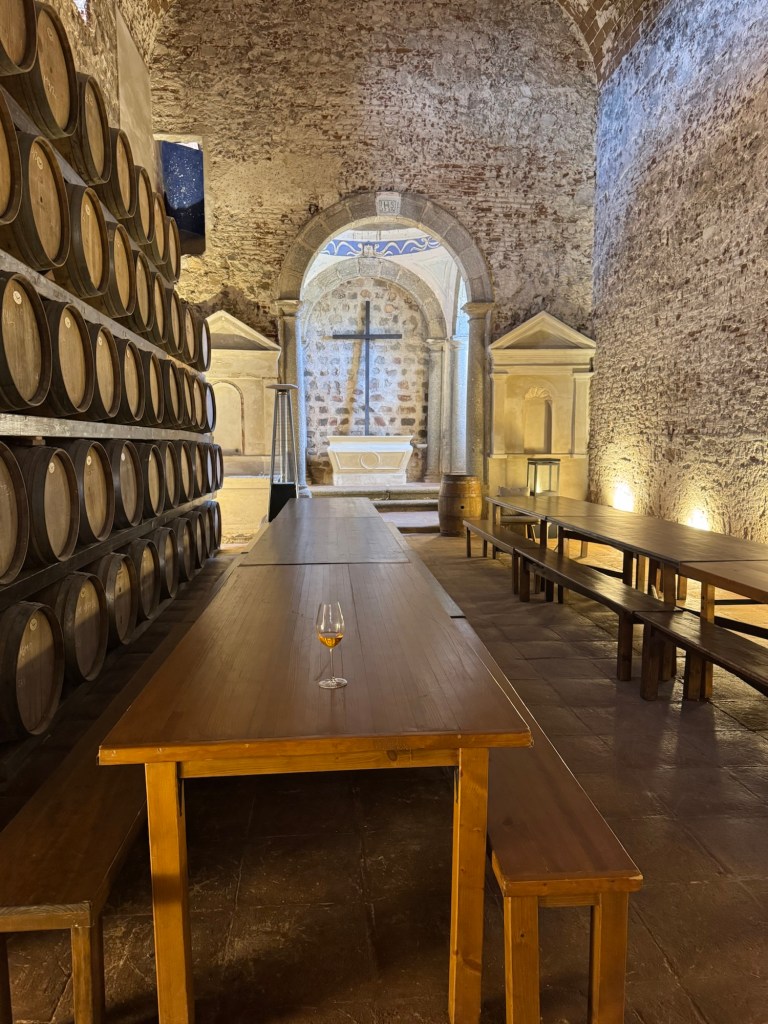
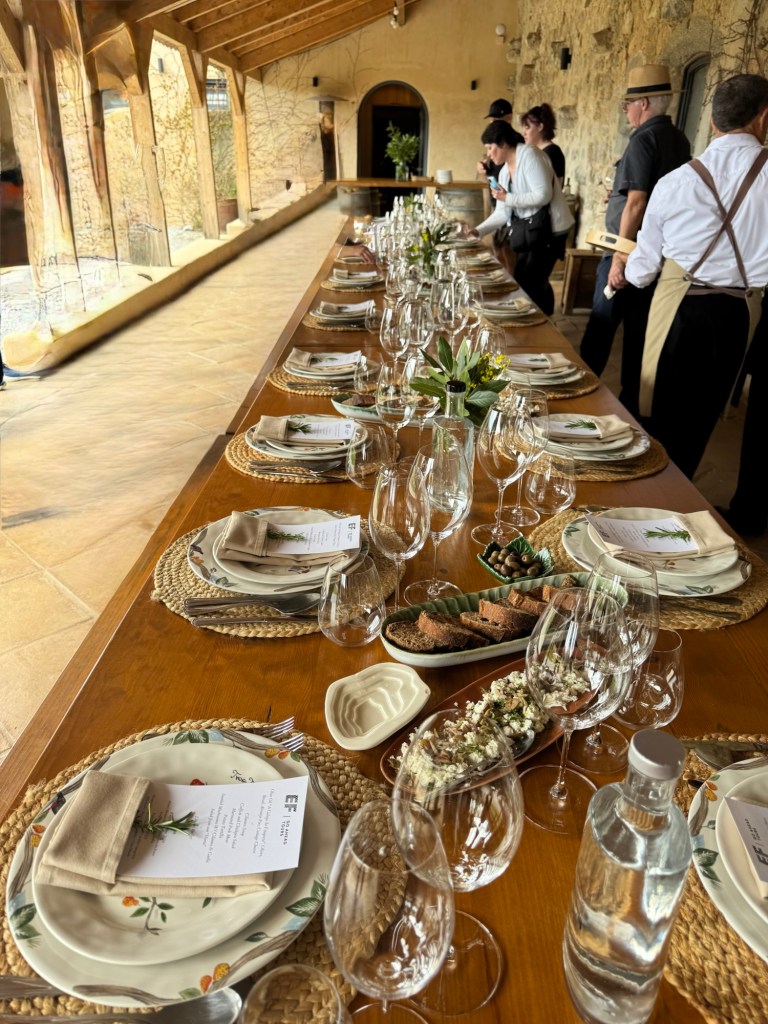
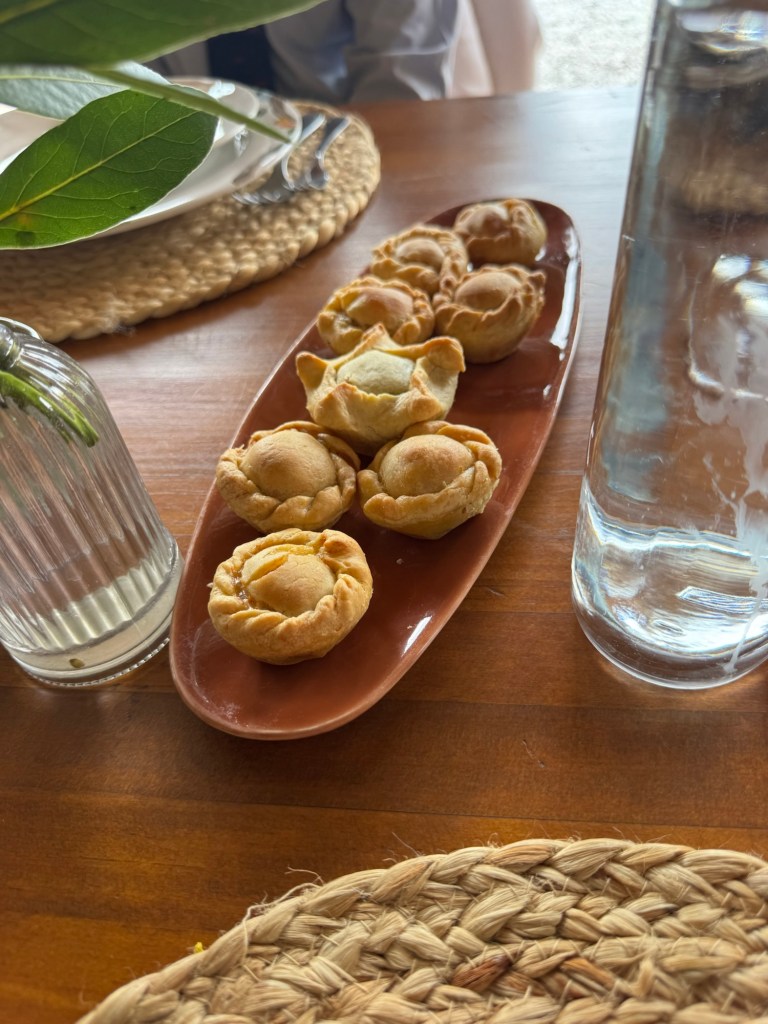
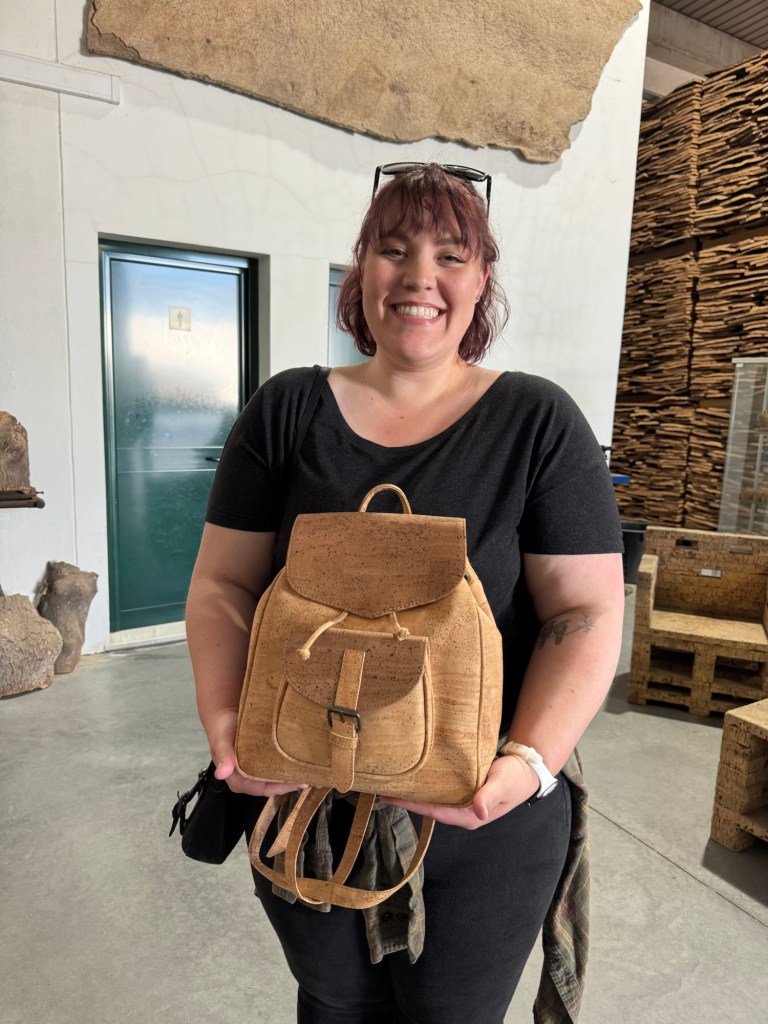
Our day wasn’t over yet. We visited a factory where they make just about everything imaginable from cork—hats, purses, cutting boards, shoes, even bikinis. Cork is waterproof and incredibly durable.
Morocco to Spain and Portugal Day 10: Évora
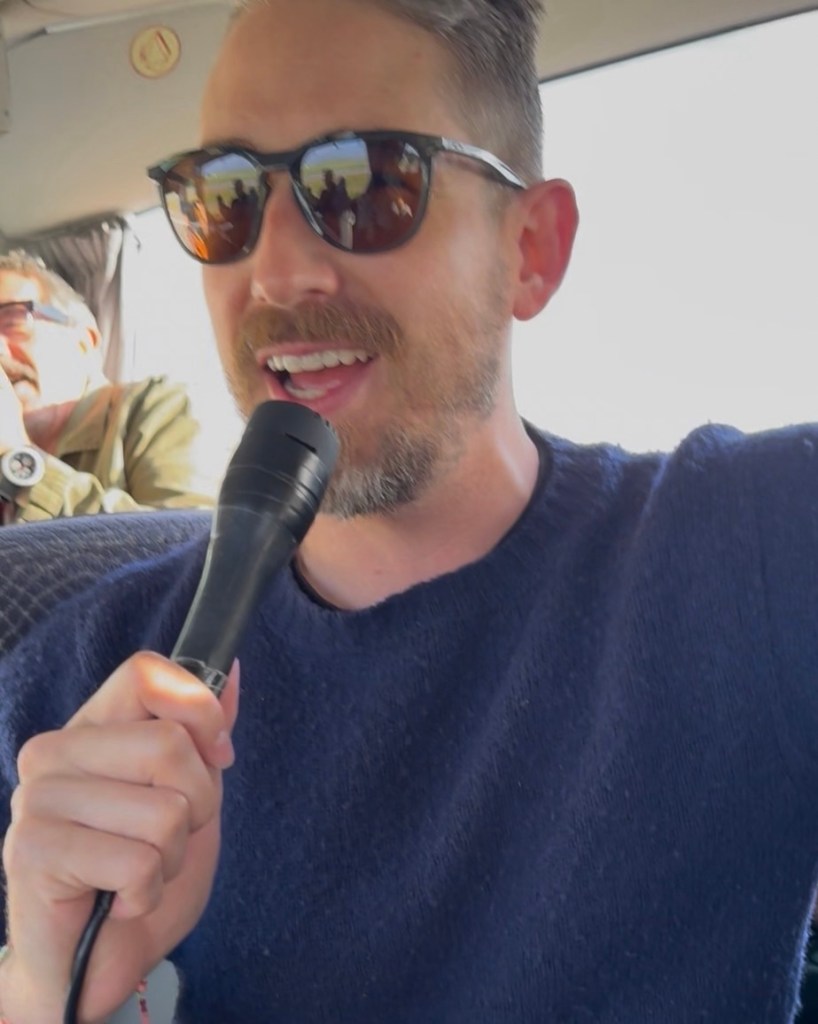
It was our 47th wedding anniversary, and to celebrate—(and because he was late!)—Matt sang My Way. I’m so proud of my son-in-law, and this song has become especially meaningful to me. He has sung it at some of our most memorable occasions. It never fails to pull at my heartstrings.
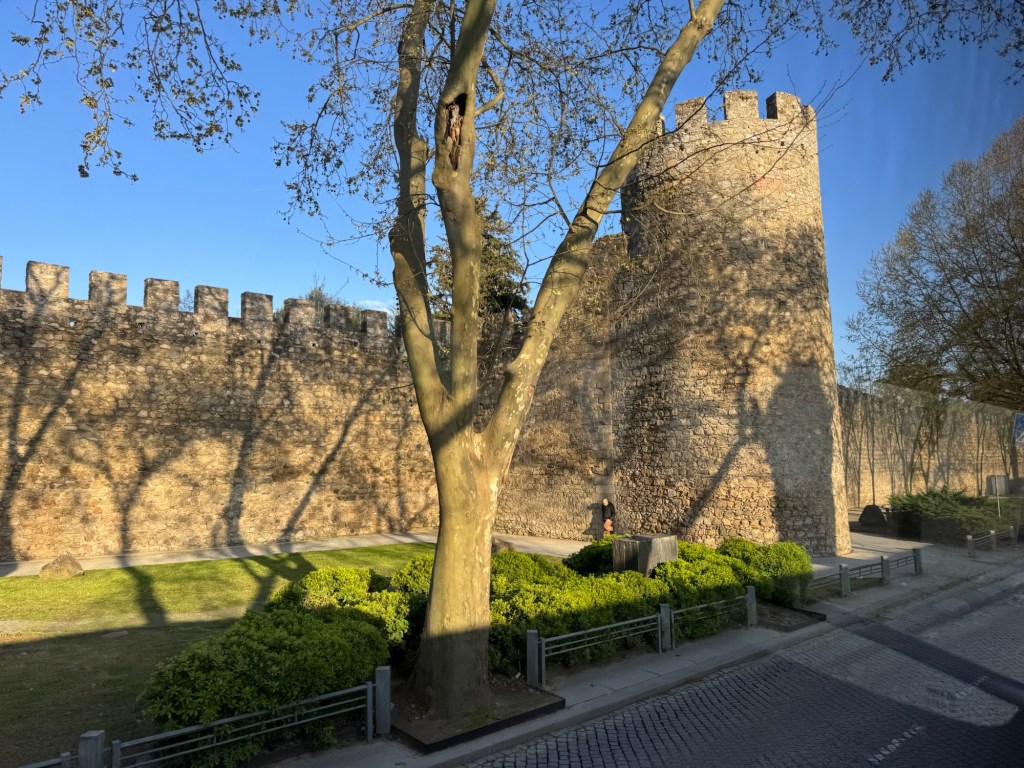
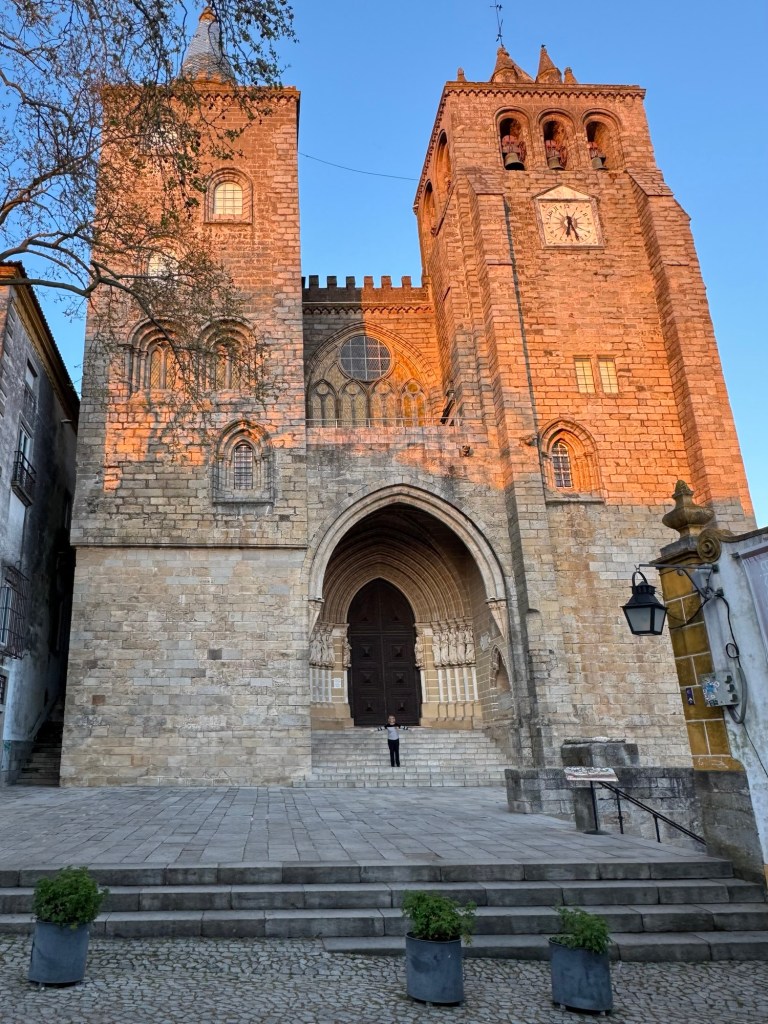
My Italian teacher recommended that we visit Évora, Portugal, and it was excellent advice. The city is famous for its massive walls, which date back to Roman times and still surround it today.
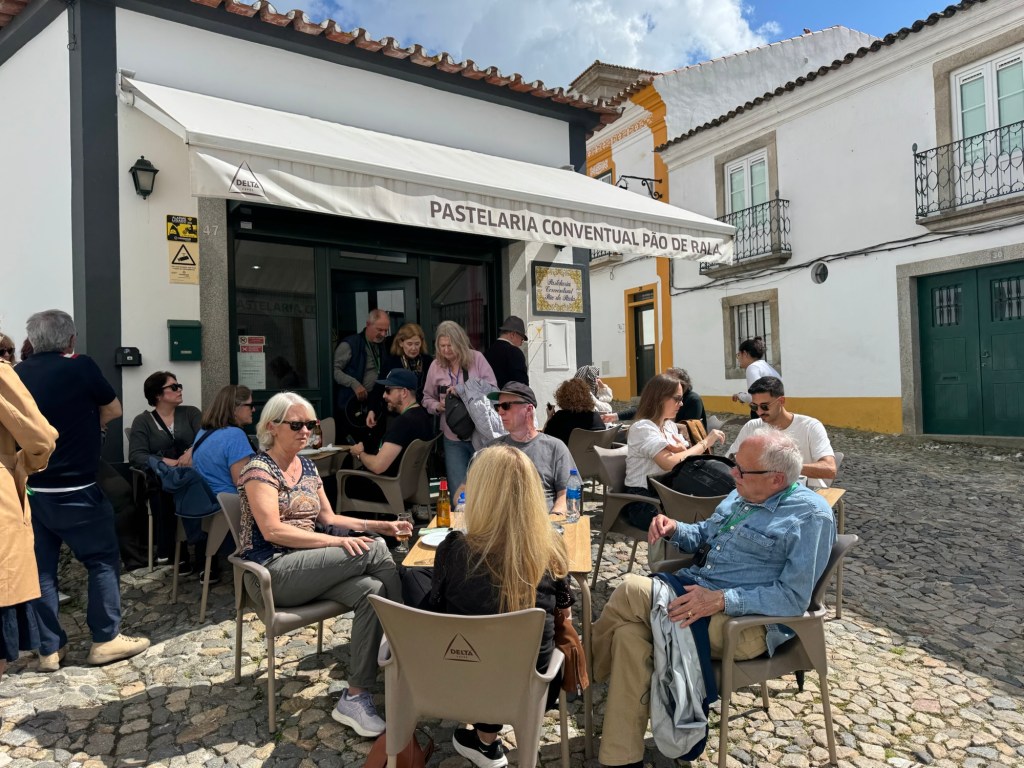
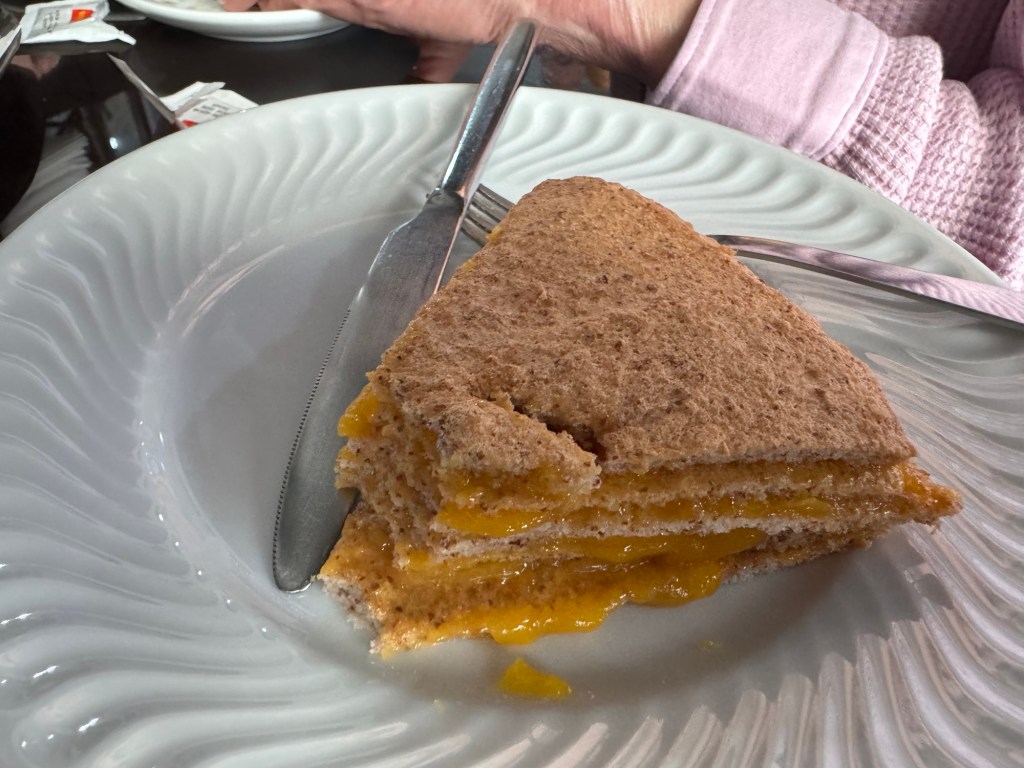
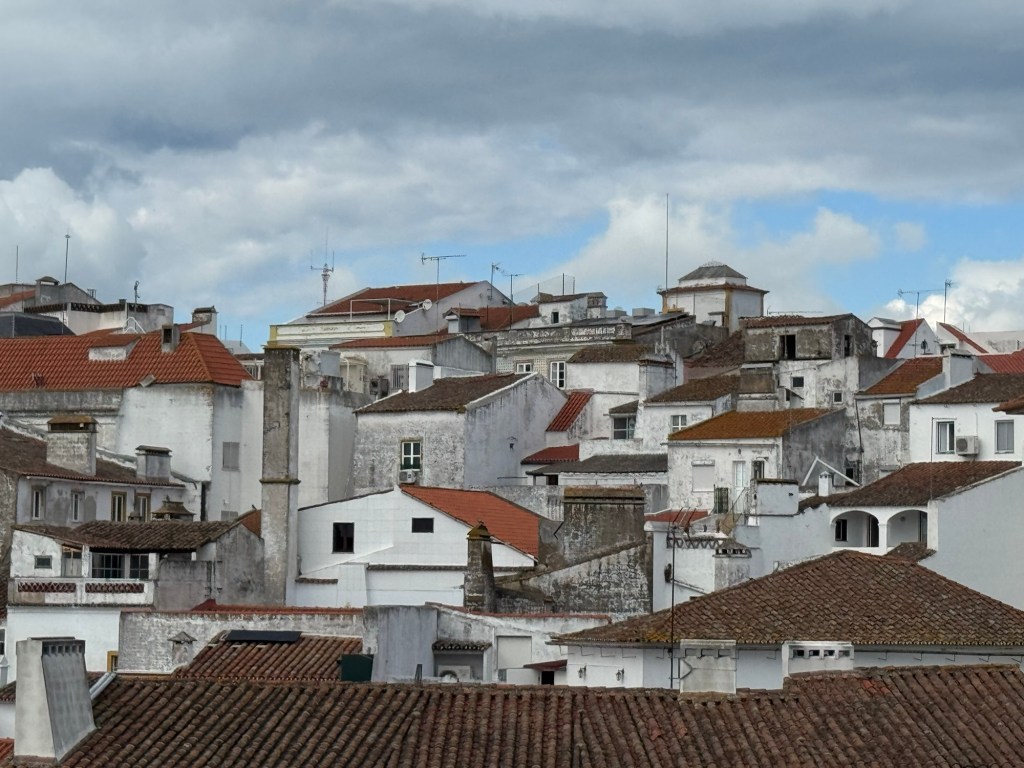
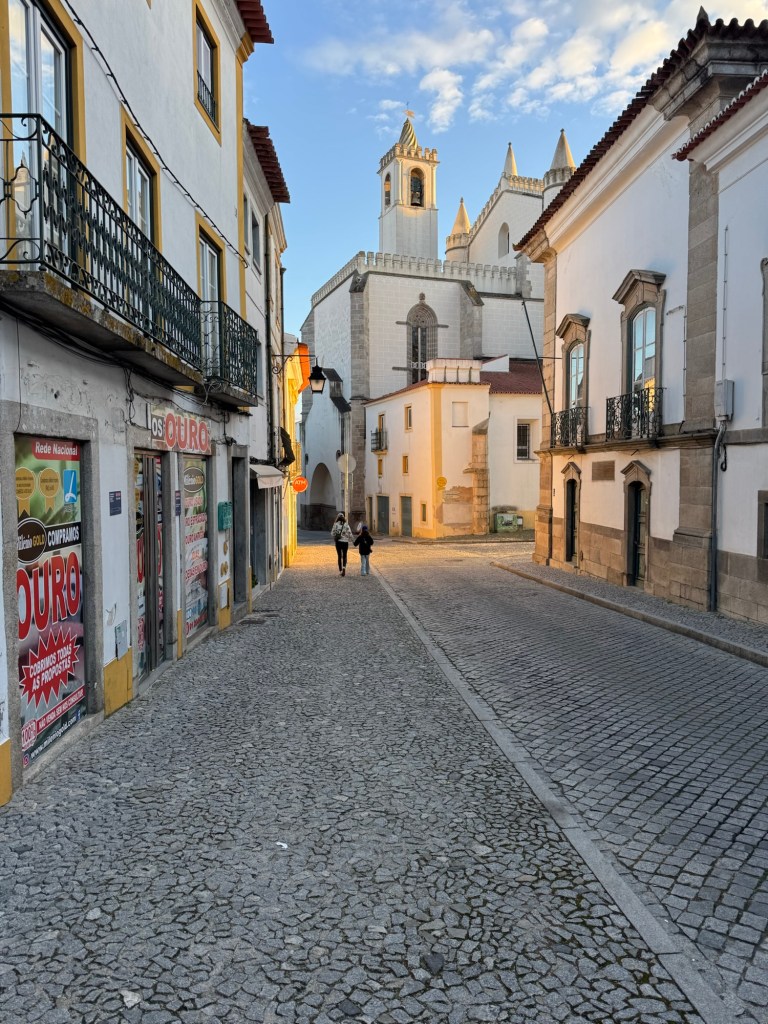
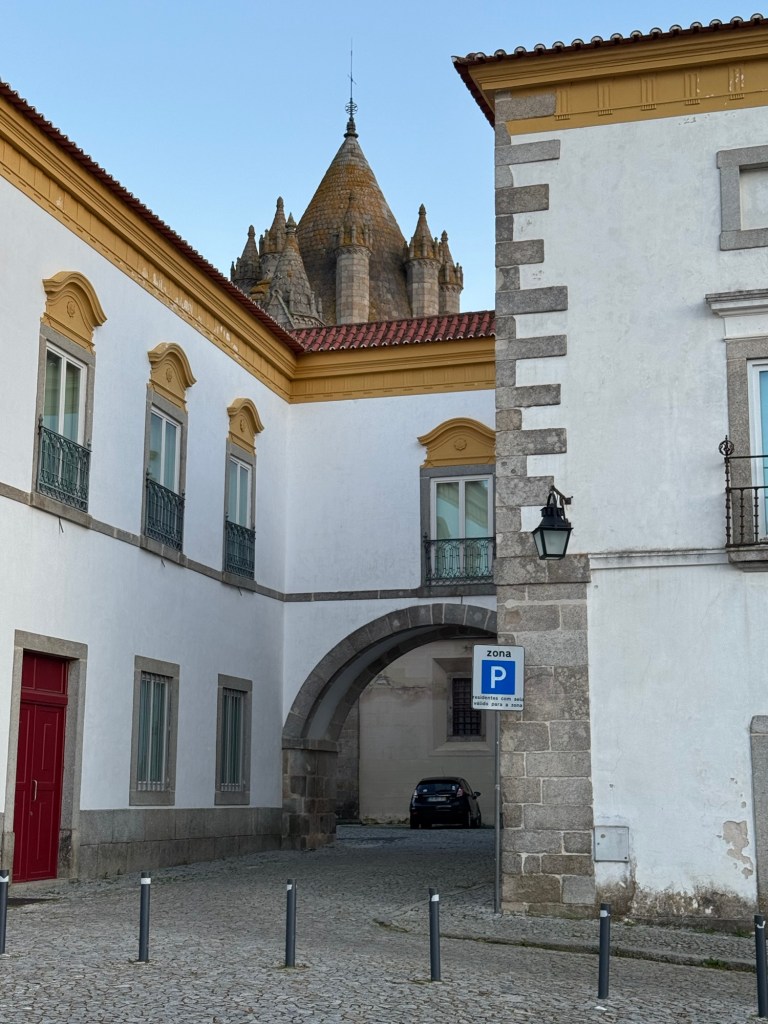
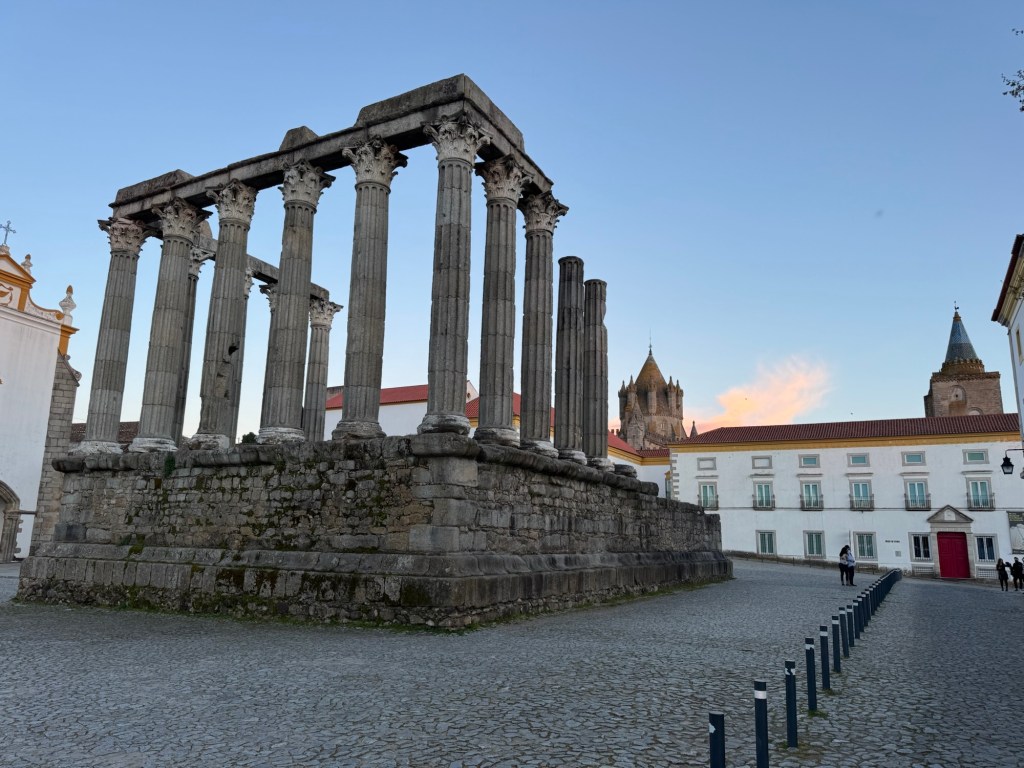
We wandered the village streets with their whitewashed walls and yellow trim. I know I say this every time, but the town is absolutely darling. The Roman temple at the top of the hill is a testament to its rich history, while the independent shops showcase the work of modern local artists. It’s a tourist destination, yes—but also a place where locals live, shop, and go to school.
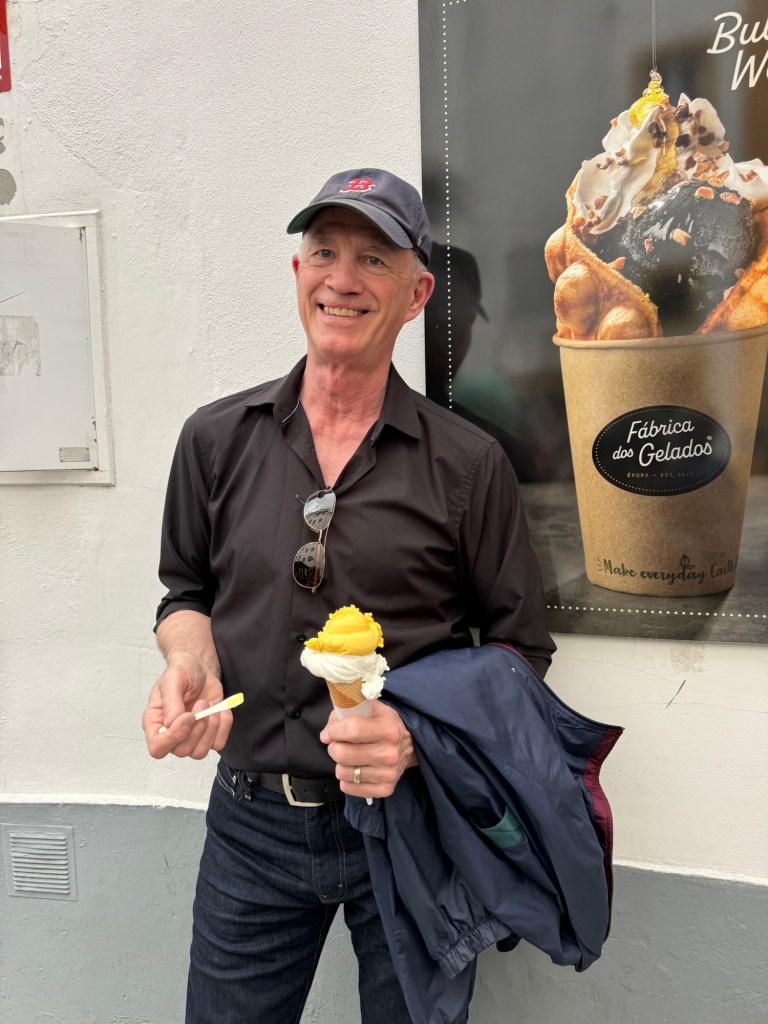
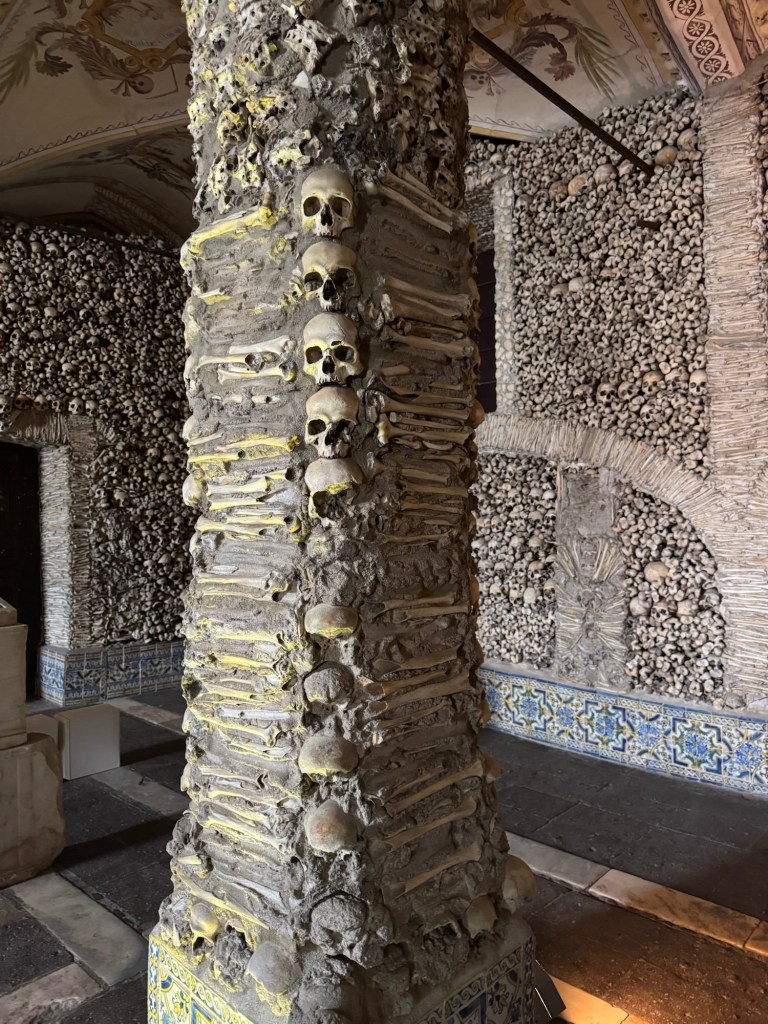
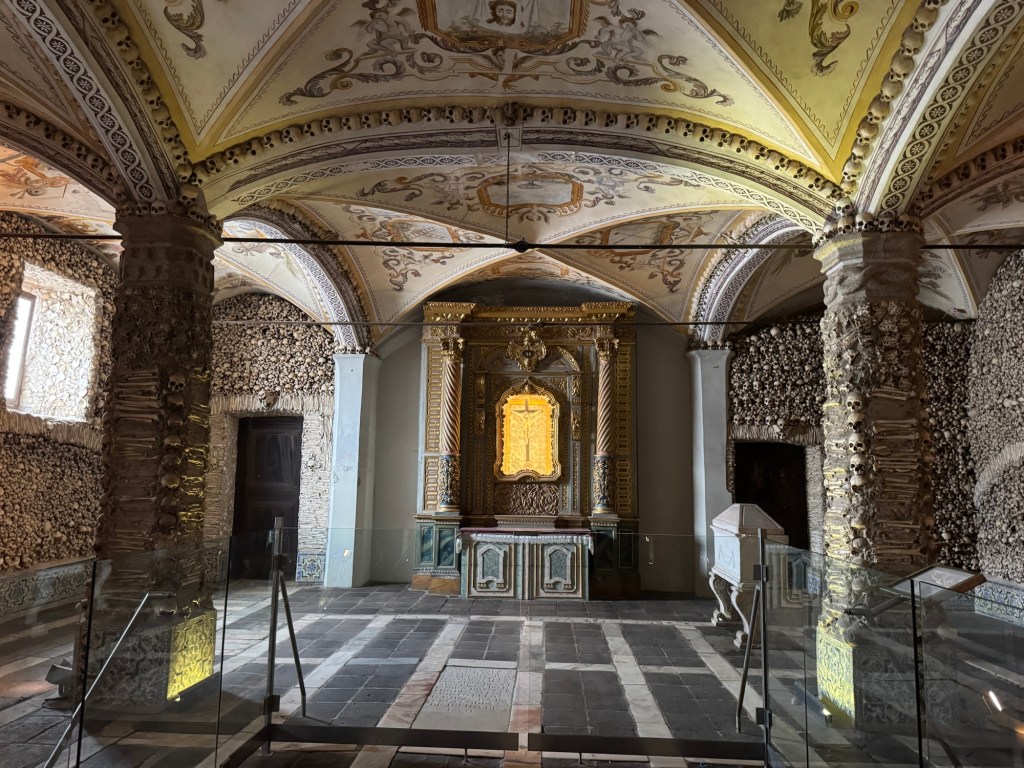
We visited a chapel built by the Franciscans, constructed using the bones of people who had long ago been buried in unmarked graves. The message they wanted to convey is that, in the end, we are all the same. Wealth, fame, and status will not help you in eternity—what matters is your soul.
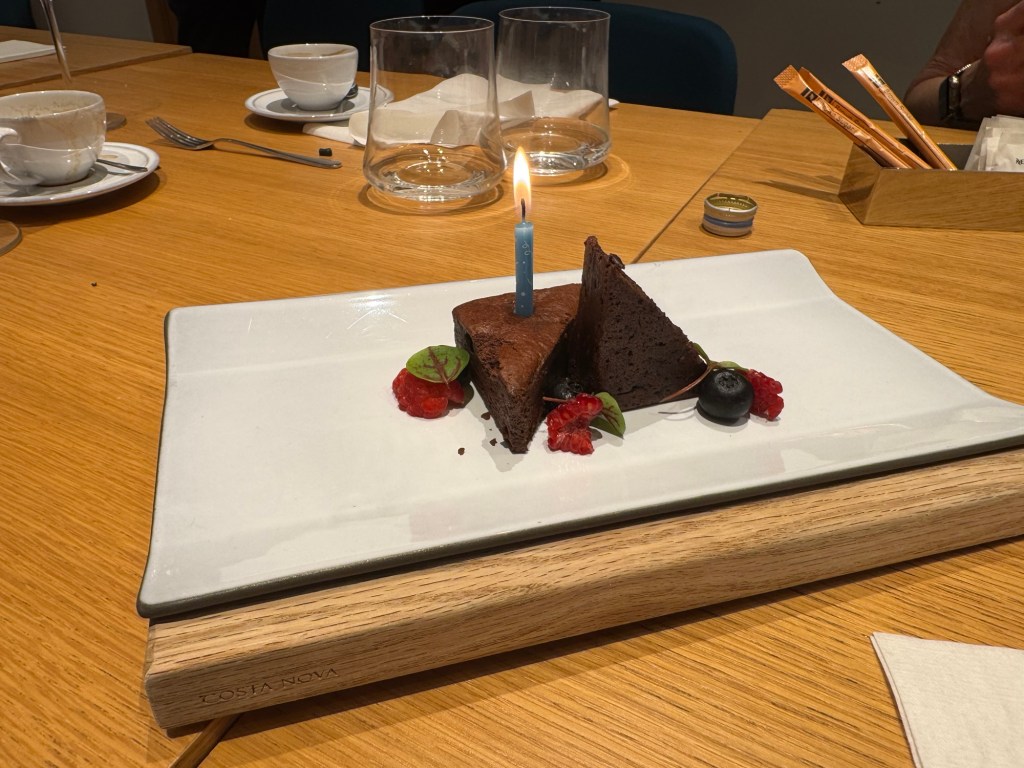
It was such fun to have so many of our friends gathered to celebrate our anniversary with us—including Rick and Diane, who were in our wedding, and Lisa, who attended. Our tour director ordered lava cake, and everyone sang.
Morocco to Spain and Portugal Day 9: Sevilla
We’ve been here several times before, but what I’ll remember about Sevilla this time is the strong, beautiful scent of orange blossoms. It was everywhere.
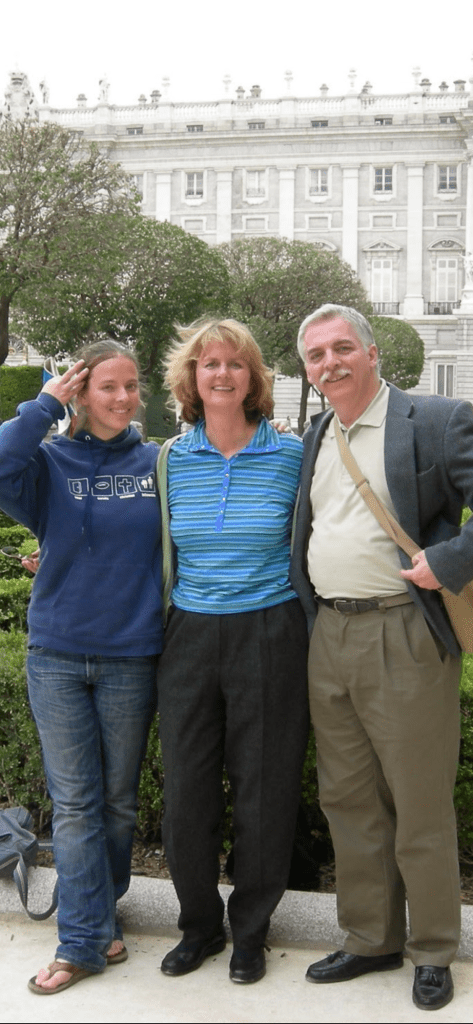
We had a guided walking tour through the city. It’s the traditional mixed with the very modern.
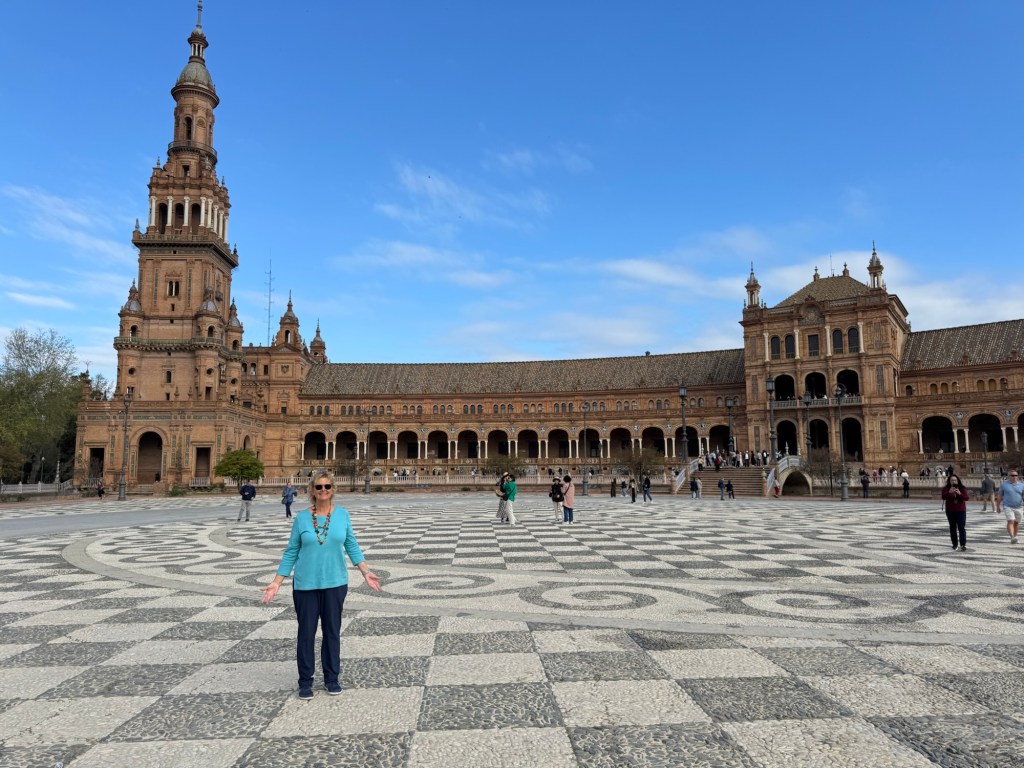
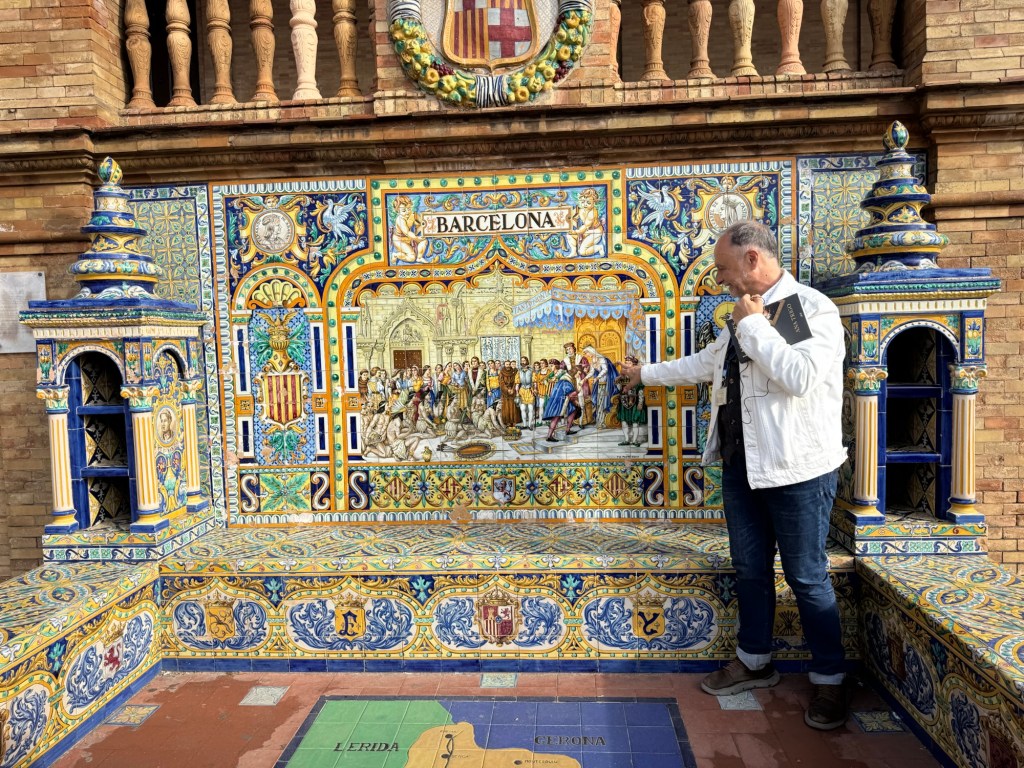
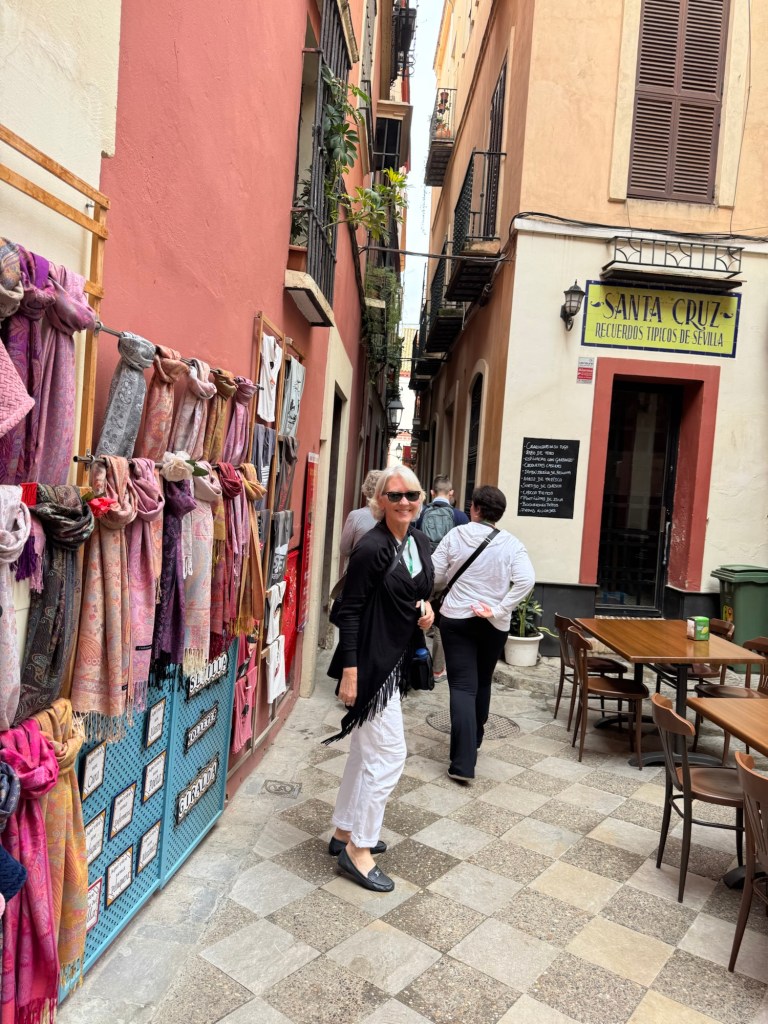
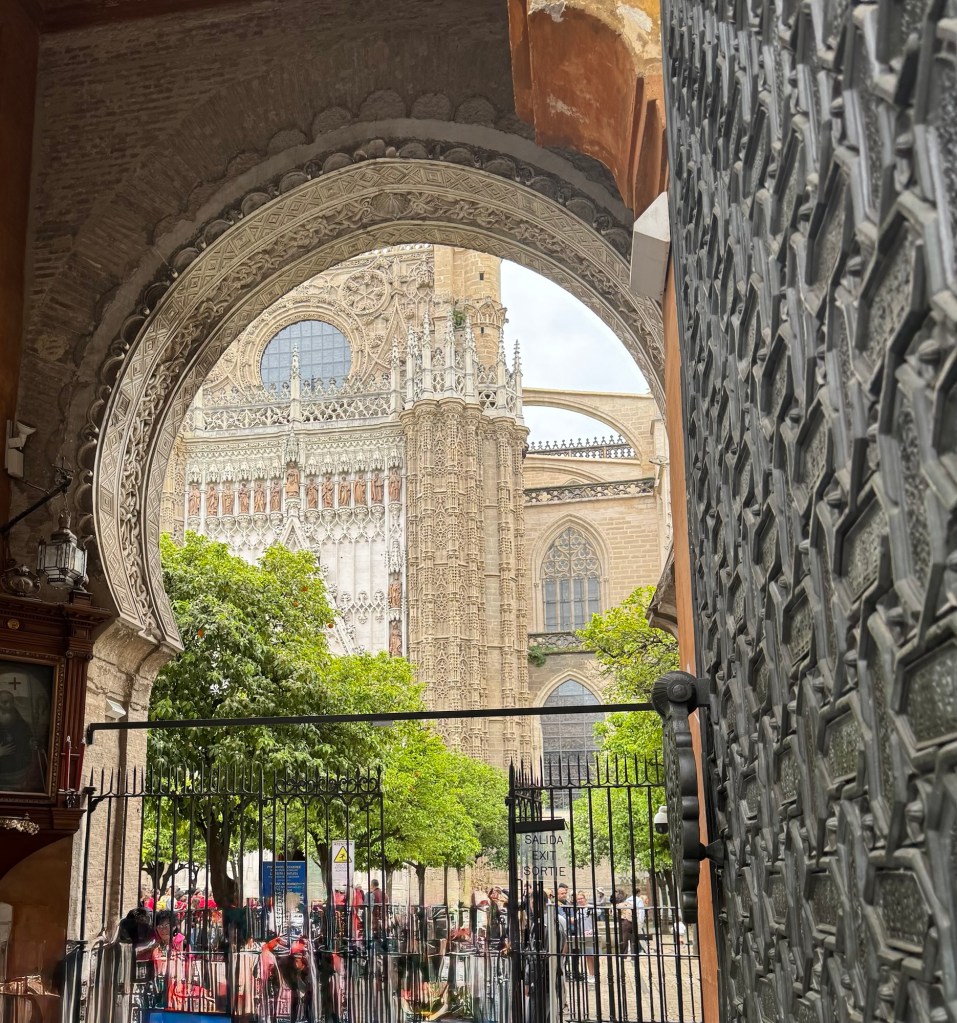
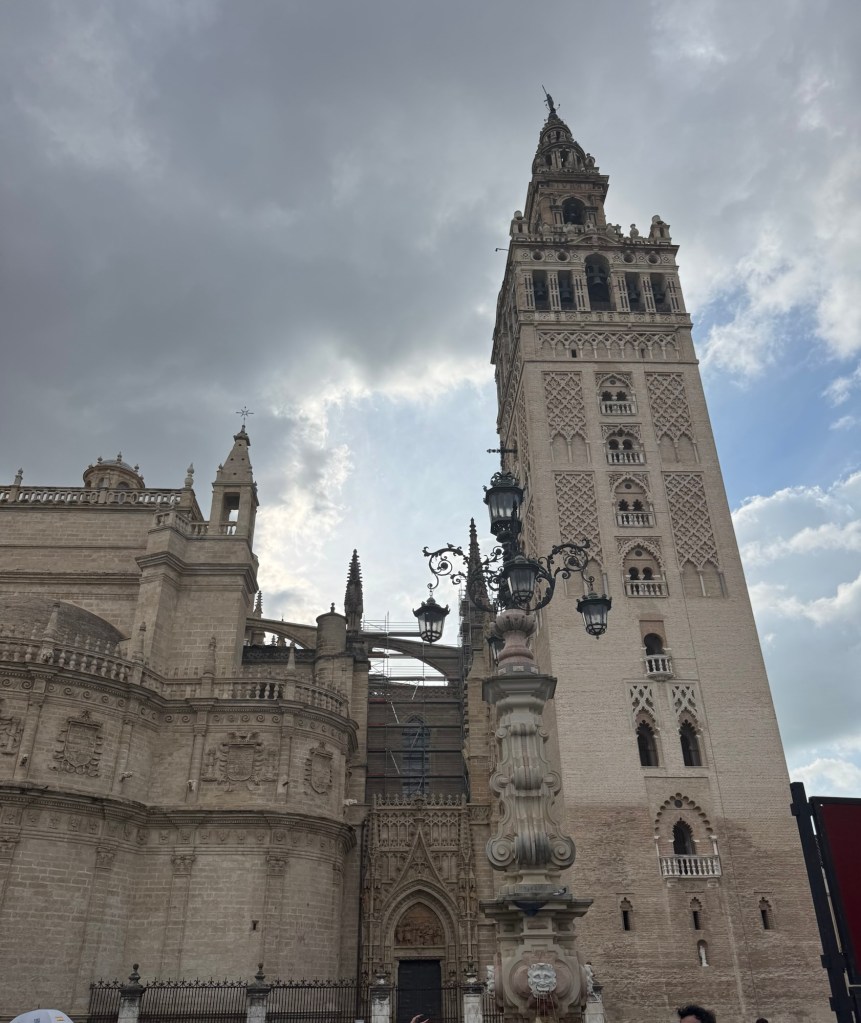
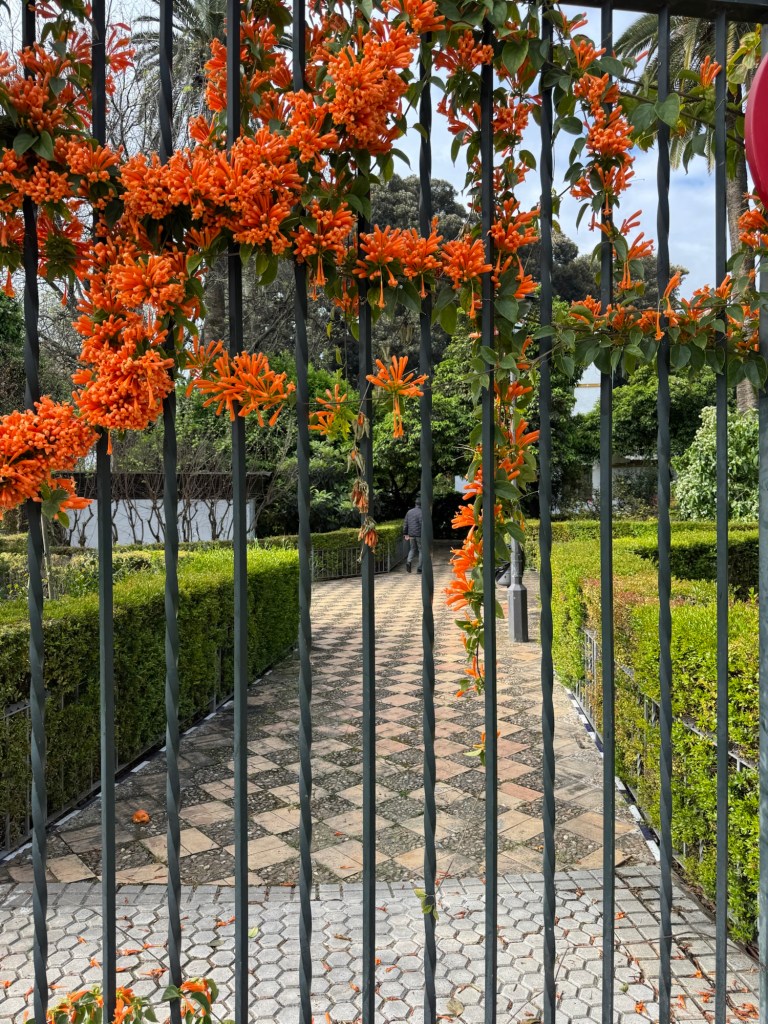
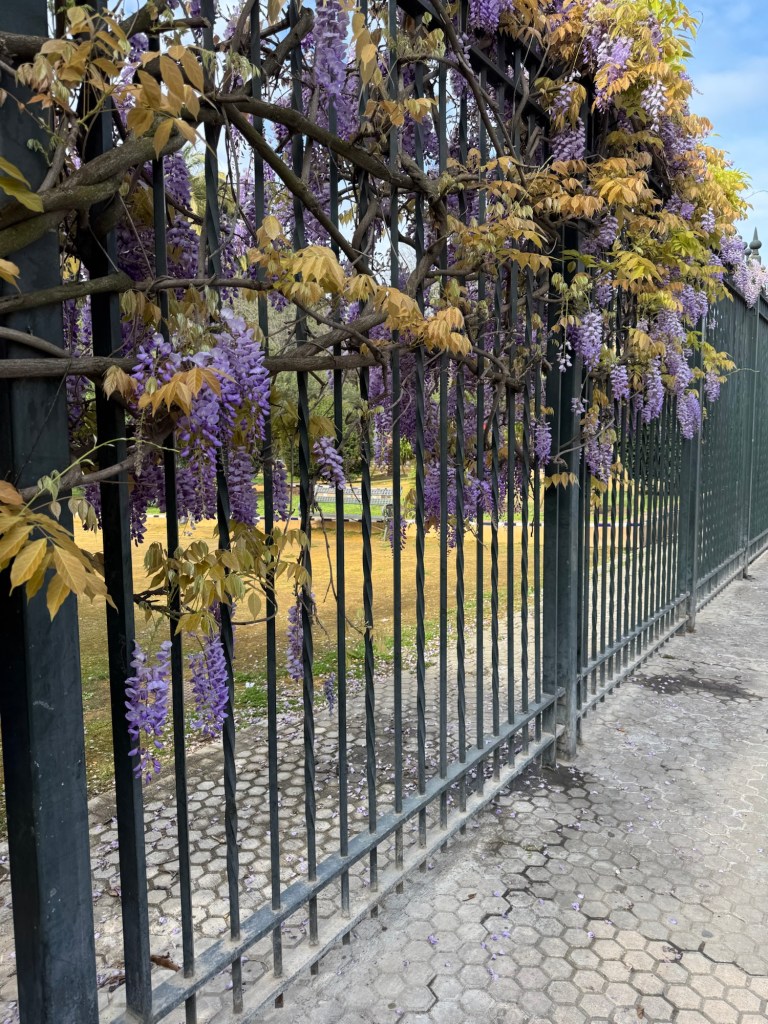
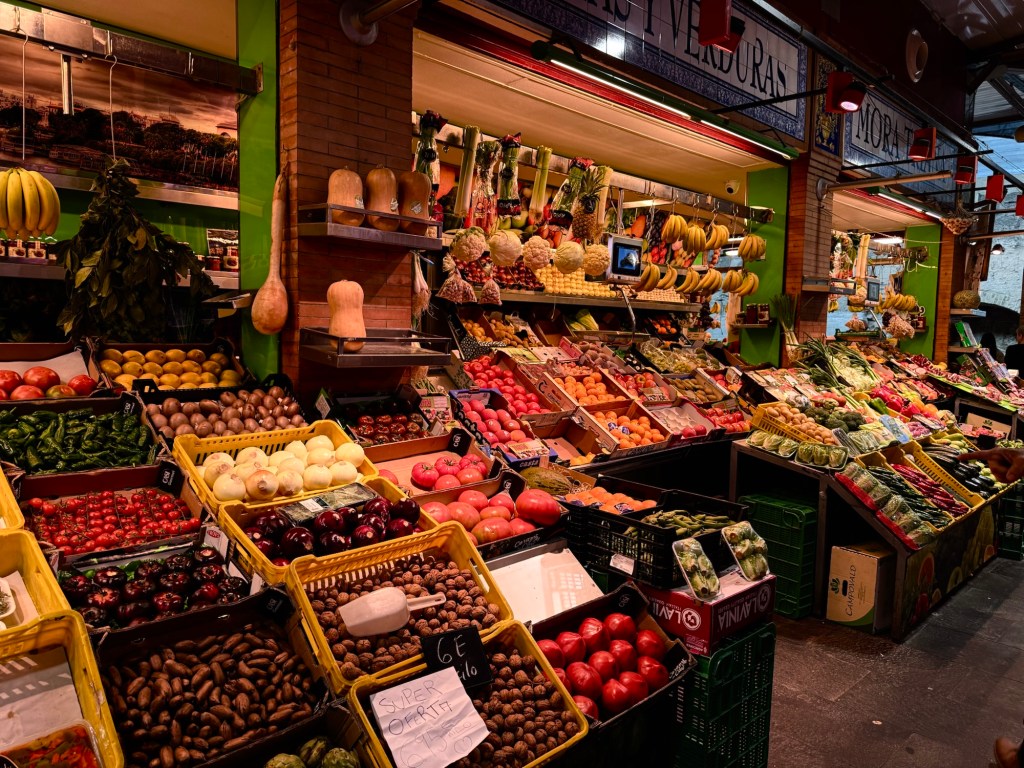
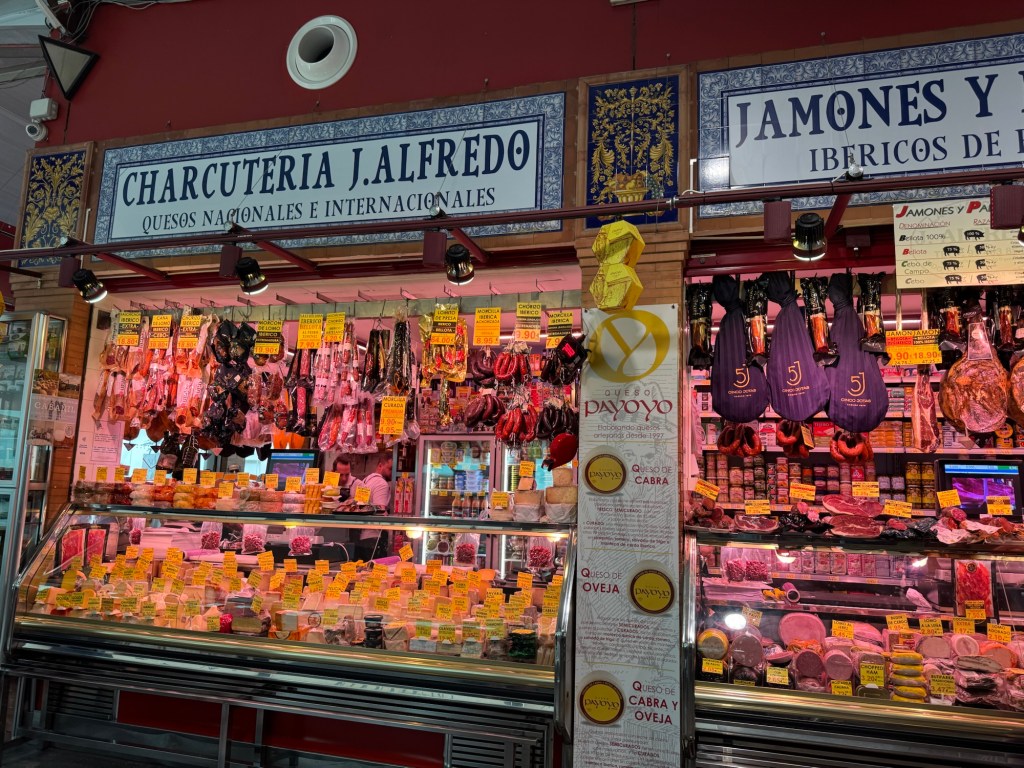
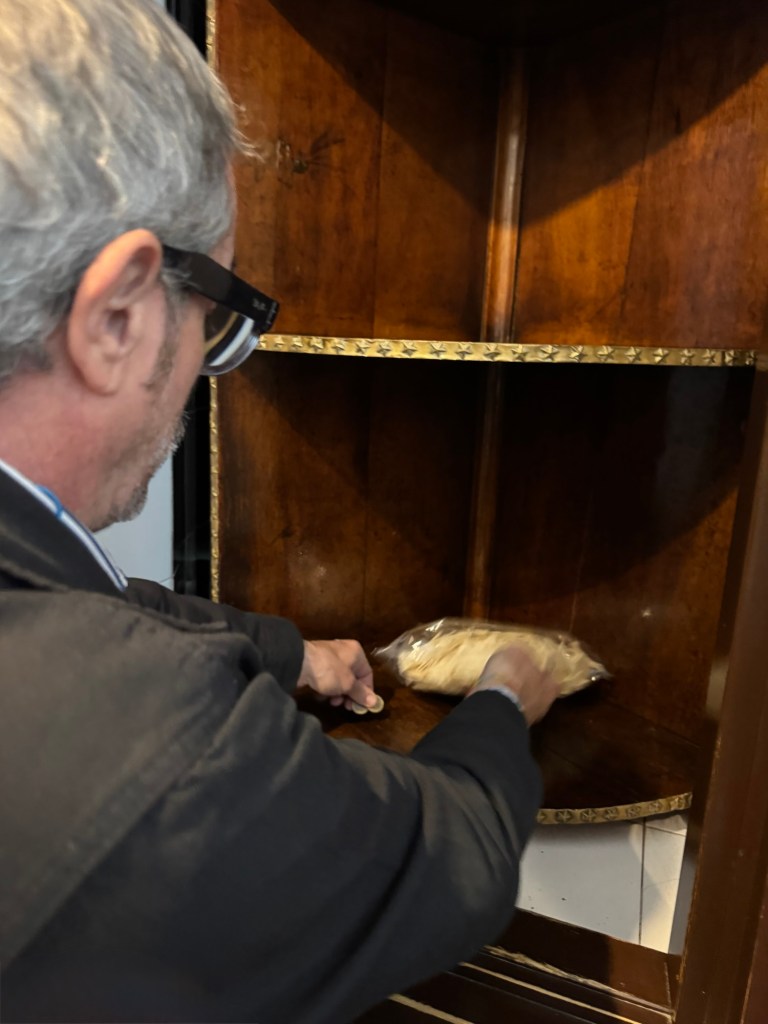
This next picture is at a convent where they bake the communion host. You put the coin on a lazy Susan and they replace the coin with a bag of the leftovers from stamping the host. I found myself surprised that even the smallest remnants of something so sacred would be sold so freely.
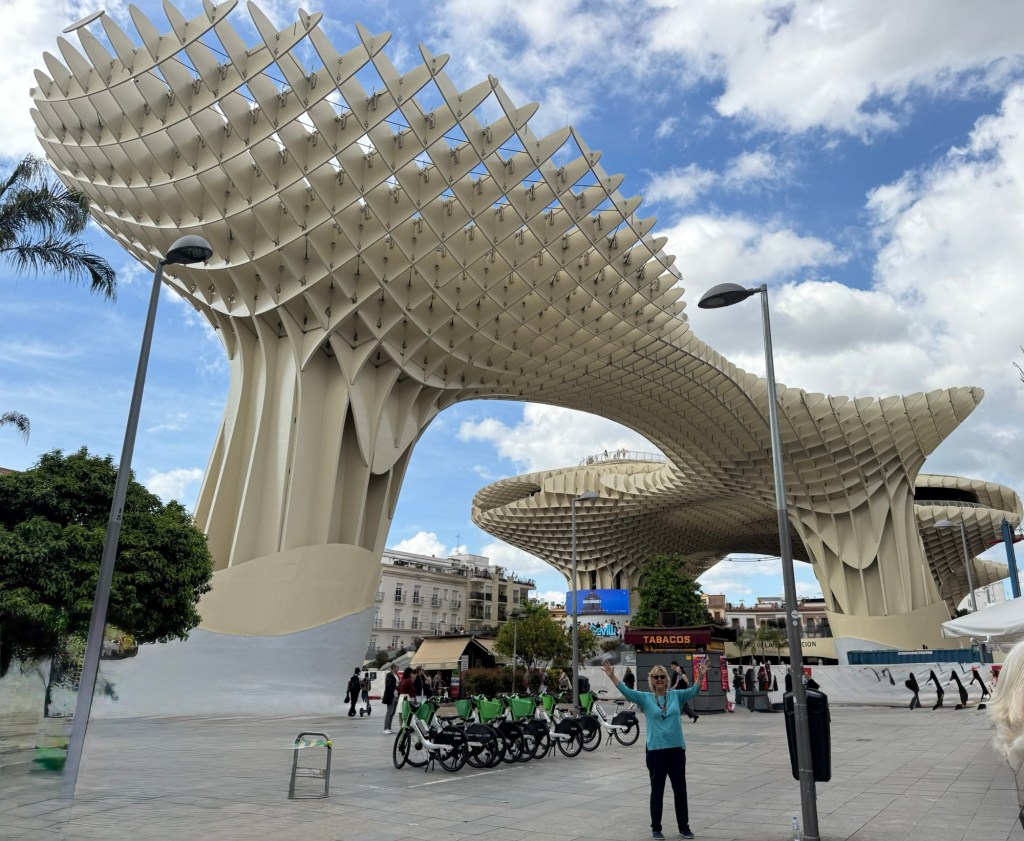
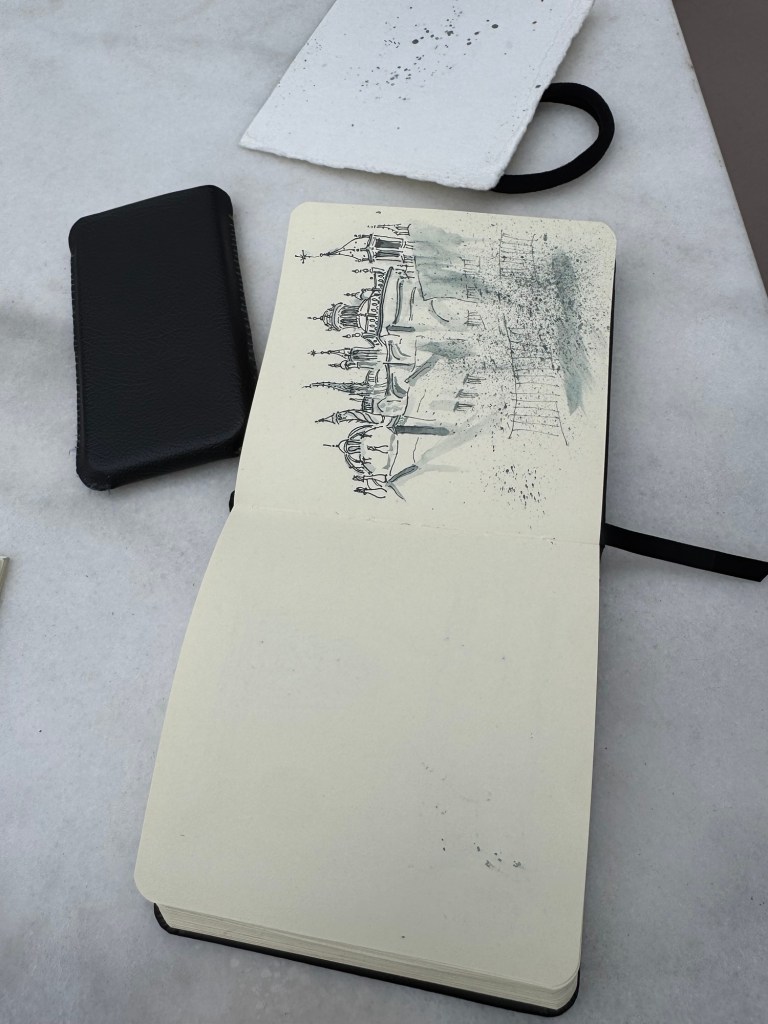
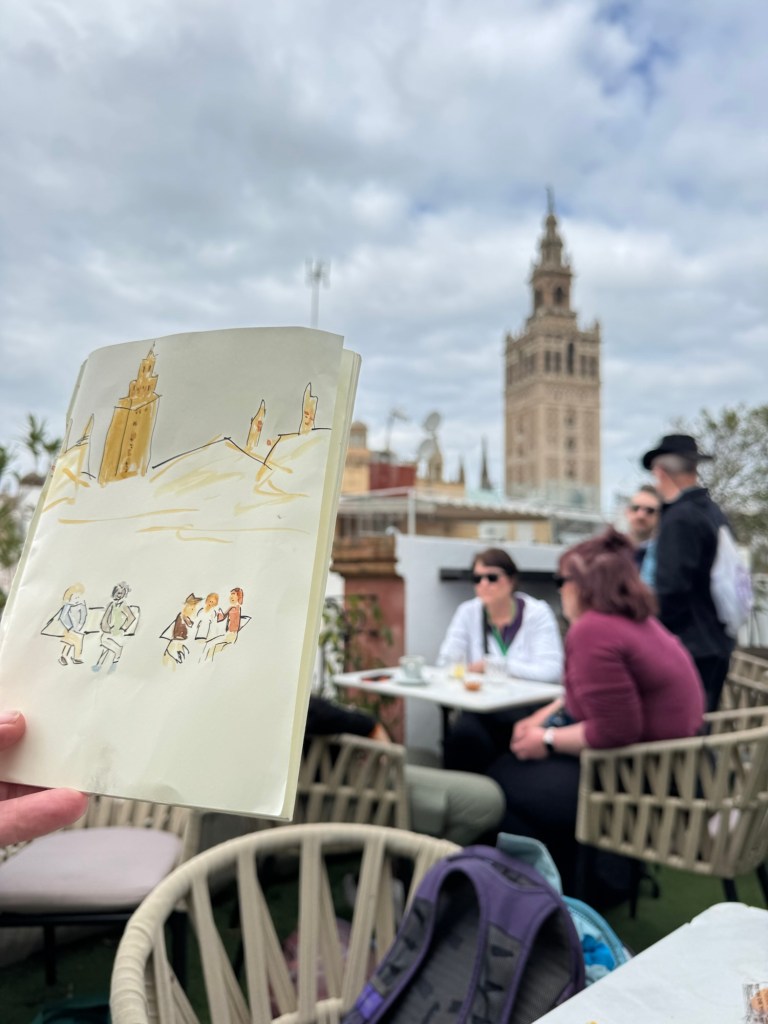
We had coffee and treats on a rooftop our tour director recommended. An artist was sketching nearby, and I pulled out my watercolors. I’m new to painting and know I’m not very skilled yet, but he was so kind—he asked if he could see what I was working on. Then he showed me his own (professional) work and generously praised mine. It absolutely made my day.
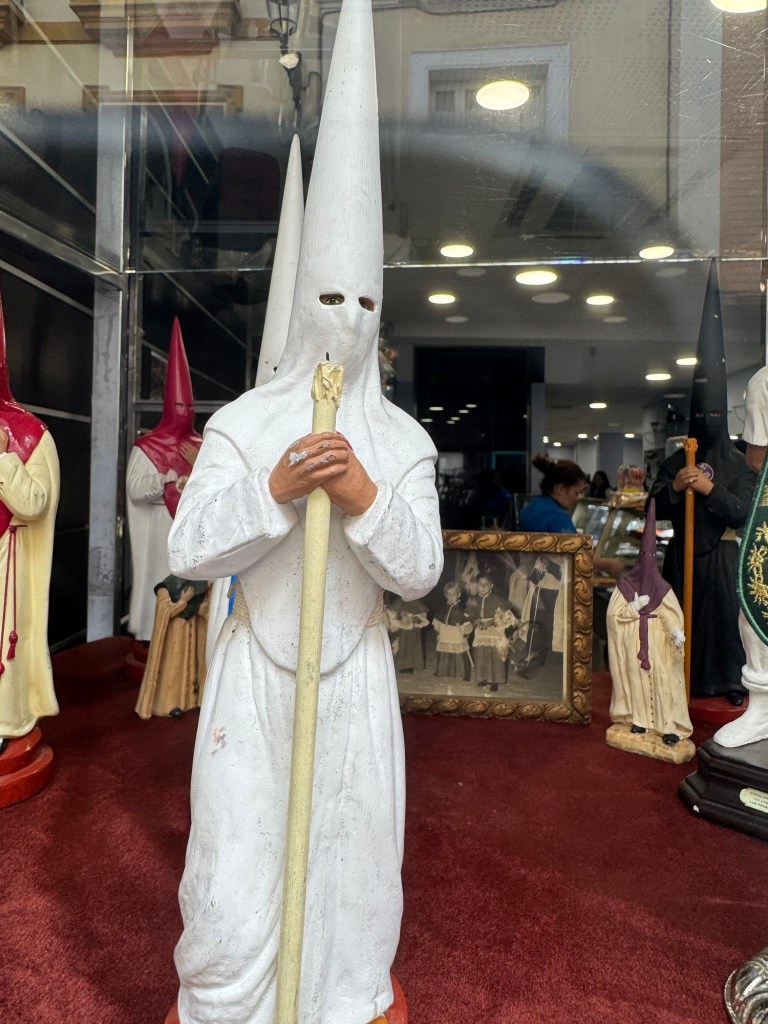
It’s Lent, so although we didn’t see the penitentes—the hooded figures that can look startlingly like the Ku Klux Klan to outsiders—there were beautiful sugar models displayed in every bakery.
In the Christian tradition, penitentes are participants in Holy Week processions, especially in Spain. Their robes and covered faces are meant to symbolize humility, repentance, and anonymity before God. Rather than drawing attention to themselves, they point to a deeper spiritual reflection—walking in remembrance of Christ’s suffering and expressing a desire for forgiveness and renewal.
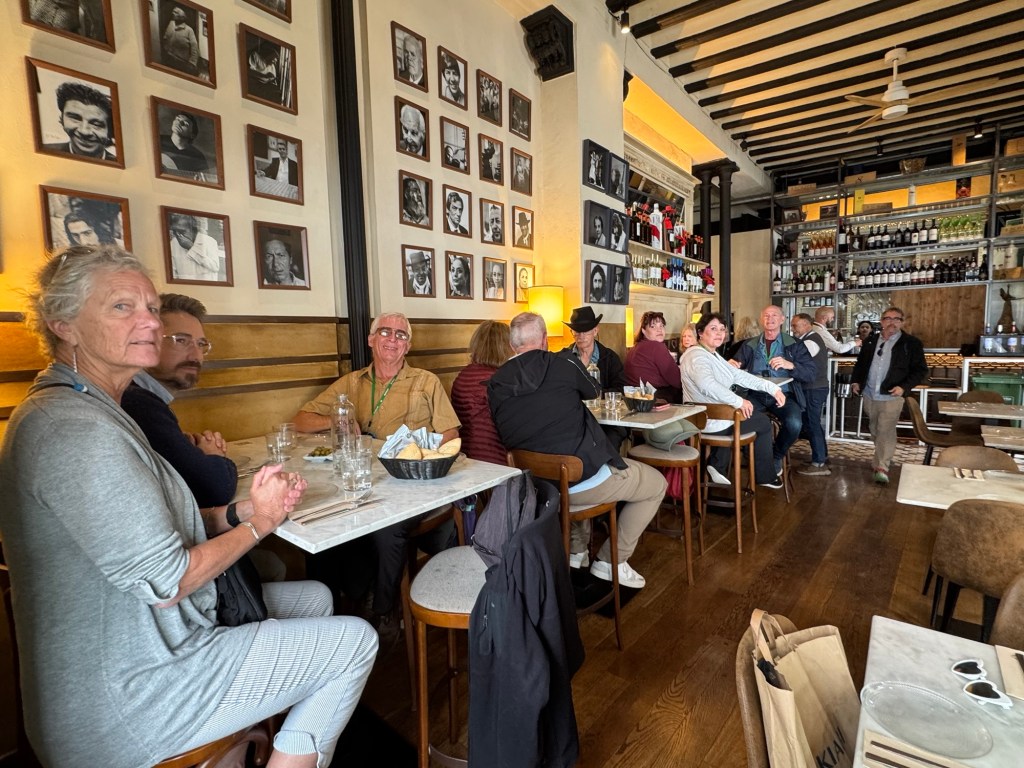
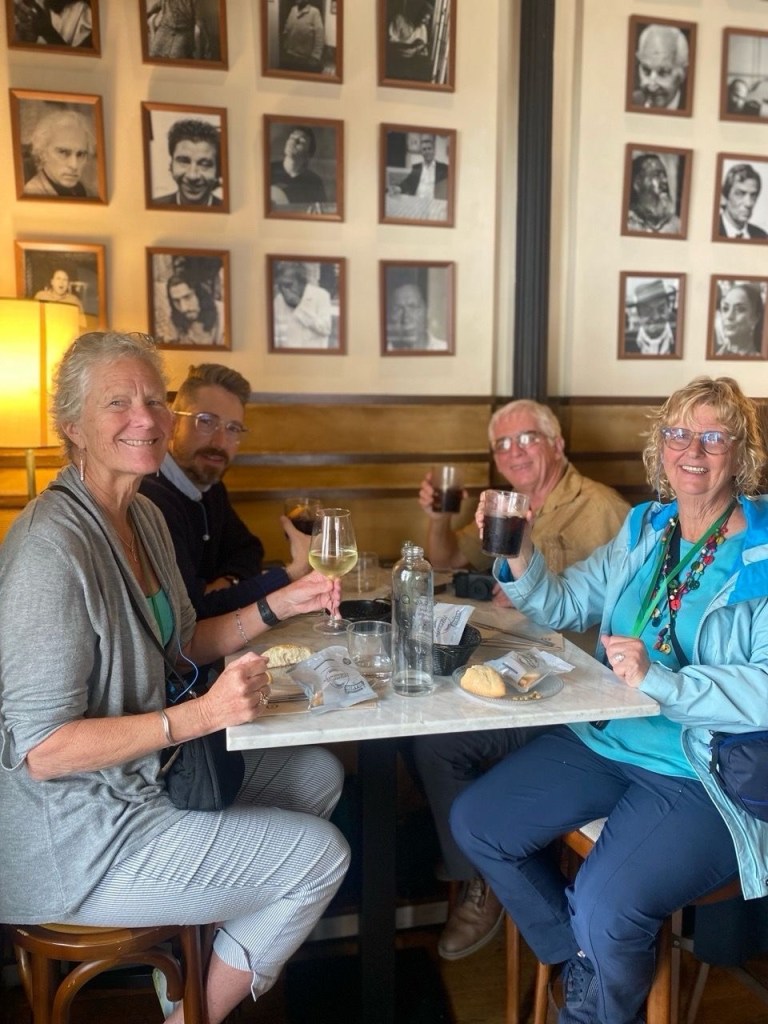
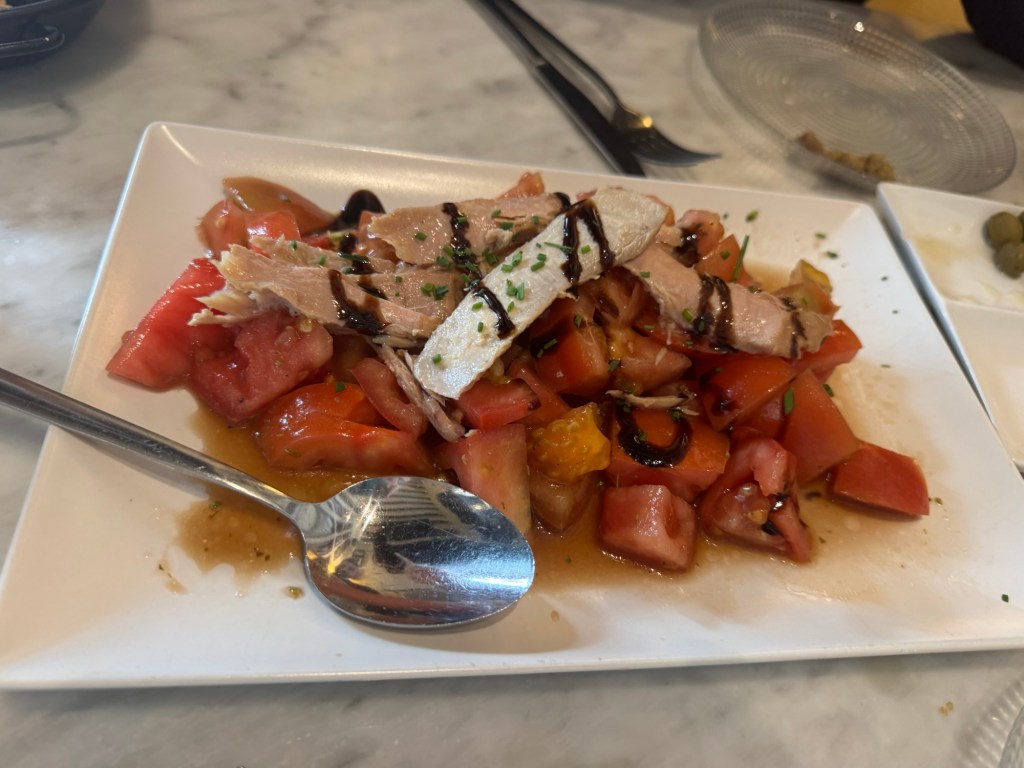
We did a delicious tapas tour.
Morocco, Spain and Portugal Day 8: Tangiers to Sevilla
Leaving Morocco today feels a little bittersweet because I’ve loved this experience so much. It’s unlike anything I’ve done before.
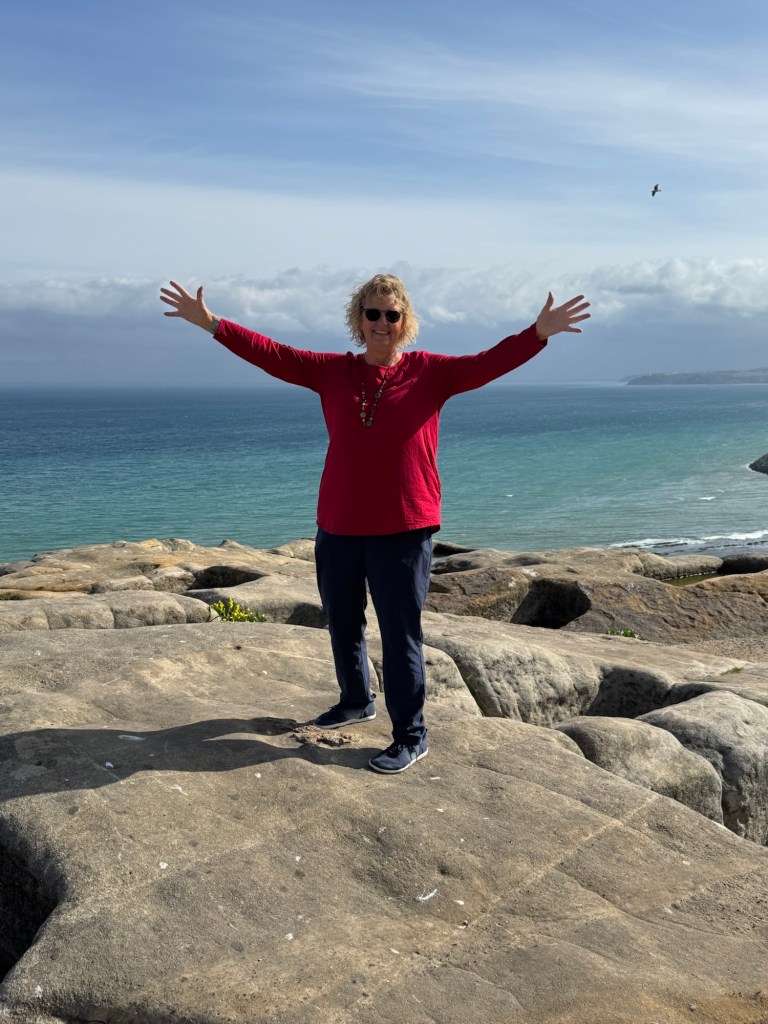
Marrakech had the craziest open market—with its snakes, dancing monkeys, and motorcycles squeezing through narrow passageways. Casablanca featured the most stunning mosque—modern, massive, and built right over the ocean. Rabat charmed me with its adorable kasbah, full of navy doors and clean, labyrinthine alleys. Fez had the most impressive medina—so vast it felt endless. And Tangiers offered the best ocean views, with its beautiful boardwalk.
It’s the end of Ramadan today. There have been challenges, with many places closed during midday, but the tradeoff is that we’ve gained an insight into the culture. Our tour director doesn’t really have faith (his mom wants him to do the daily prayers but he doesn’t), but he would never consider not fasting because he’s part of a community and they’re all in it together. “People would look down on me if I didn’t fast.” It’s fun to see the children in traditional dress. Some of the little girls have makeup, while their moms wear none.
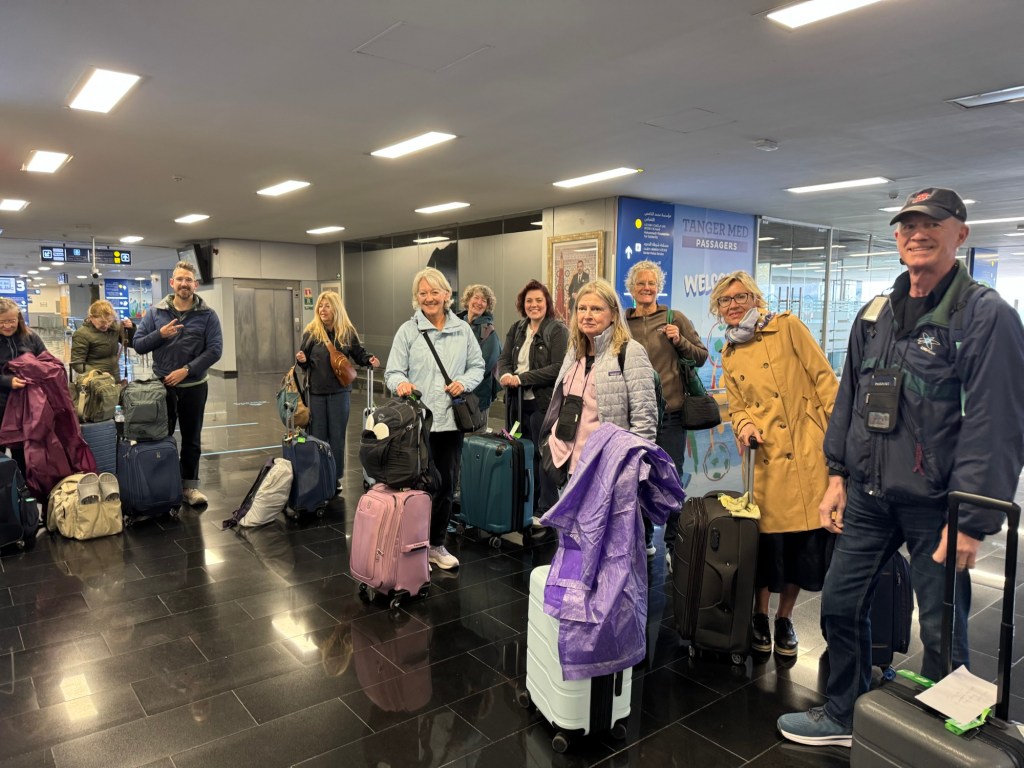
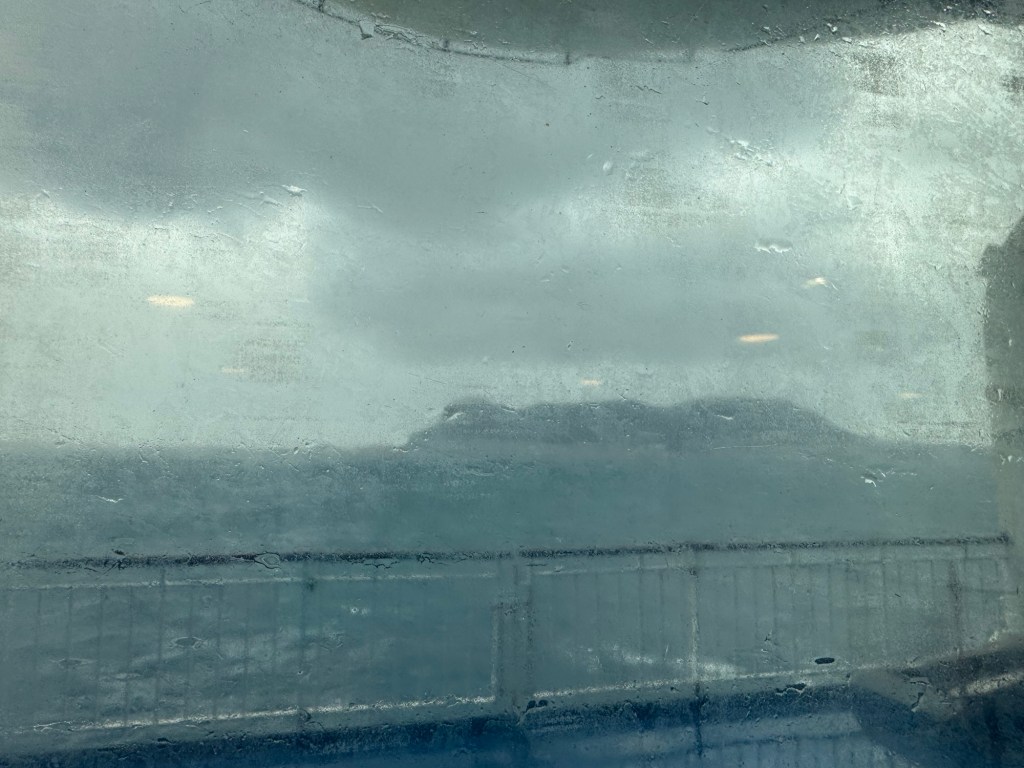
It’s a travel day today. We took the bus to the ferry to the bus, and arrived at dinner time at the hotel. It was raining and gray most of the day. We’ve had great weather so far.
Morocco, Spain, and Portugal Day 7: Tangier
I love languages, and Morocco has been such a delight for me. I’ve been able to use my French quite a bit, since it’s widely taught and spoken here. I’ve even dipped into my Italian with the many Italian tourists around. And our tour director is Spanish—such a treat, because I love the sound of beautiful Castilian Spanish.
I keep wondering how Morocco will change in the coming years. One thing you still experience here—much less common in other countries now—is bargaining over prices. I can do it well, but sometimes you just want to buy something without spending five minutes negotiating. There have even been moments when I’ve thought, “Oh, I’d love to have that,” but didn’t feel like going through the whole process to get it.
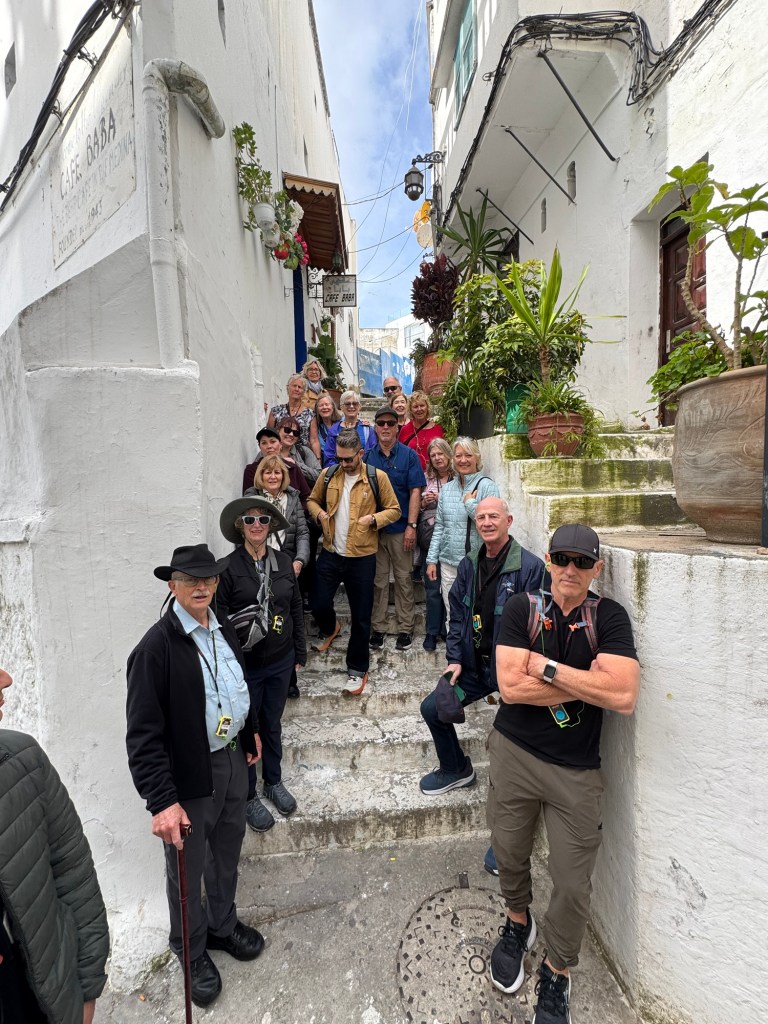
I first came to Morocco nearly 50 years ago when I was in college. Walking around Tangiers this time, I found myself searching for something familiar—but it all felt entirely new. I know the beautiful boardwalk and beach lined with high-rises are recent additions, but even the medina, with all its charm, didn’t stir any recognition.
Still, it’s a stunning city—layered with a rich blend of cultures. As you wander its streets, you hear Spanish, French, and Arabic all around you, each one adding to the city’s unique rhythm.
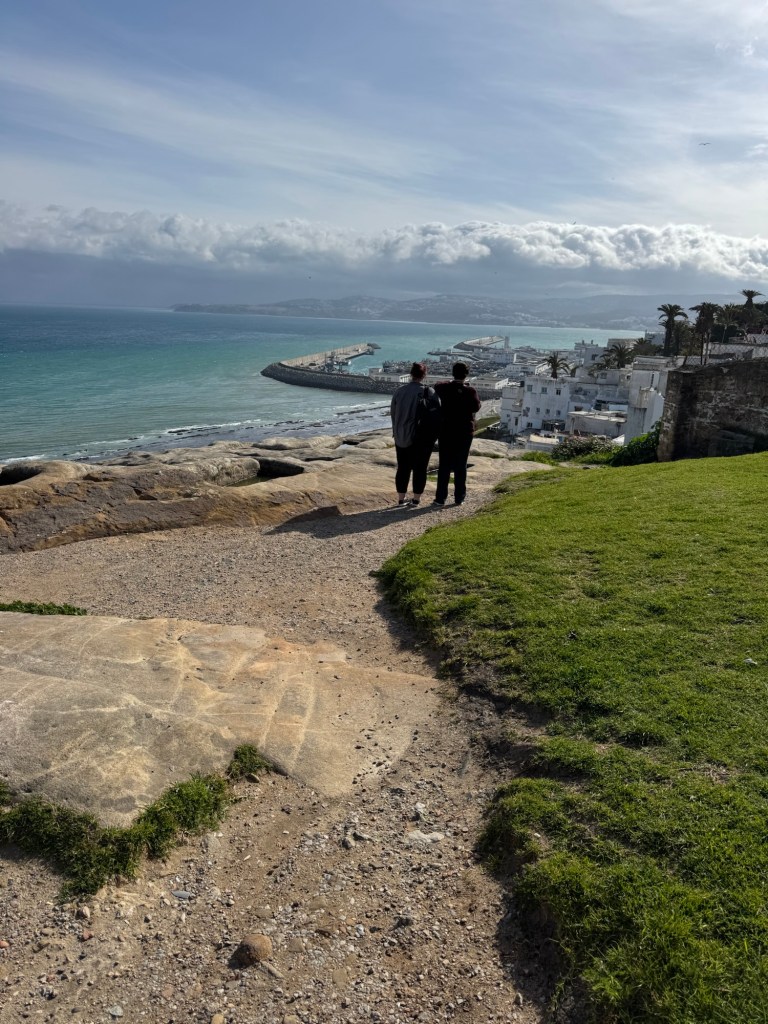
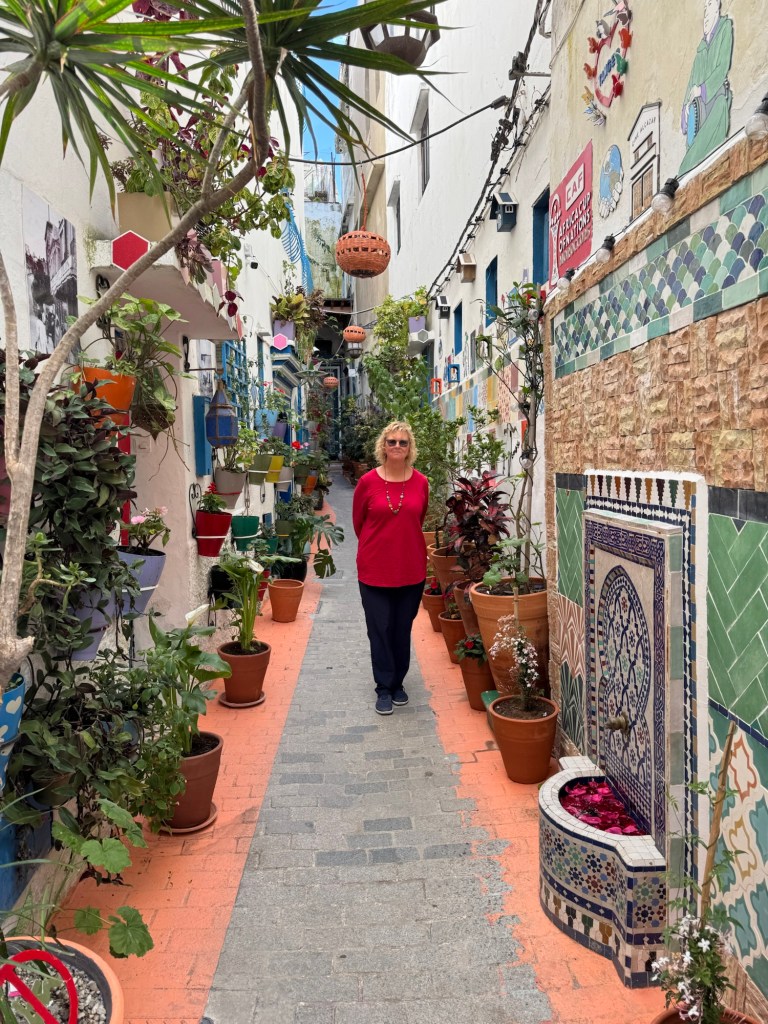
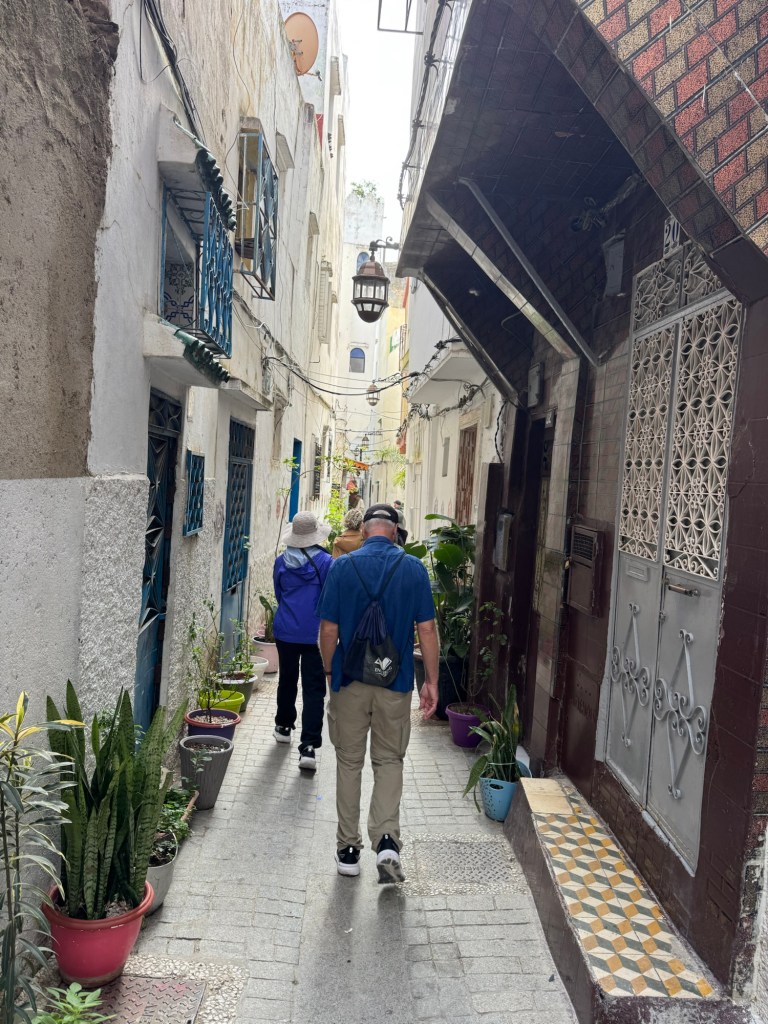
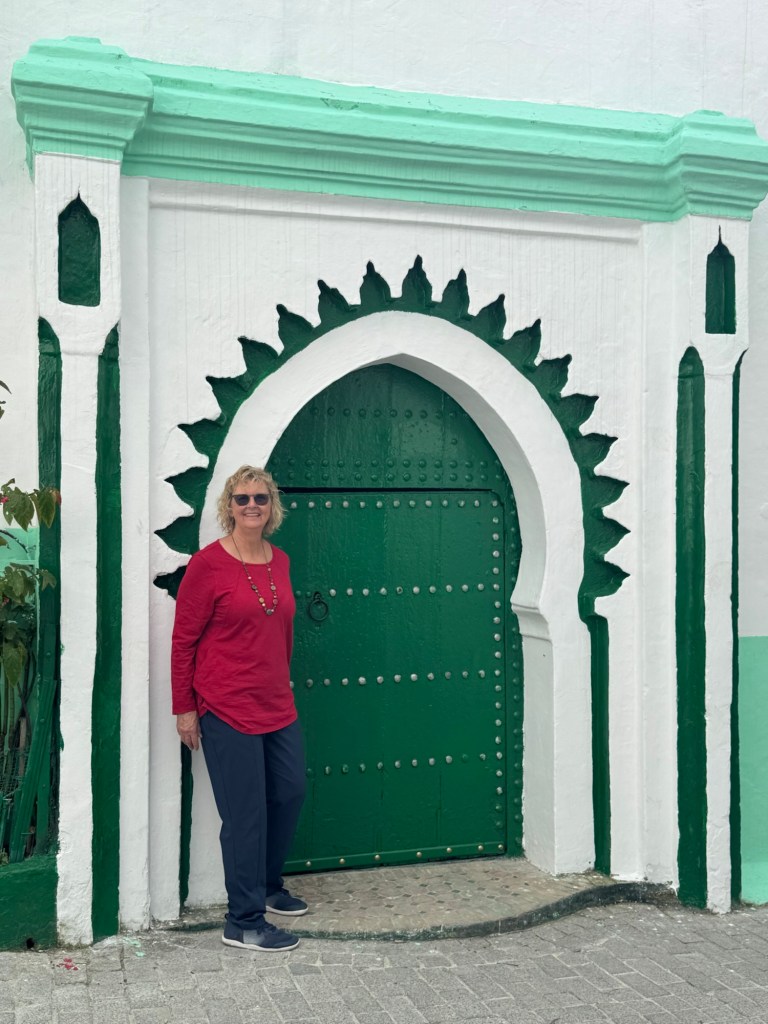
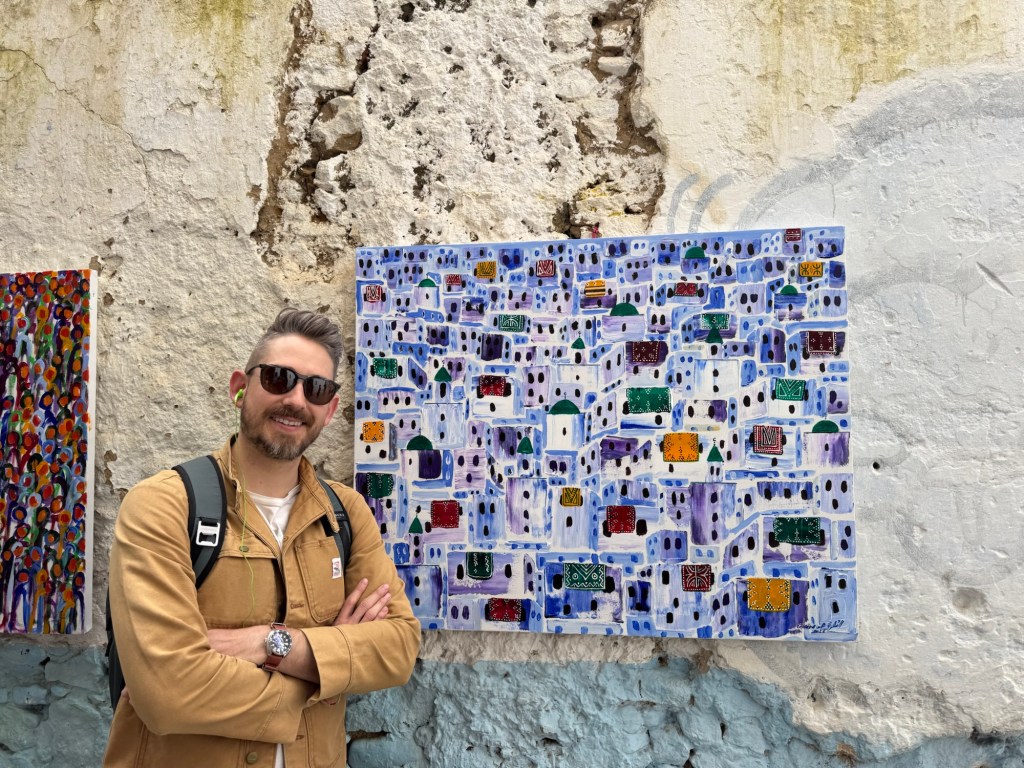
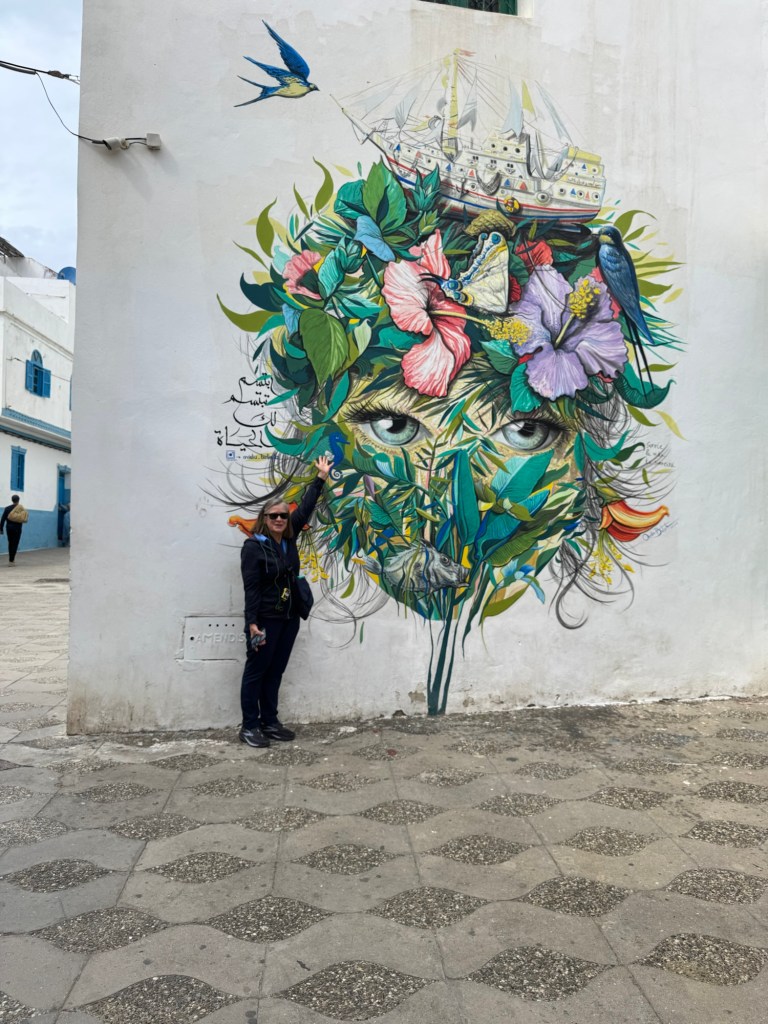
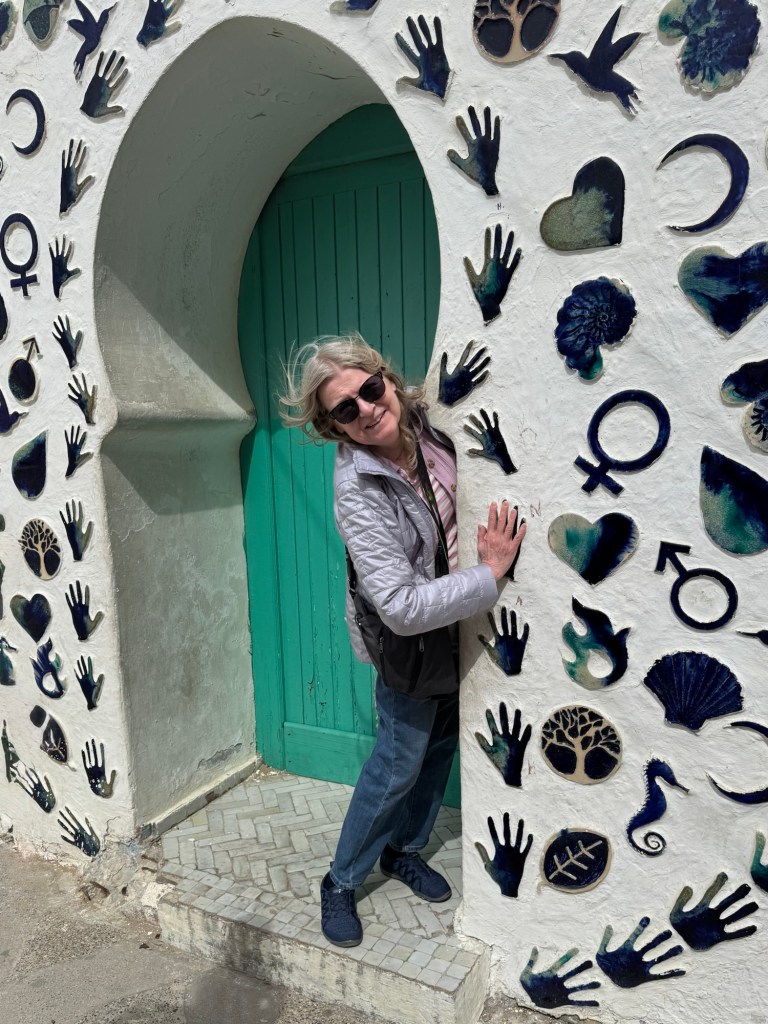
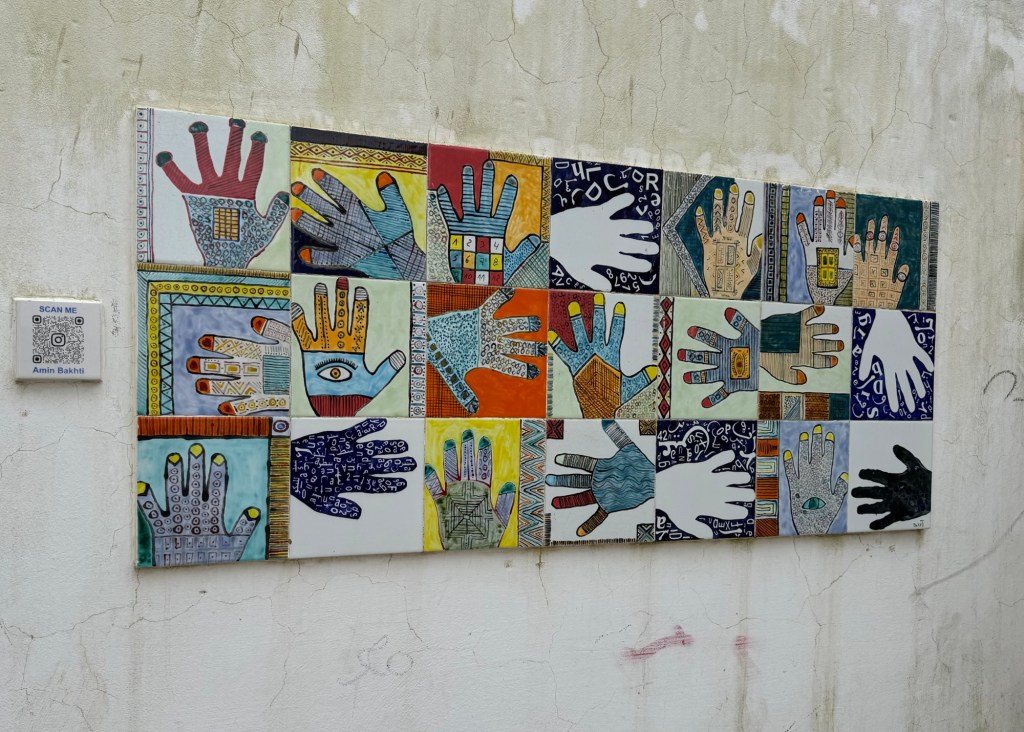
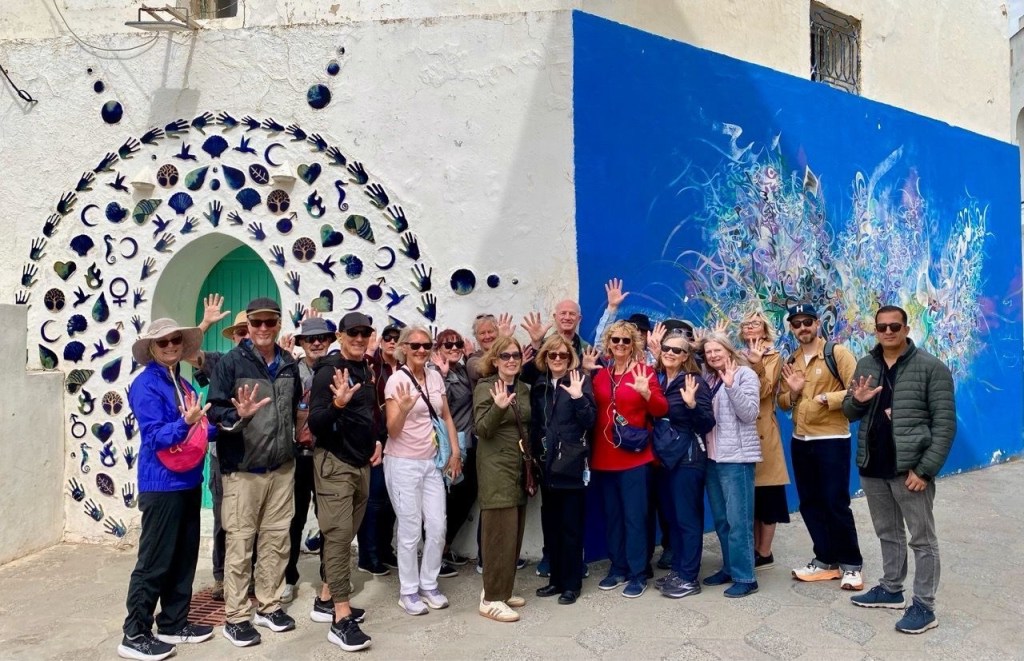
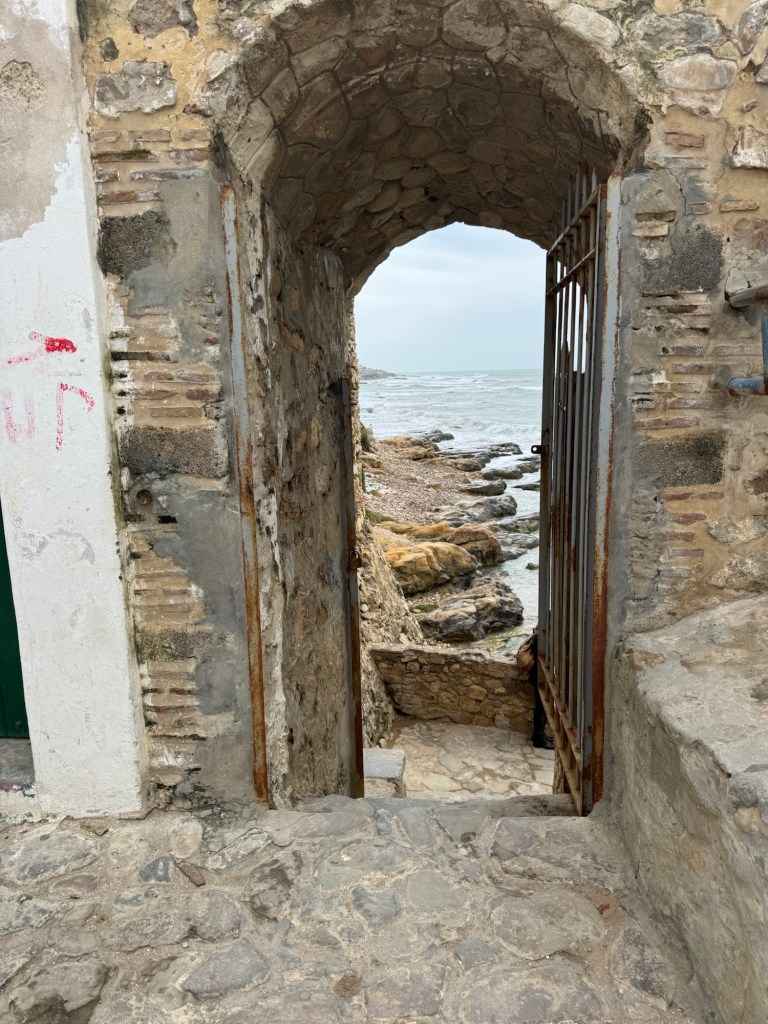
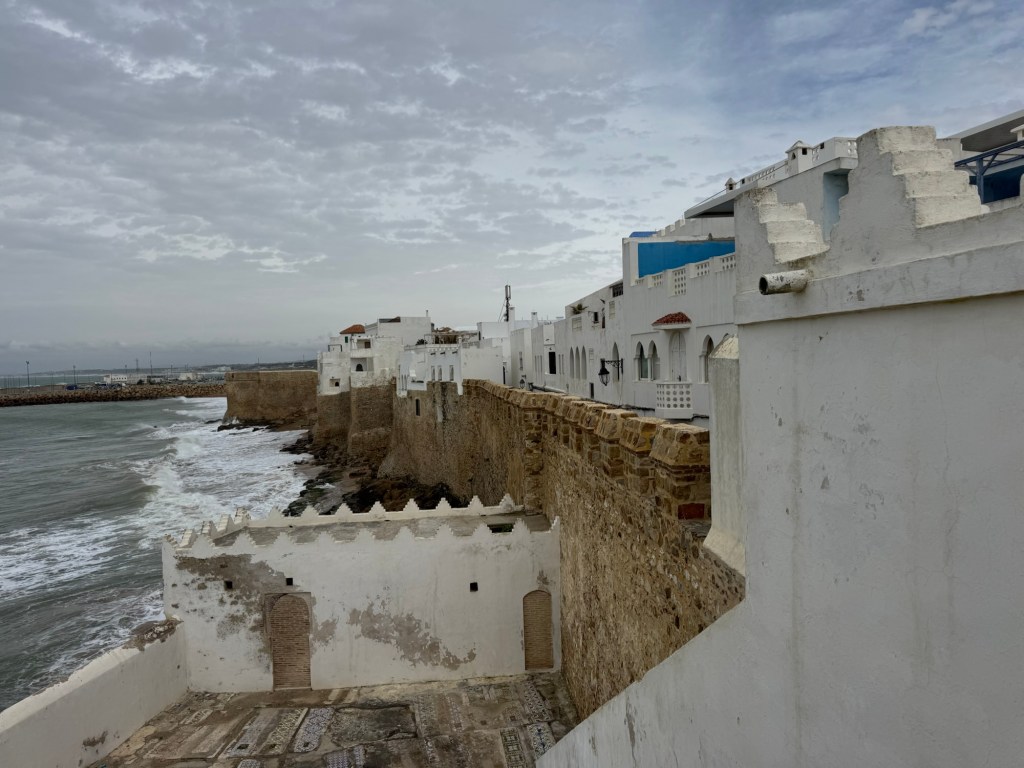


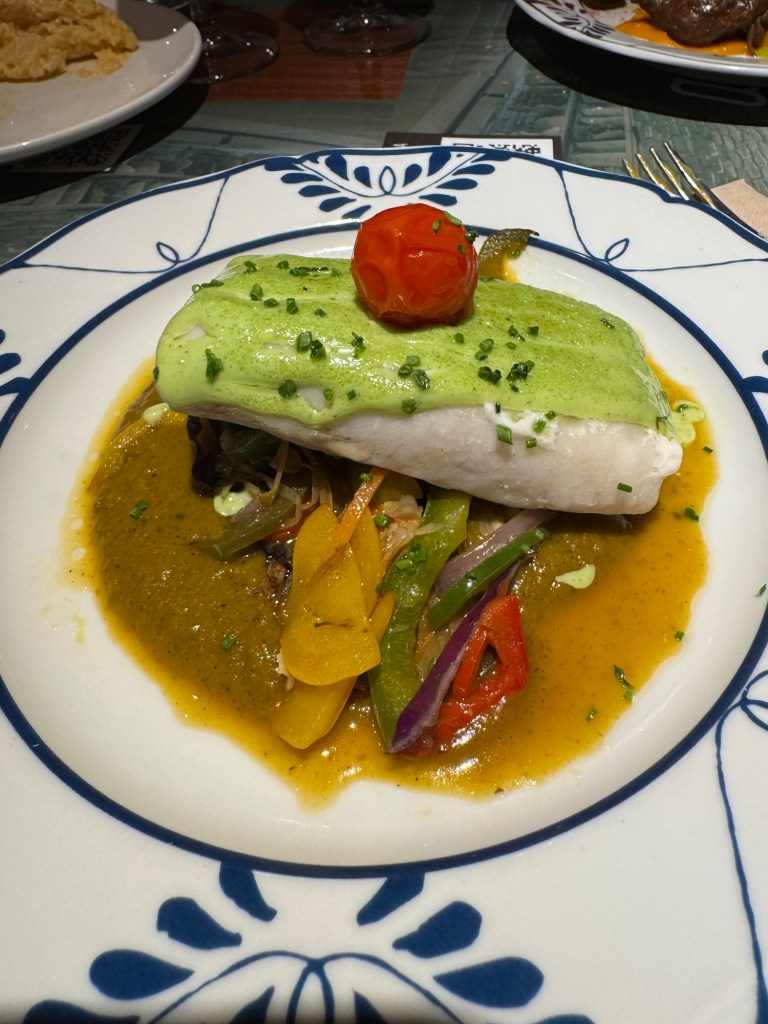
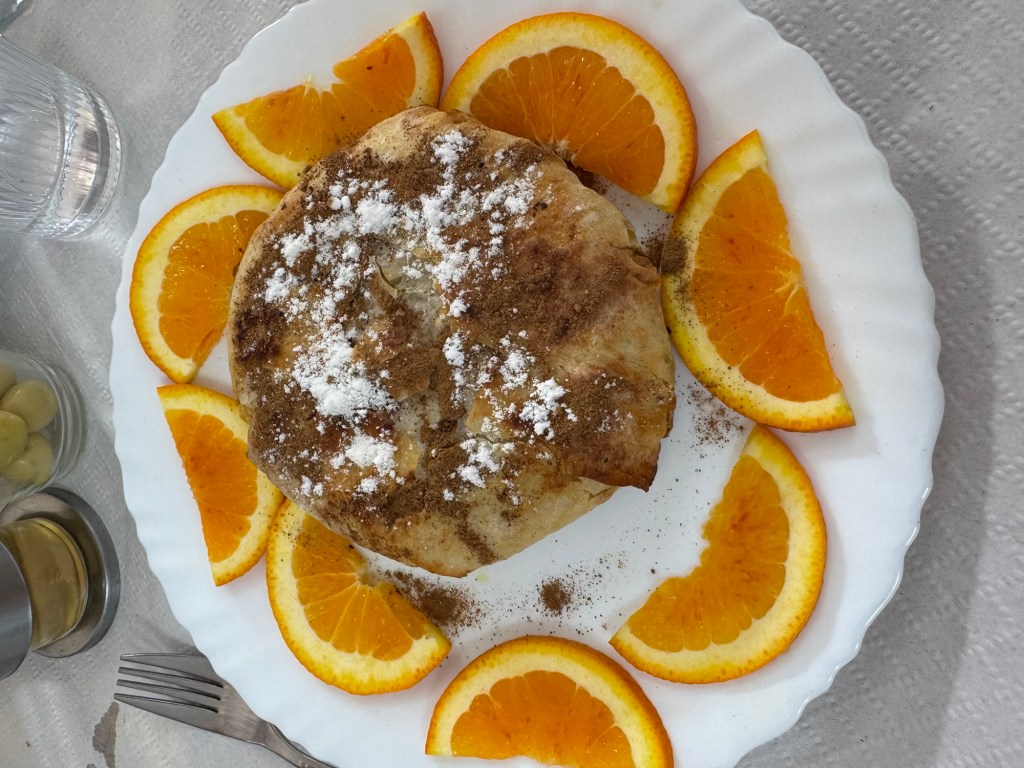
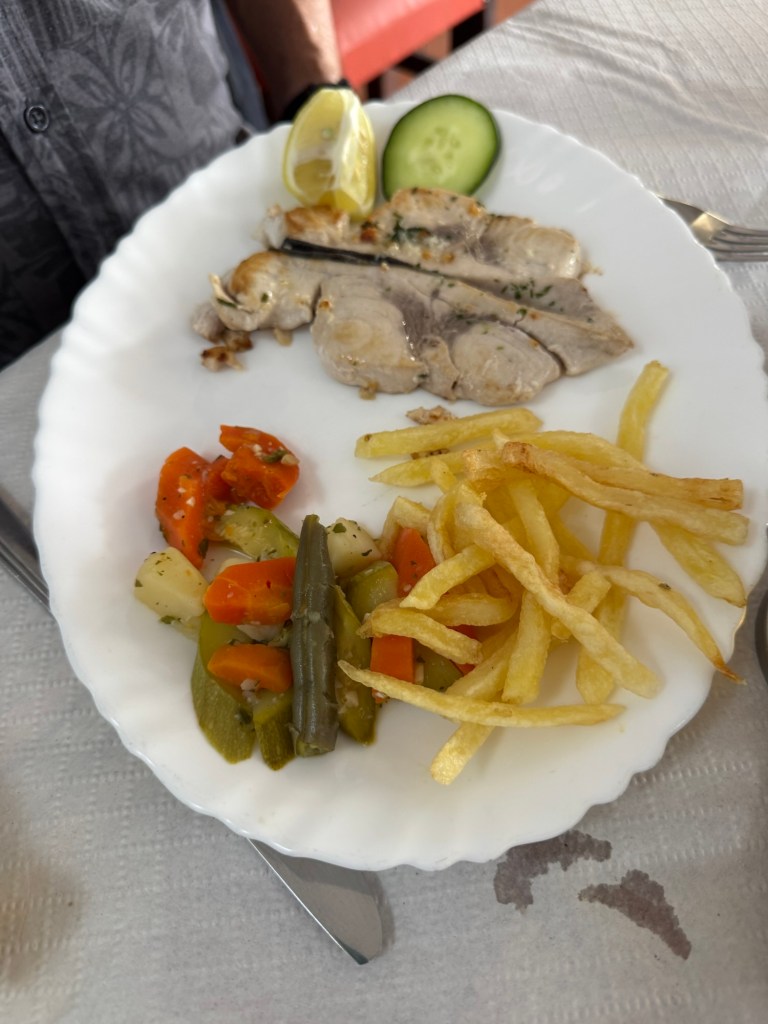
The food is amazing too. I loved the Pastilla I had eaten in Rabat so much that I ordered it again, but most people had fish.
Morocco, Spain and Portugal Day 6: Fez to Tangier via Chefchaouen
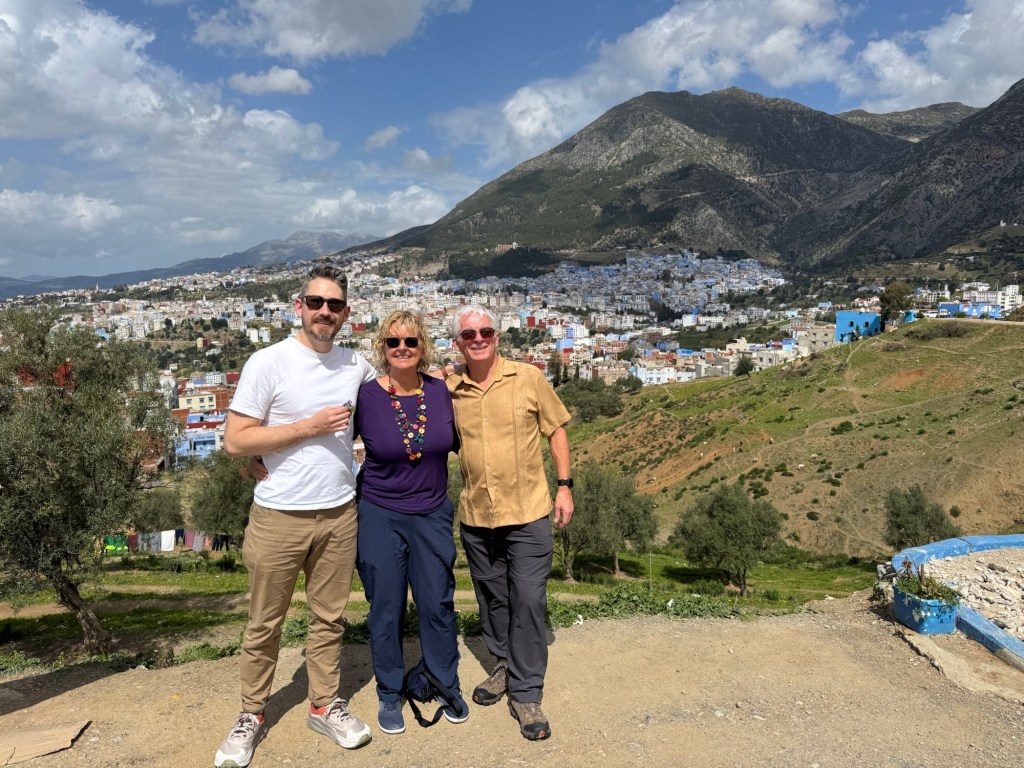
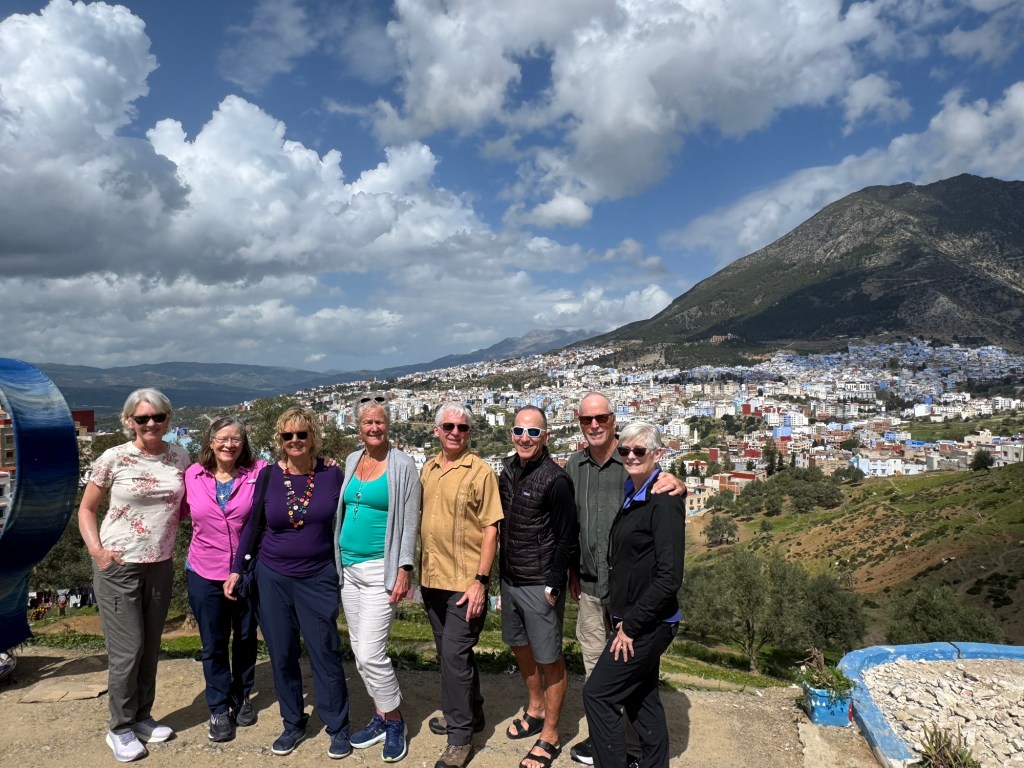
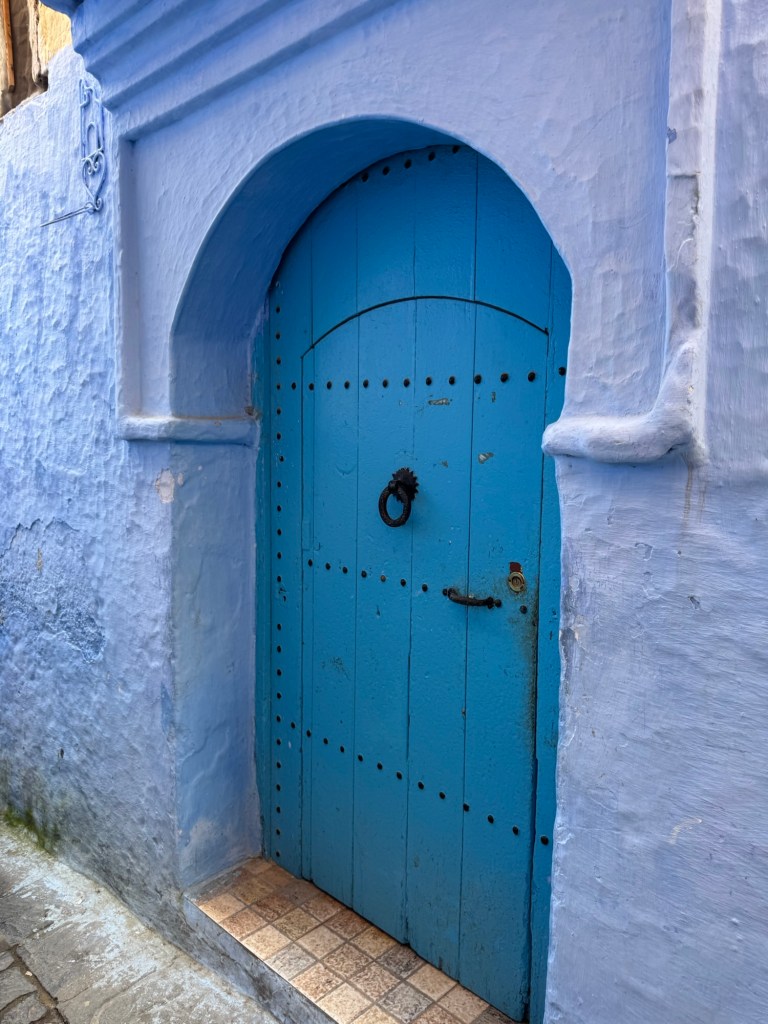
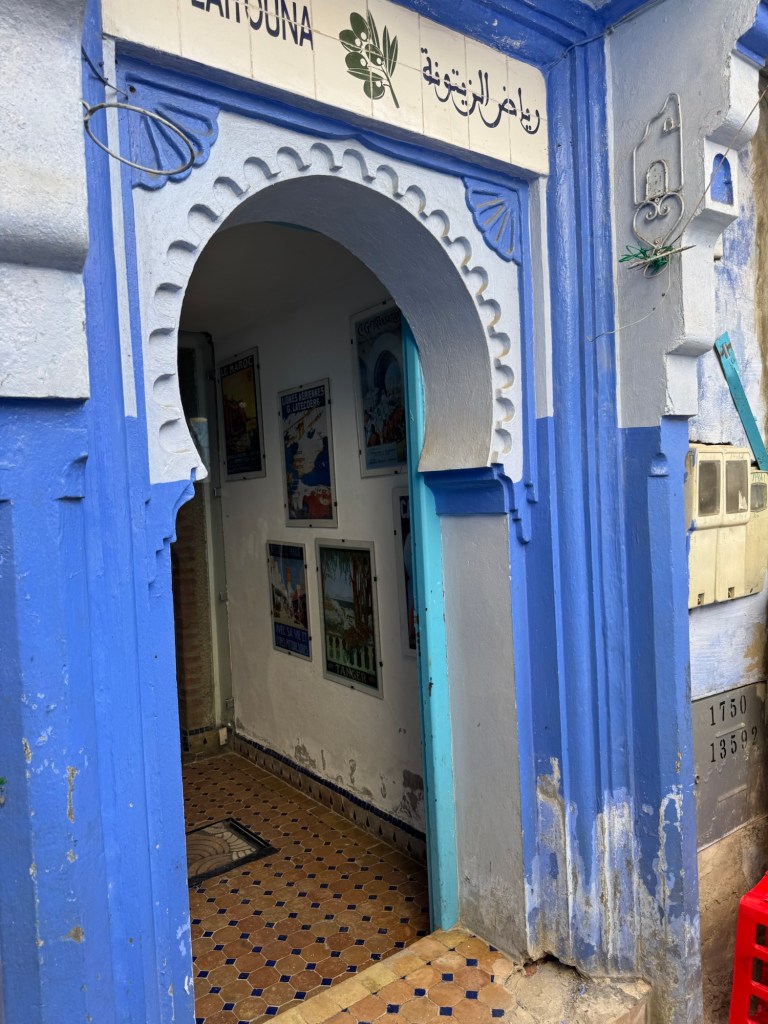
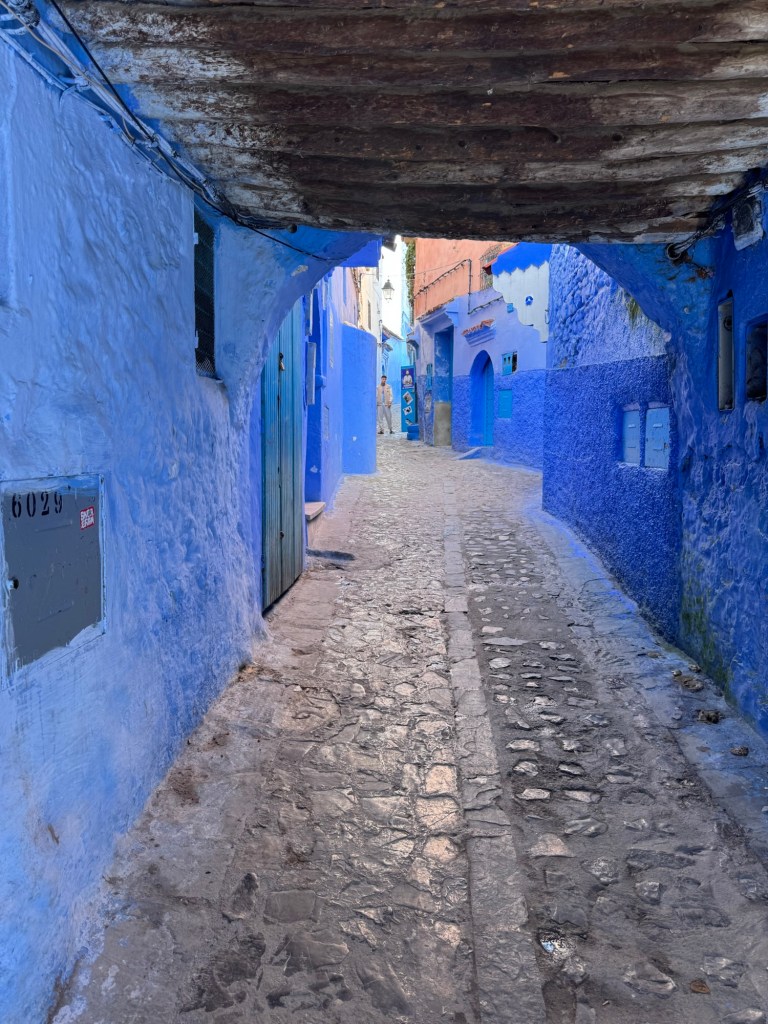
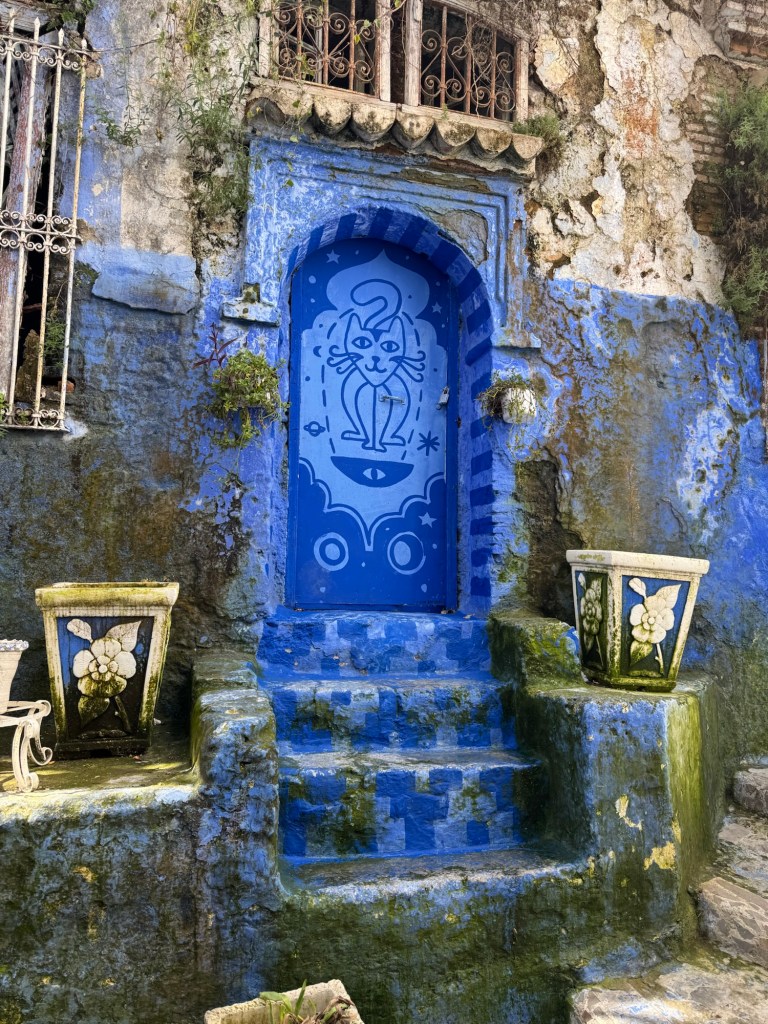
The reason I planned this trip to Morocco was because I saw someone’s photos of Chefchaouen—the Blue City—and couldn’t get it out of my mind. The drive through the mountains to get there was stunning, with lush green countryside, shepherds, camels, and farmers plowing fields with burros.
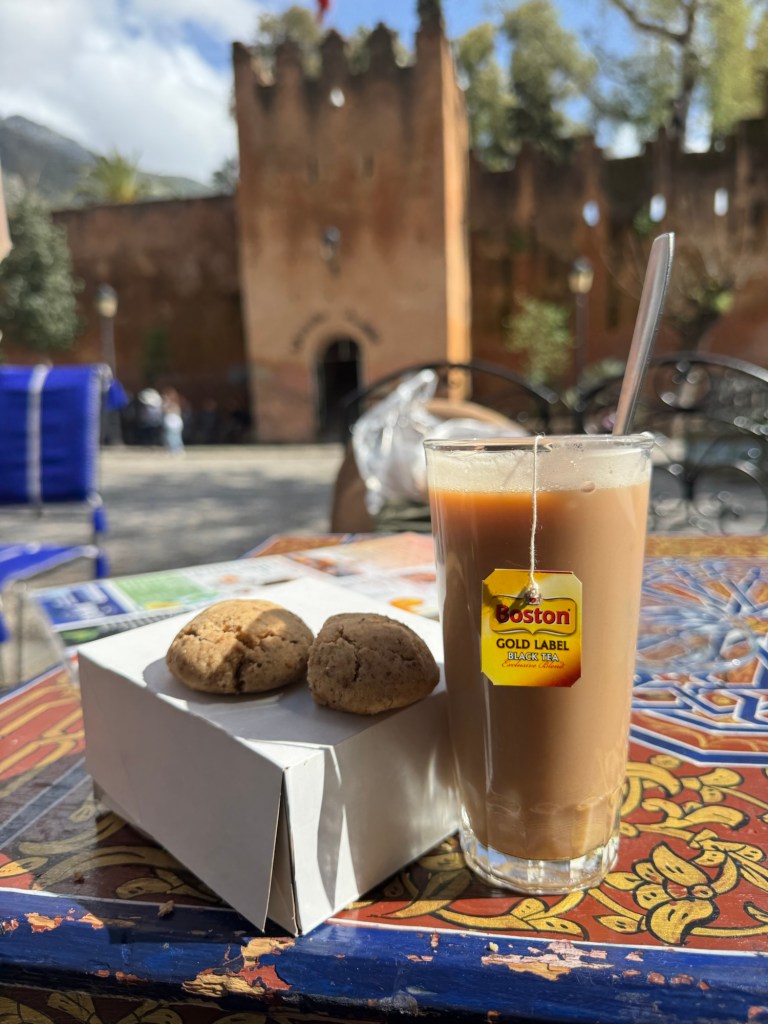
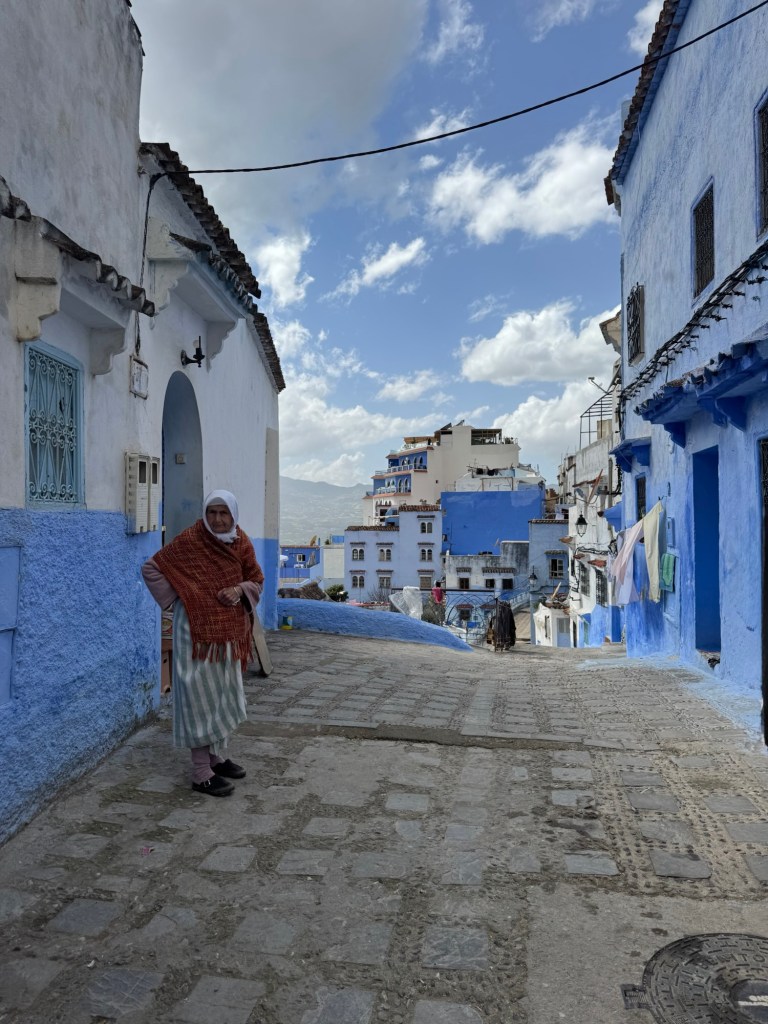
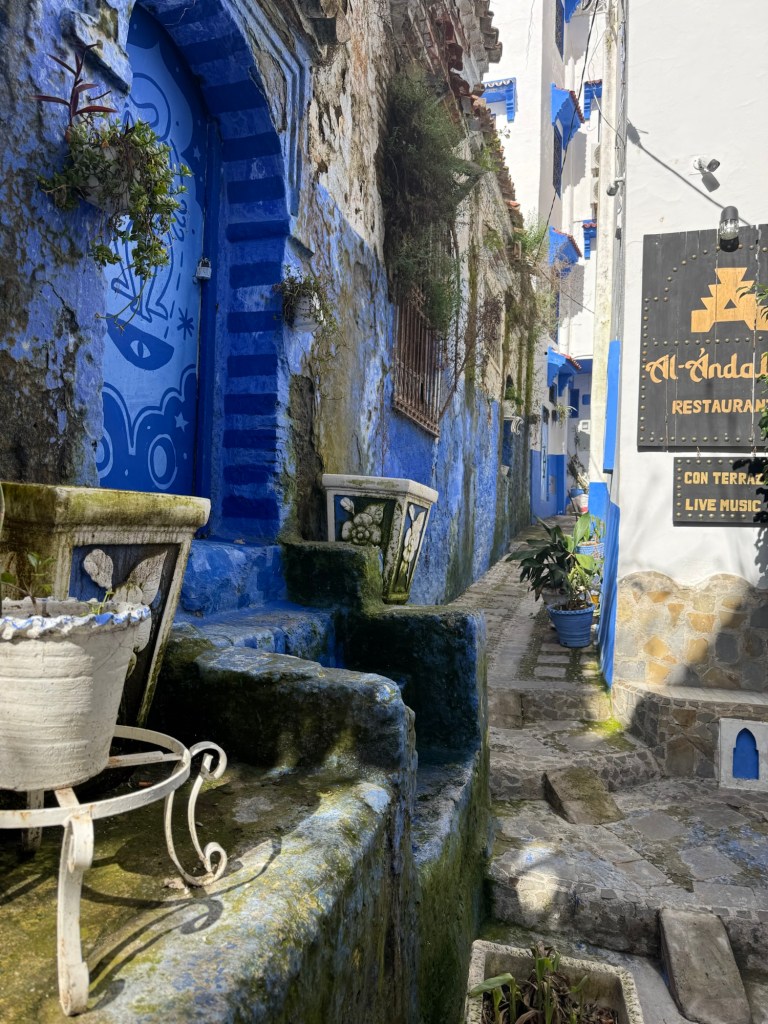
This village is the very definition of picturesque. Every time I turned a corner, there was another charming doorway or irresistible alley. I loved every minute. Anna and I went to a bakery, then ordered tea and coffee in the main square, while we watched people pass.
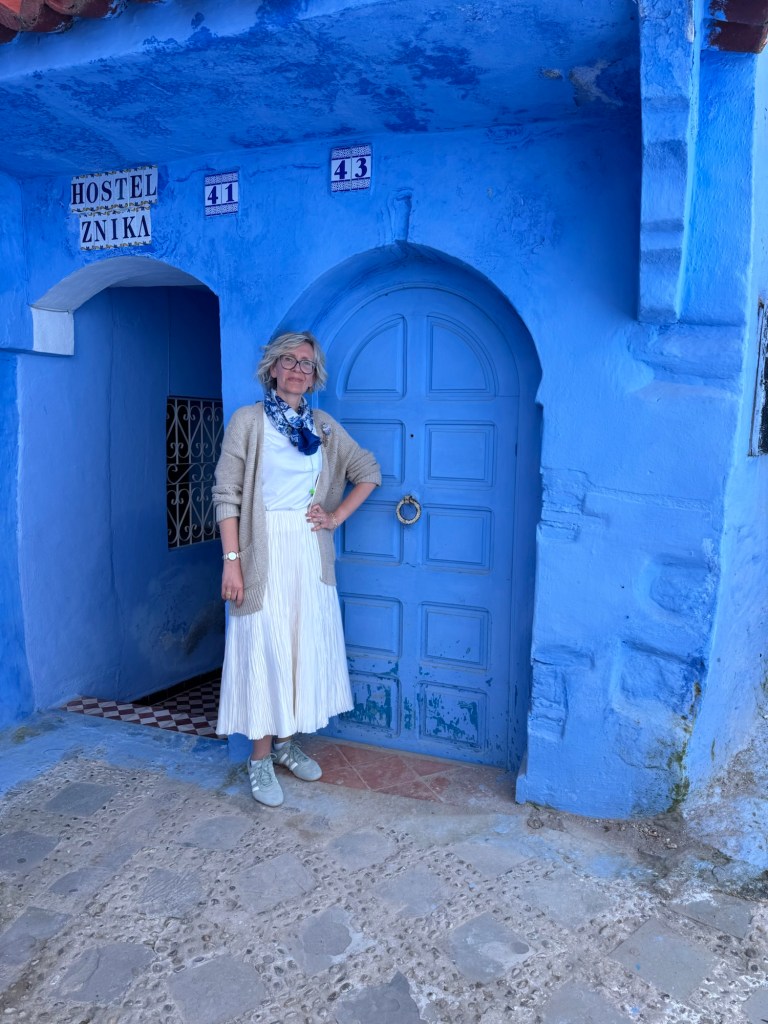
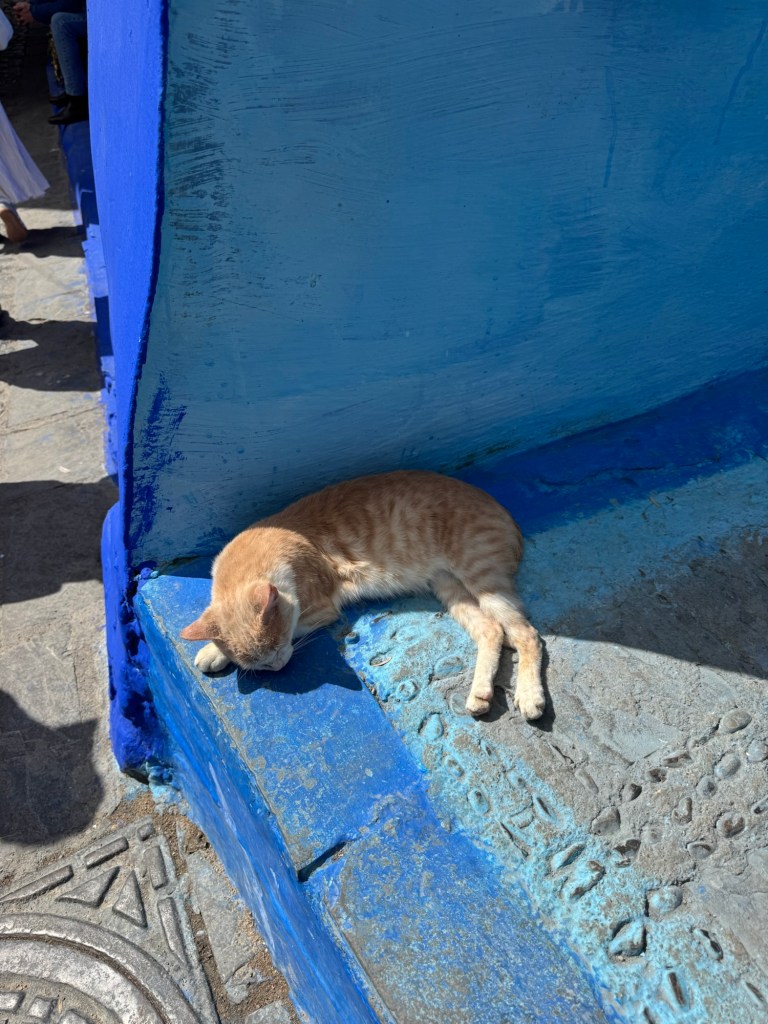
As for why the city is painted blue, no one knows for certain. Some say it dates back to Jewish refugees who arrived in 1492. Others claim the color helps repel mosquitoes. Still others say it attracts tourists.


 Marsh Travels